
Translated material
Goodbay, America!
 Photo: ITAR-TASS
The United States is leaving the working group on civil society of the Russian-American bilateral presidential commission. This was stated by US Department of Communications on Democracy, Human Rights and Labor, Thomas Melia.
"The United States decided to leave the working group on the civil society of the Russian-American bilateral presidential commission in the light of the recent steps of the Russian government to limit the civil society," he said. The Russian side immediately reacted to the American demarche. Presidential spokesman Dmitry Peskov said that he was regretting the decision of the United States.
The working group on civilian society was created in 2009 by the current US President Barack Obama and former Russian President Dmitry Medvedev. The creation of the working group was part of the reloading policy: rethinking and improving Russian-American relations. Her first chairmen were Michael McFol (US Ambassador to Russia) and Vladislav Surkov, First Deputy Head of the Presidential Administration under Medvedev and one of the most influential people in Russian politics. |
Relations between Russia and the United States have significantly deteriorated after the adoption by the Congress of the "Magnitsky Law" and the response of the "anti -Sirot" law adopted by the State Duma.
Now the United States has left the working group in civil society. PublicPost talked with experts about where Russian-American relations are moving and what will become with the "reboot".
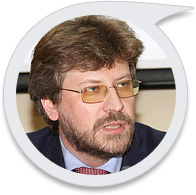
Fedor Lukyanov, internationalist, political scientist:
"This is perceived as a certain demarche, but in general this is bringing the institutional base of relations in line with reality. In the current situation, there is no need and the need to discuss the issues of civil society and human rights, since the positions are diametrical. If, under the first chairman of this commission on the Russian side, we proved the American side that we are normal in this area in this area, we are moving in the right direction and in the right direction and in the right direction We will come to the right result, now the approach has changed a little: we are not at all interesting what you think about it, and that’s all before Russia, and now it came to the conclusion that it is pointless in this situation.
The question is more significant - what will happen to other units of this Big Presidential Commission. A group of civil society attracted more attention to specific occasions. All other commissions are also not to say that they worked violently.
-The position of Russia “We don’t care what you think” is part of some new ideology or an answer to the “Magnitsky Law”?
This is part of the new approach, within which they try to find ideology. It is completely optional that they will find it, and that it will be successful. But it seems to me that this is another stage, which will then be replaced by something else. This is not a random step, this is a general attitude that the era of the 90s, when Russia a priori proceeded from the fact that in the West a more correct system was over.
- That is, this is how the thesis that "Russia got up from the knees" works?
The fact is that it was not Russia that got up from the knees, while others fell on them. The West experiences a variety of difficulties, including ideological ones. This only enhances the motivation "What you teach us, you yourself cannot solve anything at yourself."

Maria Lipman, editor -in -chief of Pro et Contra, member of the Scientific Council of the Moscow Center of Carnegie:
“The reboot has completely outlived itself. There is nothing left of it today. Over the past year, the tendency is completely obvious and unambiguous-to deteriorate Russian-American relations. This is true and in the case of a relationship between Russia with the rest of the West. I will not take this decision to literally-I have not seen it. But, as I understand it, the work of this commission was, to put it mildly, not intense. There are no achievements.
- The adoption of the "anti -Sirot" law stimulated this process?
This, of course, is extremely important. I can’t say that this is some kind of fatal episode, but this is, of course, an event that attracted very much attention to itself. And the point is not only that this law is anti -Human, as it is already customary to say in Russia, a cannibalic character. And the fact is that after the two parties worked very seriously on the Russian-American adoption agreement, the Russian authorities considered it possible to simply throw this work into the trash and send a serious signal that Russia does not put its international obligations under the agreements in a penny. This illustrates how Russia relates to its international obligations. At the same time, powerful anti -American propaganda continues in Russia. In Russia, anti -Americanism is taken into service as a method of combating a protest community. This is also a sign of the state in which the relationship is. "