
Translated material
Human rights activist Valery Abramkin died
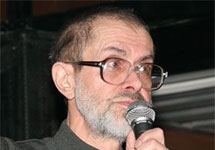
After a serious illness at the 67th year of his life, the director of the Center for Assistance to Criminal Justice Reform Valery Abramkin died, Polit.ru reports .
Valery Fedorovich Abramkin was born in Moscow in a working family. In the 70s after graduation, he worked as a chemical engineer. In his youth, he joined the bard movement, stood at the origins of the Moscow club of amateur song. In the same years, Abramkin is included in dissident activities. He had searches, he was fired from the Research Institute. He worked as a lumberjack, stoker, church watchman.
In the 70s, Abramkin participated in the release of Samizdat magazines "Resurrection" and "Search". In 1979, the KGB and the prosecutor’s office were instructed to stop the “searches”, which gained more and more popularity among the democratic intelligentsia. Employees and readers of this magazine conducted more than a hundred searches, the case was opened under Article 190-1 of the Criminal Code of the RSFSR ("Distribution of slanderous fabrications that defeat the Soviet social and state system"). In December 1979, Abramkin was arrested and spent a year in Butyrka prison. In October 1980, he was sentenced to three years of camps. He served the deadline for Altai.
Abramkin regularly transmitted information about human rights violations from prison and camps, for which he was sentenced to three years in prison under the same article 190-1. In the camp he fell ill with tuberculosis and a number of other serious diseases. Against the backdrop of protests of Western human rights organizations, he was released at the end of the second period without the initiation of another case.
In December 1985, Abramkin was sent under the supervision of the police in the deaf village of the Tver region, where he worked at a school for children with disabilities. He was allowed to return to Moscow only in early 1989. Upon his return, he joined in active human rights activities, entered the Moscow Helsinki group, created the non -governmental organization "Prison and Volya", which in 1992 was transformed into the Center for Assistance to Criminal Justice Reform .
In the early 90s, together with journalist Igor Demin, he began to conduct the transfer of the “clouds” at the state radio station “Voice of Russia” at the state radio station, which is still a broadcast weekly.
Abramkin participated in the development of various bills in the field of criminal justice, including the first package of amendments in the correctional labor code (1992).
In 1992, Abramkin, together with Yuri Chizhov, prepared and released the book "How to Set in a Soviet Prison", about 30 thousand copies. which was freely distributed to prisoners and their relatives.
Abramkin is the author of numerous publications on the situation of prisoners and prison life. He prepared on these topics dozens of reports for international conferences, state structures, international and Russian NPOs.
For many years, Abramkin regularly visited the places of imprisonment in order to control the observance of human rights, to assist prisoners, released, employees of penitentiary institutions. He was a member of the Council on Judicial Reform (1994-1997) and a member of the PKS standing Chamber under the President of the Russian Federation (1997-2000), the Human Rights Commission under the President (2002-2004), the Public Council under the Minister of Justice (since August 2003), the Human Rights Commission under the mayor of Moscow. Since November 2004 he was a member of the Presidential Council for Human Rights.