
Translated material
Orphans in Russia: how to solve the problem?
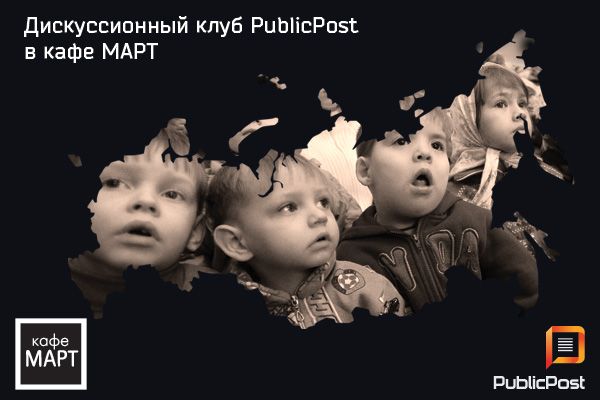 Photo: collage PublicPost
Publicpost opens the discussion club: several times a month we will collect experts, public figures, bloggers and journalists to discuss the most relevant topics and events. The first meeting is devoted to the development of a law on facilitating the adoption of orphans in Russia.
The discussion was adopted by the head of the Volunteers charitable foundation to help orphans, Elena Alshanskaya, Andrei Bepischev, a graduate of the orphanage and other experts. Olga Batalina, invited to discuss the State Duma from "United Russia", could not come to the meeting.
The conversation was about what can be done so that citizens are decided to adopt, so that foster families do not return children to orphanages, how to influence the motivation of potential adoptive parents. And also about how to organize civil control over orphans in orphanages.
PublicPost was broadcasting discussion.
22:14 Lyudmila Petranovskaya, teacher-psychologist, family device specialist
After the deputies are ashamed to appear on the street after decisions made, then the goal of the media will be achieved. The goal is in public pressure.
22:10 Nikolai Klimenyuk/Publicpost
State Duma deputies who make decisions on these issues should have taken part in our conversation today. But they could not come. We will give them a list with the requirements that we have formulated today. And tomorrow, a publication will appear on the PublicPost website, where everything will be set out in detail.
Our task is to reduce those who have something to say about the problems with adoption, and those who make a decision on this issue.
22:05 Natalya Belova, pediatrician of the European Medical Center
We must not forget about the open adoption. To help people, to teach them how to inform the child that he is not their native. In America there is no problem with this: there they say to such children that he was born "from the heart."
22:01 Tatyana Tulchinskaya, Director of the Charitable Fund "Here and now"
There is a scheme that can give a result, but we do not use it. The media must conduct programs on how we should change.
About 10 years ago there was a contingent of orphans who were born from saleswomen and migrant workers. Information about free clinics where abortion is made simply did not reach them. It needs to be promoted. There would be fewer such children then. The same thing with analyzes on Down syndrome. People should know where to make them for free.
It is necessary to support parents with children who have a wolf mouth and a hare lip. Sometimes it’s enough to say that you will help with the operations - and they will not give up the child.
21:58 Andrey Berkishchev, graduate of the orphanage
You will not solve anything with money. Understanding is also necessary. My parents are “bumps”, one might say. And the sense?
21:54 Anna Baldova, teacher of the orphanage, former pupil of the orphanage
How to make something change, I do not know. It is better to give a chance to relatives, parents.
People gathered here who are not indifferent to the kindness of sincere. And now, after 100 thousand have been promised, people will get children for the sake of money, they will be supplied somehow and at the age of 18 they will let go. Money will not decide anything. It's only about kindness. If someone takes one child, this is good. And when they get a lot of children to work in the house, and they receive more money for them - this is another thing.
21:43 Lyudmila Petranovskaya, teacher-psychologist, family device specialist
1. The Institute of Gosopecun retains and preserves the situation. It should be changed and no different from the usual guardian.
2. The responsibility system of guardianship authorities is arranged as follows: if something happens to the family (blood or reception) with the child, then the guardianship authority "responds to the full." If something happens in the state institution, the guardianship authorities do not meet in any way, no one is responsible. It is generally beneficial for the guardianship authorities so that no one will ever come for a child. If children return to the blood family, then the guardianship authorities have more work with the same salary. The custody in general can pick up the child by signal - without leaving in place.
3. The child in the institution is considered arranged. He should not be considered arranged - he is in a situation of defeat in rights. This should be changed.
4. We need to set a deadline - for example, six months. To understand whether the child can return to the blood family. If it cannot, another family should be selected for him. If the child is not arranged, the guardianship authorities must be responsible for this!
5. Catastrophic unprofessionalism in this area. Starting from the deposit employee of the guardianship in the region, ending with Mr. Astakhov. Astakhov is sincerely surprised that violence is happening to children. He believes that the worst thing is cards in the nightstand. We have no universities that train specialists. People do not know what is happening in the soul of a child who is taken away from the mother. And he has grief - more terrible pediculosis.
21:42 Nikolai Klimenyuk/Publicpost
Is it possible to significantly change the situation with orphans in the short term? How long does it take? Year, two, five?
On the points: What steps need to be taken so that the situation begins to change?
21:36 Natalya RUDA, editor -in -chief of the TV channel "Mother and Child", foster mother
There should be no institutions, these ghetto, where children live. There must be a transshipment base from which the child is arranged in the family. There they should also help parents with acceptance. 100 thousand is a completely ineffective measure. The crime is to spend this money in this way. When you take the child into the family, there is not enough money, but escort! We went to the touch, it lasted for years and still lasts. If we understood some things before, it would be easier for us to everyone. If a person once thought about taking a child, and he would know what would help him, he would make a decision much faster. And he is currently afraid of control, afraid to not cope.
21:32 Natalya Belova, pediatrician of the European Medical Center
By the example of gutter, one can understand what American adoptive parents feel. It would be nice to understand this by the representatives of our State Duma.
21:25 adoptive parents, family of the Gzelobanovs
We submitted documents for adoption, but two municipalities were engaged in a child at once, the second candidates appeared. When the documents were already in court, the municipality of the textileschikov made notes with errors, the time stretched, and through another municipality of the child managed to give to another family. The girl Nastya was born in December, she doesn’t care in which family to live, but we feel the right to retreat, we are waiting for the court decision.
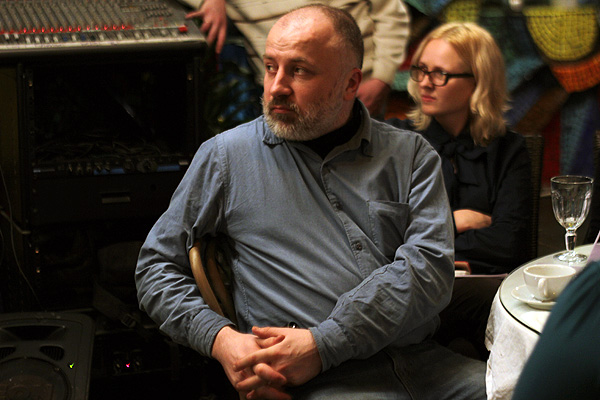
Elena Zhelobanova: "During the visits, I managed to feel like my mother, we were not in the know that the second adoption was being started, prepared things, told relatives, they accepted the child into the family. We learned the post-fact that the child was taken away somewhere. It demonstrates the absence of the system and the attitude of the employees of such institutions."
21:23
We stubbornly cannot talk about native families and close circles - everyone immediately recalls new families and social parasitism. Social parasitism (when families receive children and live with this money) is not so terrible.
21:19 Elena Alshanskaya, Head of the Volunteers Charitable Fund to help orphans "
Suppose a mother dies in a child, there is no grandmother, but there is a friend of mom. For custody, this person has no advantages as an adoptive parents. We try to help. A new family must be sought when scorched earth, when there is no from a close circle at all. And we have adoption - a priority form of a family device! At the same time, the bulk of the children needs temporary custody in close environment.
For us, a child is a thing. They took there, transferred there.
21:12 Elena Alshanskaya, Head of the Volunteers Charitable Fund to help orphans "
When the crisis happened, the family could not cope or not cope - there should be a system of simple reaction. Do not identify and control, but help. We now have only regulatory authorities - to pick up a child or not to pick up. The Soviet system created in the 30s.
We play soldiers, and there should be any person helping. Not the same for everyone, but for each family - different. An individual approach is the main thing.
The main supplier of orphans is a system of deprivation of parental rights. Of the 100 thousand orphans 60 - after the deprivation of parental rights. There are very few those who have died.
We have a procedure for deprivation of rights elementary. Without any juvenile justice under Soviet condo legislation, you can take any child from any family. Then they begin to look for a new family, nothing happens to him - it is necessary to solve problems with his family families. Then we will have no more than 20 thousand orphans per year.
21:10 Elena Alshanskaya, Head of the Charitable Fund "Volunteers to help orphans"
With children, you need to engage in rehabilitation, and not algebra and geometry and songs-pears. Inside the system is most often not evil people, but they do not understand what to do with children. Therefore, complex children fall into disciplinary institutions.
21:05
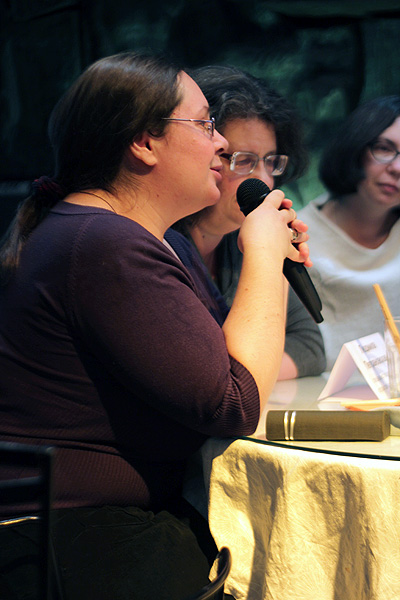
Maria Aismont: "Andrei Bepischev went through guardianship, he was taken under guardianship and returned to the orphanage."
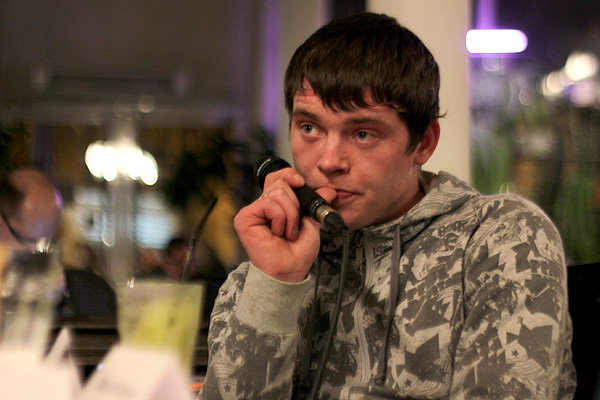
Andrei Bephchev: “I was several times in a psychiatric hospital because I was running away from the orphanage - after I was returned to the orphanage. I didn’t make myself, didn’t get in touch, I fought, I was a month in the hospital. I had a week, because I got a fight. I still don’t know the diagnosis, I haven’t been disclosed. I have been 21 years old, I have a girl.”
Elena Fanailova: "Why did you return, what do you think?"
Andrei Bepischev: “We constantly cursed with my sister, I smoked, walked late, behaved badly. They sent me to the distributor. They didn’t try to contact a psychologist. My father is a deputy of the local Duma, my mother is the Dean of the Pedagogical Institute. I sometimes go to my mother, I didn’t communicate with my father - I got a fight for the last time.”
21:04 Alena Sinkevich, consultant on international adoptions
Something will happen to us-they immediately enhance control. But the large expenses of society are not required to rebuild from control to help!
21:02 Anna Baldova, teacher of the orphanage from Kirova, former pupil of the orphanage
When I was a pupil, we had good educators, they were in the first place, not the state There was anything, they made diagnoses. One child at school understood mathematics a little worse, he was sent to a special institution, although the boy in other lessons managed.
There were situations when children were sent to a psychiatric hospital when they behaved badly. They underwent a course of treatment and continue to live with a diagnosis. It is unknown whether it is correct or not - maybe the child simply interfered with statistics.
20:56 Tatyana Tulchinskaya, Director of the Charitable Fund "Here and now"
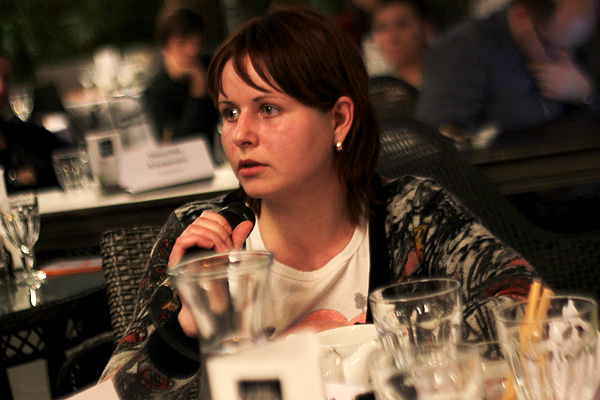
There is mythology in society, it is always simple: there are simple directors, but there are good ones. If the monster director is replaced with good, then everything will work. So everything does not work. Often the "good" directors become hostages of the system. It is necessary to stop dividing them into bad and good.
20:52 Lyudmila Petranovskaya, teacher-psychologist, family device specialist
Now the child takes care of the so -called. Gosopeccun is the director of the orphanage, the chief physician of the shelter, etc. And he has more rights than his own parent! Although Gosopecks can have 500 children, for this it is enough to have a pedagogical diploma. And if the State Pedagogical University does not cope and transfer it to another institution or to the house of the disabled, no one will tell him anything. That is, this person has power over children, and responsibility is very small.
It is necessary to closely close the Gosopeckun to the individual guardian. Responsible for each step, receive preparation. Or let's not pretend that these 500 children have a guardian.
20:49 Lyudmila Petranovskaya, teacher-psychologist, family device specialist
If the orphanage "fights" for the title of specialized (with special financing), then they will carefully monitor that the child does not have a diagnosis. Recently, in the child’s house, one child with cerebral palsy was performed, but they are not sent to rehabilitation, because it is more convenient to send with the rest in the summer. If it would be your child, you would not care - then you will wear it all your life in your hands in the toilet. There must be a person who is responsible for the child personally!
20:47 Elena Alshanskaya, Head of the Volunteers Charitable Fund to help orphans "
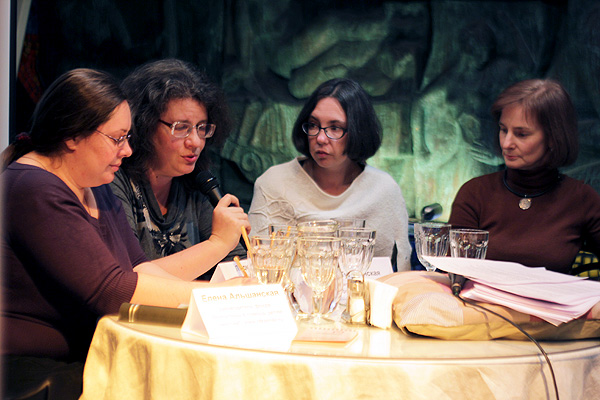
We have all the houses of the child-medical psychological institutions. As if children by default are sick, and not just small. The child gets into this system, remains alone and receives a bouquet of diagnoses. And this is besides the fact that he is left without his own family.
20:45 Natalya Belova, pediatrician of the European Medical Center
The matter is in our medicine, many terrible diagnoses are made not only in the houses of the child, but also in children's clinics. There are a dozen diagnoses that the pupil of the child’s home will be required. And foster families can never distinguish which of them is true and which is not.
20:41 Maria Aismont, Publicpost
In orphanages, half of the children are not sick, but simply pedagogically neglected. The commission assured me that the child is abnormal, could not go to a regular kindergarten. But I still gave it to the usual, because I was sure that everything was in order with the child. She just did not see the street, so she could not distinguish the birch from the oak. And what would a young inexperienced mother do in my place?
20:35 Natalya Belova, pediatrician of the European Medical Center
Biological families who grow a disabled child are difficult not only because there is no suitable environment. In this regard, something, of course, changes, but the worst thing is that there is no correct information environment, information about affordable help. We have no communication of specialist doctors. Parents do not know where to turn.
Formally, in any house of a child, every child has a rather narrow path on which he is obliged to go. With malformations in the front region - in one hospital, perennial queues. We proposed a specific option - to create a database of centers that are engaged in a specific pathology, and spread it to the homes of the child. The lists that are in the Ministry of Health contradict reality. Many children simply cannot get medical care - you need to create an institution of trusted doctors, help children with specific pathologies and help parents of these children at the very initial stage.
20:33 Tatyana Tulchinskaya, Director of the Charitable Fund "Here and now"
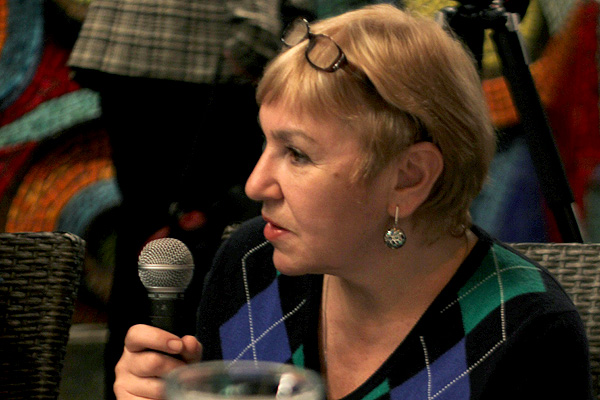
I would suggest not taking this law hastily, without examination. The fact that "in the Schuher mode" will be paid one hundred thousand to someone will not solve the problem!
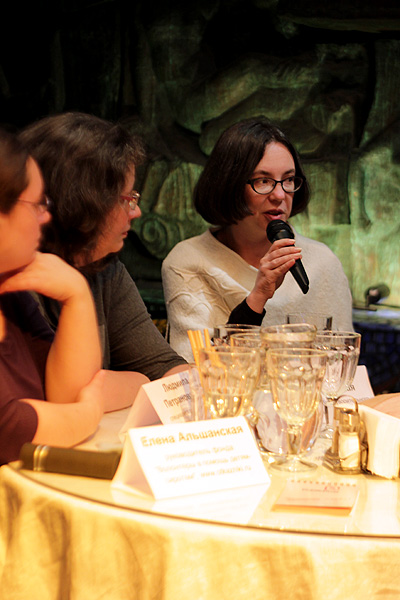
20:31 Elena Alshanskaya, Head of the Volunteers Charitable Fund to help orphans "
One -time handouts of the situation do not change. Even the foster family who takes a disabled child falls into public condemnation. The Moscow metro, for example, is not equipped with a disabled person at all.
20:30
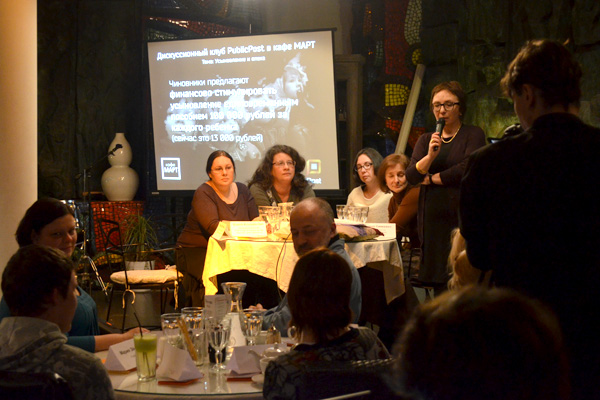
20:26
Elena Alshanskaya believes that this problem cannot be solved by fiscal ways. The only solution to the problem of orphanhood, especially the orphanage of people with disabilities, is prevention. Everything else is "sweeping dust." And these 100 thousand should be given to a biological family, by and large, who thinks, leave this disabled child or give it to a shelter.
20:19
Elena Fanailova said that yesterday it became known about the "relief" for the Russian adoptive parents. A decision was made to extend the shelf life of documents from three to six months, adoptive parents do not need to provide a certificate of housing (unwritten can also adopt). They also promise financial incentives for those who decide to adopt disabled people and children over 10 years old - they will be paid 100 thousand rubles.
Lyudmila Petranovskaya believes that despite this, there are no systemic changes.
20:16
The discussion is Elena Fanailova and Publicpost journalist Maria Aismont.
January 29 at 20:00 began the first meeting of the PublicPost discussion club at the March cafe. The focus is the state campaign to stimulate the adoption of orphans by Russian citizens.