
Translated material
A prison of a special regime
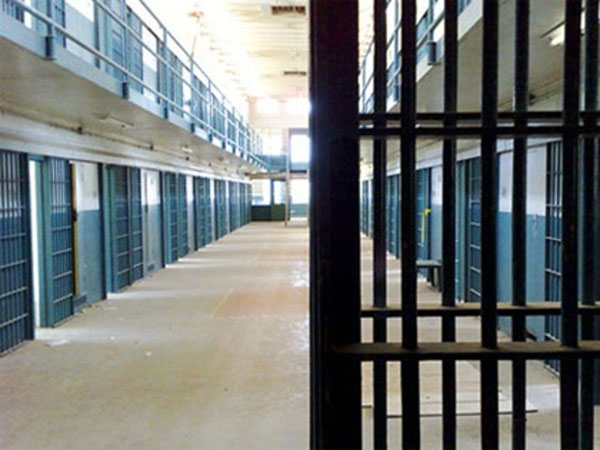
In the Krasnoyarsk Territory this spring, a special regime prison will begin work. The institution, located in the city of Yeniseisk, will contain convicts for especially serious crimes, including terrorists and extremists. The head of the Krasnoyarsk Directorate of the FSIN Vladimir Shaeshnikov admitted that “it is not great honor to have such an institution in the territory of the region”, however, he promised to ensure his work.
 Vladimir Shaeshnikov. Photo: krsk.sibnovosti.ru
On the basis of the SIZO-2 in Yeniseisk, a special building has already been equipped for a prison. It has all the conditions for conducting regime and educational events, a separate walking courtyard and its own video surveillance system.
For Russia, the prison is a fairly exotic type of punishment. Most prisoners are in colonies, which in Russia are divided into 4 classes. In the colony-settlement, which are mainly located in the country remote from the large cities of the northern and eastern regions, the prisoners are not even protected, but are under the “supervision of the administration”. Such colonies, in theory, should save the first -time deprivation from incorporation into the criminal community, since life in them, in fact, is weakly different from life in remote villages.
Next are colonies of general and strict regime. The prisoners are worst in the colonies of a special regime - there are only five of them throughout the country and it is believed that it is impossible to escape from there. About such colonies as the “White Swan” in Solikamsk or the “polar owl” in the Northern Urals in the criminal world are composed of peculiar legends.
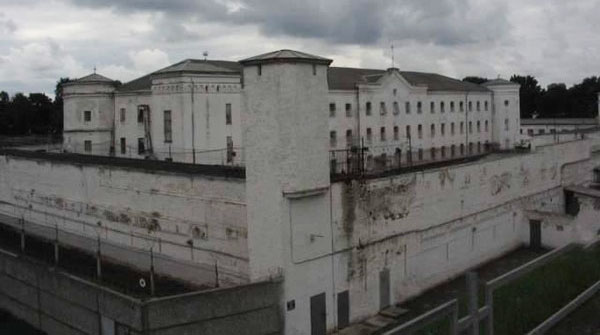 Colony "White Swan"
Prison -type institutions in Russia are investigative insulators, or pre -trial detention centers. People in them do not live in barracks, but in the cells, and the rest of the conditions is noticeably worse than in ordinary colonies, and even more so in the colonies-settlements. In a pre -trial detention center, citizens stay over them during the trial, and after the sentence they are sent to the place of imprisonment. According to the Russian law, the term of stay in the pre -trial detention center is deducted from the term of imprisonment, but the conditions in them are so worse than in the middle colony that some human rights activists urge to equate one day in a pre -trial detention center by 1.5 days in the colony.
The pre -trial detention center is the only FSIN institutions that are located in the center of large cities and, thus, are the "windows" of the Russian penitentiary system. It is worth recognizing that the anti -advertising function is not performed perfectly. As a rule, pre -trial detention centers are located in prisons, which were built in the XVIII, XIX, rarely at the beginning of the XX centuries. From the windows of neighboring houses, you can sometimes observe what is happening behind the heavy walls, in what ways there is a prison mail, sometimes shouting prisoners with relatives who came to their windows are heard.
Some prisons are so old that they are rather suitable for the museum than for keeping people. For example, Emelian Pugachev was in the capital Butyrka at one time, and Mayakovsky began to write poetry there, and now the Public Chamber proposes to organize a museum in Butyrka. The new prison in Yeniseisk, by the way, is only a hundred years younger than a hundred years-its building was built in 1863-65, that is, it will soon turn 140 years old.
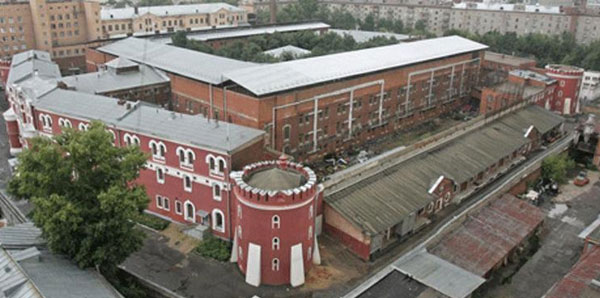 Butyrskaya prison. Photo: pda.sledcom.ru
For now, in Russia, unlike the colonies, there are few prisons. The Yenisei will be the eighth throughout the country and the second throughout Siberia and the Far East. The FSIN hopes that by sending dangerous recidivists to prisons, he will be able to limit the influence of criminal authorities - unlike the colonies, communications between prisoners are very difficult in prisons.
There are general and strict modes in prisons. In general regime institutions, prisoners are allowed to receive two parcels and two parcels for a year, as well as have two short -term and two long dates. In prisoners in a maximum security prison, one package and one parcel and only two short -term dates per year are allowed. The daily routine provides for a walk, but the yard is arranged in such a way that the light does not penetrate there, so the prisoners refuse this right.
The Criminal Executive Code of Russia involves the creation of arrest houses. These are complete analogues of prisons with the exception that people are serving not long time in them, but small sentences, up to several months of arrest. Moreover, arrest houses should be in the same region where the court took place. The FSIN, however, has not yet begun the creation of arrest houses, despite loud statements.
 Valery Abramkin
The human rights activist and fighter for the rights of prisoners Valery Abramkin, who died from the tuberculosis received in the Soviet colonies on January 25, 2013, believed that in Russia it was necessary to treat the prisoners humanly and understand from the problem and needs, if only because of various causes in the hands of the penitentiary system, not marginals, but absolutely ordinary people.
“When I was in jail, the most amazing impression was that, seeing the people with whom I sat for the first year, I clearly understood that if in some random way to change those who are in prison, with those who walk in the wild, no one would notice this in prison or in the wild. When I already reached a strict regime, I realized that the villains, real villains, are much more in the wild, ”Abramkin said during his lecture, which was given as part of the Polit.ru cycle in 2005.
Despite the terrible name - a prison for extremists and terrorists - convicts exclusively for extremism in the Yenisei prison are unlikely to get. In accordance with the Criminal Executive Code, prison may contain convicts for more than 5 years for committing especially serious crimes; Convicts for a particularly dangerous relapse or malicious violators of the regime in the colony. The largest punishment for extremism is provided for in paragraph 3 of Article 282.1 of the Criminal Code - the participation or creation of an extremist community using an official position - provides for up to six years in prison, which means it is considered not a particularly serious, but simply a serious crime.
So dissatisfied with the existing government can continue to scold the “strange economic model” and receive 120 hours of correctional labor for this, and not five years of the Yenisei prison.