
Translated material
Town & City: A few words about the provincial style
Today, dear readers and friends, I will puzzle myself and you with a question regarding the stylproductory - we will try to figure out how he differs from my capital's fellow and is this feature so terrible as it is in glossy blogs/magazines. Moreover, not so long ago, cinema brought a great example to my threshold.
When in 2011, the SHAREN DAVIS costume artist had to create costumes for the movie "The Help", which takes place in the 60s in the provincial town of Jackson of the state of Mississippi, she encountered the double difficulty of the task.
Firstly, how to choose costumes that reflect both the spirit of the era and the place of action? And secondly, how to act when, against the background, the costumes of the Mad Men series loom, also from the 60s, though with the capital's New York context?
According to Sharen herself, her first impulse was, like Mad Men artists, to use the samples seen in glossy magazines. But, leafing through Vogue releases over the years and comparing outfits with the available photographs of real women from the state remote from the NYC, the first difference between the provincial manner of dressing from the capital's capital surfaced to the surface. It turned out that it was remote from the center, the fashion of the American suburbs for several seasons clearly lagged behind what glossy offered its readers (and what looked harmonious on active residents of New York, with whom we are faced with Mad Men). Plus, even in the 60s, the models presented in the Vouge seemed too much Fashion-forward to look realistic on a breeding house or on a lunch in the garden taking place in Jackson, Mississippi. Therefore, the actual “VOG” was postponed aside - it was replaced by earlier editions, as well as magazines as Seventeen, aimed at a younger (and therefore less sophisticated) audience.
Let's see what happened as a result. And how it echoes the more metropolitan style of Mad Men.
Let's start with the main character of The Help, Eugene, which differs from all her Jackson goods in that she is a working girl-a writer-writer who is in no hurry to marry. It is interesting that in order to highlight this character, stylists used techniques already known to those who carefully followed another girl-childbringer (from Mad Men):
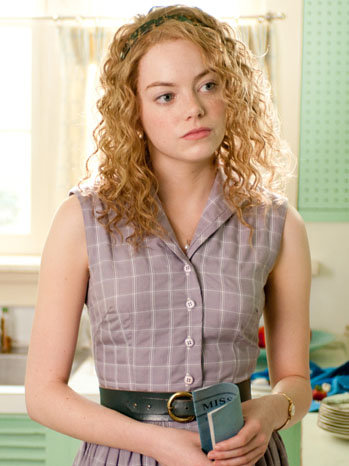
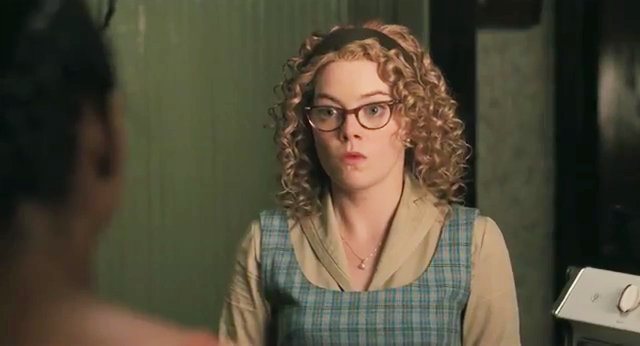
Probably, a cell that makes a dress like a form of students of a Catholic college as a symbol of the working intellectual will remain outside the division of the style into metropolitan and provincial.
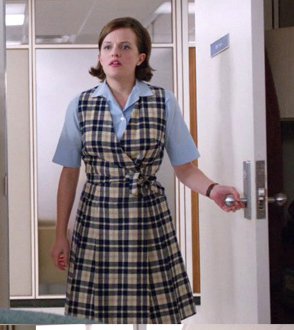
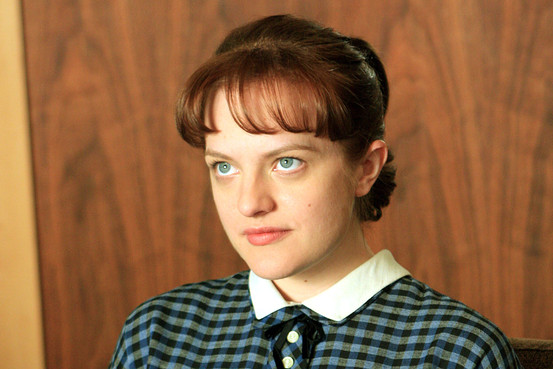
And in addition to the dresses, naughty curls, looking against the background of prolonged "helmets" of provincial ladies peak non-conformism:
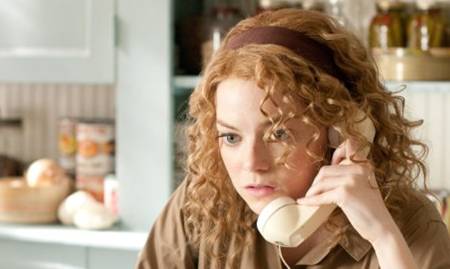
And if Evgenia with her outfits more or less manages to remain with his outfits beyond the line of good and the evil of the Azdas on the “city” and “Gorodishko”, then another fate awaits its local goods. The first violin here plays, of course, Hilly:
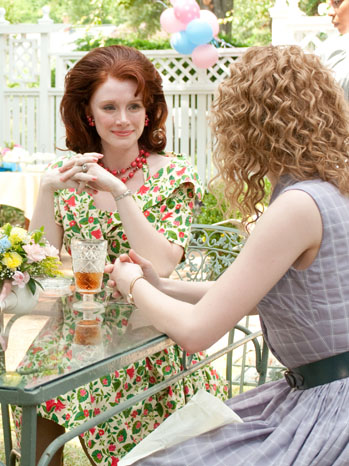
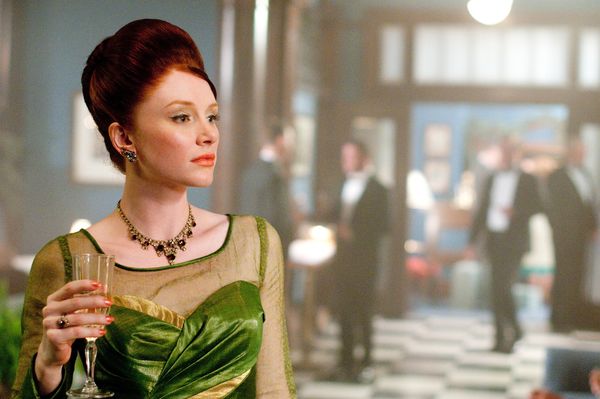
In all images, Hilly's nosa mosquito will not flow. In the literal sense of the word: the drawing of the dress corresponds to the necklace, which corresponds to the earrings that correspond to the nails on the nails, which corresponds to ... and all this enchanting matchy-Match just gives out that the girl is not from the capital.
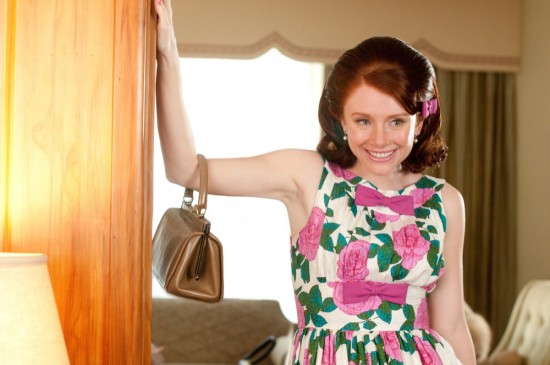
Hilly is trying very hard to look good, to match his own idea about aesthetics. And she does not hide it! All efforts are to choose a fabric for a dress corresponding to the shade of hair, then choose or order exactly the corresponding accessories, etc., reflects all these efforts. And where efforts are visible, there is no Effortless Chic - there is no feeling that the girl dressed and went in 5 minutes, everything is too hard, too strained.
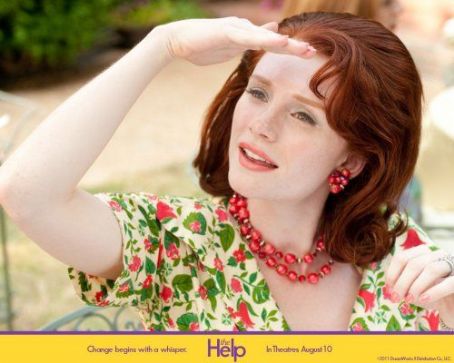
Even a too accurate hit of the tissue shade into its color type is not that I advocated for the complete neglect of it, but there is never a good one: it is never good:
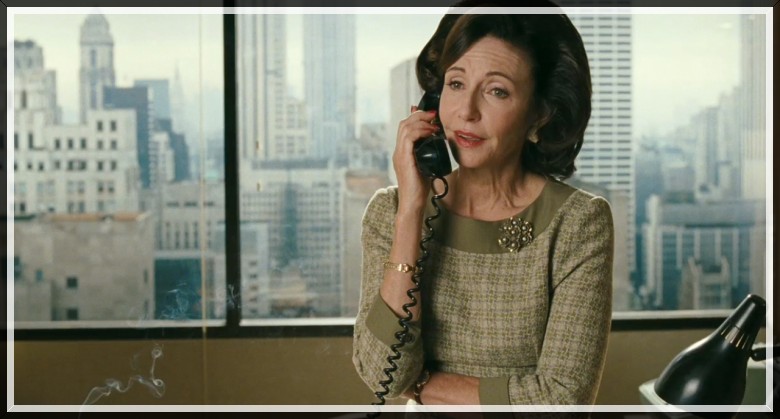
As a counterweight, one can cite an outfit of the magazine editor in the film (of course, the city lady). Here, too, everything is accurately selected, everything corresponds, but there is no feeling that the outfit was gathering with hard work. Including this is accompanied by the lack of too bright shades in it, which are much more difficult to coordinate than neutral:
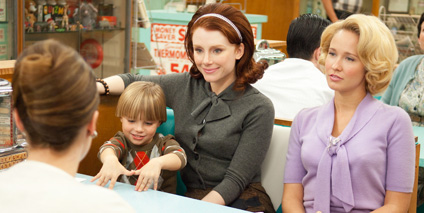
And here is the example of the Hilly heil herself, in which she manages to look much less strained:
In his desire to be ultrasoperclassical and Ladylike Hilly resembles one heroine Mad Men-also “locked” (albeit not of his own free will) in an American suburb, with a clear lag behind the advanced style of New York:
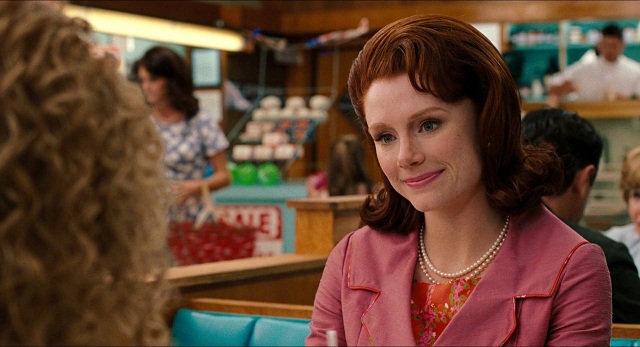
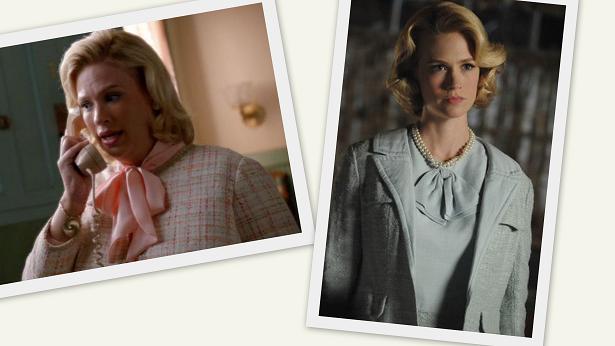
While the 60s business beauties put aside flower dresses and switched to more active geometric prints living in the suburbs of Betty continued Florals, but the news of new prints will reach Hilly only after several seasons:
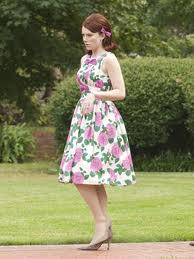
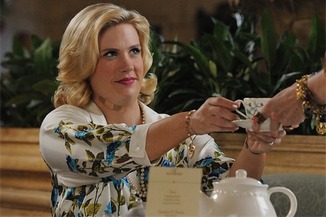
The last heroine of this Marlezon ballet is a fan of Merilin Monroe Silia:
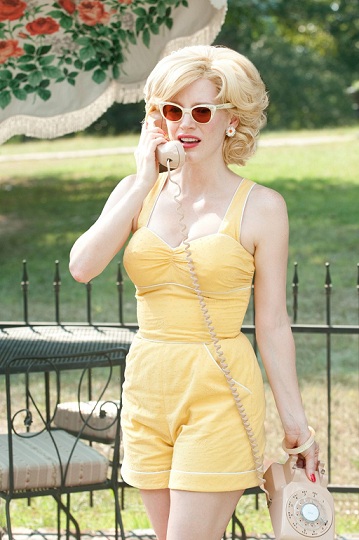
Silia interprets his love for Monroe in outfits, and he tries to do this as literally as possible:
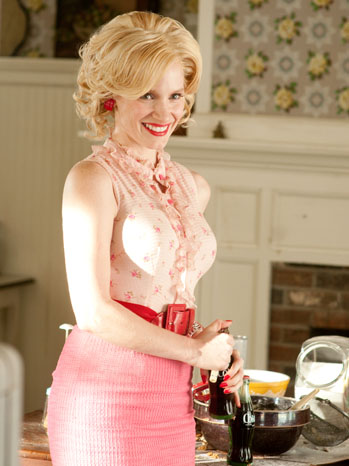
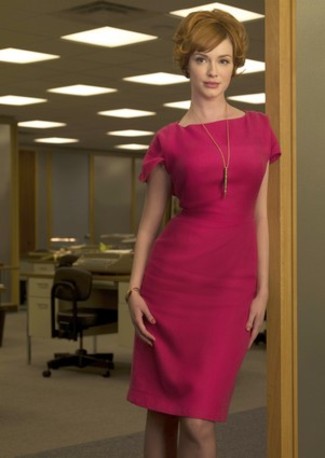
And the literality is largely consonant with the Matchy-Match principle-it also has too much effort (which is capable of depriving the image of chic). In Mad Men, a fan of blond diva is also available
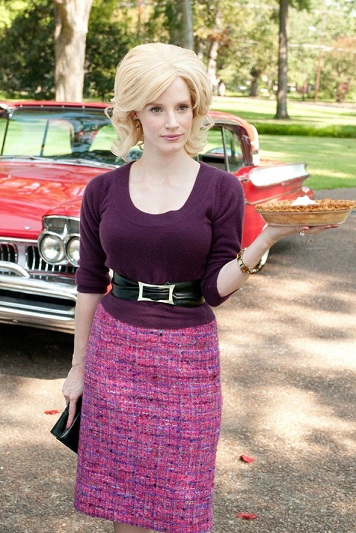
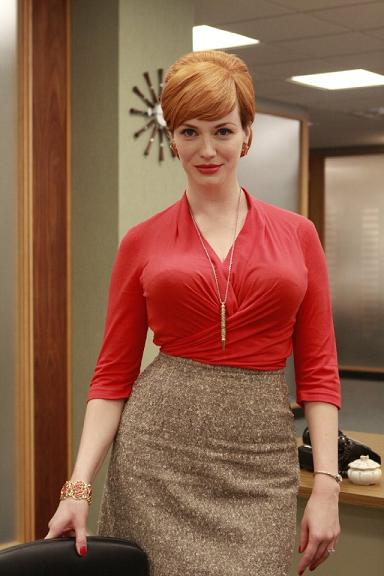
But in most cases, its interpretation is more elegant and sophisticated, and therefore less provincial:
That's it for today. Stay tuned ...