
Translated material
Doesn't admit guilt and doesn't sing
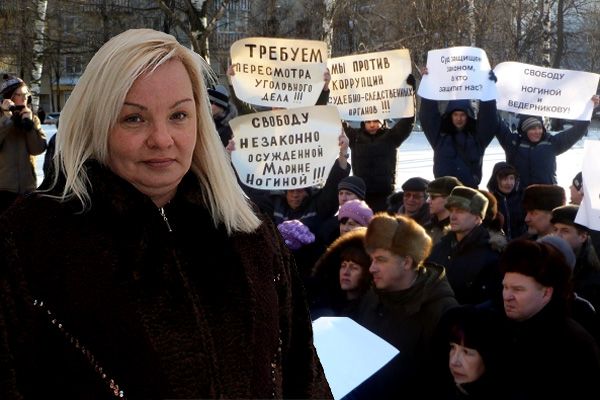
Marina Nogina is 45 years old. She can't dance and sings poorly. She does not act in amateur films and is sure that she will not be able to recite a poem beautifully with expression. But the main thing is that throughout the year and a half of his stay in the colony, the driver of the trolleybus on route 1 from Kirov categorically refuses to admit his guilt in the death of a teenage girl in an accident. Therefore, next week the court will most likely again deny parole to the mother of two children. She will refuse, despite her obvious non-danger to society, despite her good behavior in the colony, despite the fact that most lawyers and experts familiar with her case are convinced of her complete innocence.

On January 23, the Federal Penitentiary Service commission already issued its verdict: Nogina is not ready to be released . As reported by the Kirov media - for the fact that, having served more than half of her sentence, she still does not admit her guilt. And on Friday - after the commission’s decision - the prisoner had her first violation. As her lawyer Valery Rylov says, the woman’s blood pressure rose to 175, and while waiting for the doctor, she allowed herself to lie on the bed after the announcement of the rise.
There are few prisoners in Russia for whom they fought so long and hard. Not only lawyers and journalists fought, not only human rights activists and Blue Bucket activists, not only employees of the trolleybus depot where she worked as a driver, but also dozens of people who did not personally know her.
“You ask, how did I end up in this case? The answer is by accident,” says Nadezhda Devyatykh, one of the most active voluntary defenders of the convicted woman. “We didn’t even know Marina. They asked me to write some kind of “petition”, I wrote it. And then off we went, and since then I haven’t been able to stop.” Another woman who does not know Nogina cannot stop either - once a month she comes to the trolleybus depot and transfers part of her pension, each time dividing the amount into two parts: one for Marina in the colony, the other for her remaining daughters. Sometimes, trolleybus drivers say, they receive money and greetings for Marina from passengers.
***
13-year-old Alisa Suvorova died on January 20, 2011, while crossing the road at the intersection of Karl Marx and Militseiskaya streets. The culprit of the accident fled the scene, an interception plan was announced, but even then rumors spread throughout the city that the killer driver was not an ordinary person. This was the only way to explain the appearance of so many high police officers and people in civilian clothes at the scene of the accident. There were rumors about a silver jeep, and about Masha Gaidar - at that time the deputy governor of Belykh - whose car was allegedly somehow involved in the fatal accident. However, no evidence of Gaidar’s participation in this accident has yet been found, and she herself was leaving the city for the region that day.
When a week later law enforcement agencies announced an official suspect - trolleybus No. 1 driver Marina Nogina - few believed in her guilt. It was highly doubtful that a woman and mother of two children could, having hit a child to death, calmly drive on and several more times then just as calmly pass along the route of the accident site. Moreover, very soon stories appeared in the press about the pressure that was put on her during interrogation.
“Now two years have passed, I don’t remember verbatim what they told me, I then... “We haven’t broken people like that yet, you’re lying,” they mostly pointed out physical disabilities: “Do you live in such an area... Do you have a husband?” I say: “No.” “Well, of course, you’re so fat, what kind of husband?” They said: “We’ll lock you up anyway (we’ll put you in prison - editor’s note)” - this word was new to me then, I kept thinking: where should I go? will they close?
The investigation into the case was conducted extremely poorly. The verdict does not contain an exact description of the mechanism of the collision, which is mandatory for cases of road accidents, on which the verification of the entire version of the prosecution depended. Already during the trial, the judge had to change the version of the investigation that the girl was crushed by the rear wheel of the trolleybus, to the version that she was hit by the front wheel, since the size of the rear wheel of the trolleybus - 66 cm - did not coincide with the dimensions recorded on the girl’s body (less than 50 cm). And even with the child’s height of 145 cm, if she got hit by the rear wheel, she would have had completely different injuries. However, on the front right wheel of the trolleybus, no characteristic traces of a person’s crossing were found or recorded.
There is also a contradiction in the case that has not been eliminated by the investigation: according to investigator Bushkov, the collision occurred from left to right, and according to forensic expert Mikheeva, from right to left, that is, it turns out that the trolleybus was traveling in the exact opposite direction.
Many questions also arise about the main witness for the prosecution - the driver of the truck crane, who, if he really was on the spot and saw the girl get hit by a trolleybus, for some reason calmly drove by. In the first hours, he drew a trolleybus moving with a turn (his drawing is in the file). Then, a few days later, his trolleybus went straight. He later told reporters that he did not see where the trolleybus was coming from. And this is the main and only eyewitness of the collision - the other witnesses approached the child after the accident. (A detailed description of all the inconsistencies in the investigation is in the investigation by Victoria Ivleva in Novaya Gazeta, after which Moscow experts became involved in the trolleybus driver’s case.)
***
Nogina went to serve her sentence of two and a half years in a settlement colony, but the fight for her continued. Activists from the “Blue Buckets” and the public organization “Justice” joined the investigation of the accident on Militseiskaya. Expert Yuriy Antipov, the author of the report on the accident on Leninsky Prospekt involving the car of the vice-president of Lukoil , analyzed the materials in the Nogina case and concluded that the trolleybus could not have hit the girl, but a passenger car, jeep or crossover could have done it.
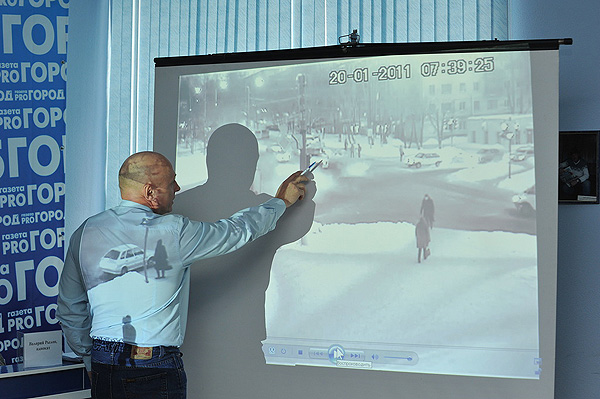

To obtain another independent expert opinion, Blue Bucket activists ordered an examination from the forensic medical center of the Ministry of Defense. Concerned citizens paid for it out of their pockets: in just over two weeks, 50 people chipped in for more than 60 thousand rubles. The state expert institution also concluded that Alisa Suvorova could not have been hit by a trolleybus, but was hit by a car that had a hood.

The conclusions of both examinations were solemnly presented to the public at a press conference in Kirov. Local newspapers came out the next day with the headlines “Blue buckets are saving Kirov from lawlessness,” “The trolleybus did not hit the girl!” , “The trolleybus driver is innocent,” and lawyer Valery Rylov, inspired by the newly discovered circumstances, went to write a complaint to the Supreme Court. Then it seemed to many that the case was inevitably heading for a review. But no review happened. “We met an absolutely inadequate reaction. from the security forces, to whom we showed the results of the examination,” wrote Blue Buckets coordinator Pyotr Shkumatov in his blog . “It is quite obvious that the trolleybus could not have caused the damage to the girl that occurred.” This absolutely excludes Marina Nogina’s guilt in this matter. But we were told: “Well, sorry, we can’t do anything.”
The Supreme Court rejected the lawyer’s complaint, and after some time the local court denied Nogina herself a parole: since “the mere fact of serving ⅓ of the term, the absence of violations and participation in educational activities, which, by virtue of the norms of penal legislation, is the responsibility of the convicted person, is not an unconditional basis for granting a request for parole,” an early release would be “premature and unfounded.” Marina later admitted to me that she did not expect a refusal: “I thought that I had fulfilled my mission: they convicted me and that’s it. Everyone knows that I didn’t run over the girl. What’s the point of keeping me here? I don’t understand this system well. Valera (lawyer Valery Rylov - editor’s note) believes that this is because I did not admit guilt, and that they are afraid that I will speak out and scream.”
Kirov residents began to perform and shout. In February 2012, a rally in defense of the innocently convicted was held in front of the regional administration building, attracting about a hundred people. Human rights issues have never brought together more people on the streets of Vyatka, a population of half a million. Most of the protesters were colleagues and friends of Marina Nogina. Passing trolleybuses honked their horns to those gathered in the cold as a sign of solidarity.

Photo: nabludatel.ru
Governor Nikita Belykh did not come out to the audience then, explaining this by the lack of an invitation and being very busy. And the day before I had a conversation with him, in which Nikita Yuryevich assured that he was aware of Marina’s case and was very sympathetic, but could not interfere, since there were no legal grounds for the governor to influence law enforcement agencies.
To prove the correctness of the governor’s words, his adviser Nikolai Votinov was soon sentenced and imprisoned for 3 years, and recently Belykh himself was summoned for questioning and searches were carried out on him.
Later, after a meeting with Blue Bucket activists, the governor of the Kirov region still promised to help with Nogina’s case - to send a personal request to law enforcement agencies. Apparently, he really can't do more.
***
It takes no more than an hour to drive from Kirov to the small town of Kalachigi, where Marina Nogina is serving her sentence, unless you miss the turn to Nizhneivkino. There is no particular beauty in the local landscape, but you can’t call it repulsive: snow-covered trees, icy roads, rickety wooden houses and more solid houses made of gray brick, rare cars and rare pedestrians. If it were not for the fence with barbed wire and the checkpoint, a casual visitor would hardly understand where the village ends and the correctional facility begins.
A settlement colony differs from a general regime colony: here you do not have to march in formation, you can wear your own clothes rather than a special uniform, and there are no restrictions on visits. Some prisoners go to work outside the institution in the village - in the summer Marina worked in a cabbage field, and at the end of the season she switched to making plastic bags. The administration is proud that after concluding an agreement with the company, all convicts were given the opportunity to work.
The colony has its own puppet theater: prisoners sew their own dolls and sometimes go to a nearby orphanage for performances. There are, of course, amateur performances: women sing and dance; they say the gypsies do it especially well. It has its own cable television studio - prisoner Nikolai Strelkov (both men and women are kept in the penal colony) makes amateur films about convicts, and then shows these films on the local cable channel.
“The most important thing is to find something to do here,” says Irina Kolchina, press secretary of the Federal Penitentiary Service for the Kirov Region. She is present during our conversation with Nogina. — When a person not only works, but also participates in public life, time passes faster. Who finds themselves in what?
Marina Nogina did not find herself in any form of amateur performance: “I don’t know how to sing, I don’t know how to dance, so I won’t go on stage. There are girls - they have good voices, it’s nice to listen to them. Why should we go out and sing? All our ears will be plugged.”
- Maybe you read poetry? - Irina offers a way out of the situation.
“I don’t recite,” Marina answers quietly but firmly.
The conversation turns to the regime and conditions of detention. The conditions are acceptable, the prisoner says. 6 people in a room, there is a doctor and a nurse on the territory of the colony, relatives and friends coming on dates can stay at a hotel in the village, telephone calls using cards are allowed without restrictions. Neighbours? Here everyone is on their own. “People here are not at all like they are in the wild, they are very different. They are aggressive, they hang on to every word, almost all of them have inflated egos, and they are on the defensive all the time.” Nogina says to herself: “My character has deteriorated. I stopped trusting people.”
“They (prisoners - editor’s note) can leave the territory of the colony,” says the press secretary of the Kirov Federal Penitentiary Service.
“Only for work,” Marina corrects.
— They can go to the store.
“45 minutes are given,” Nogina clarifies.
“...to the store,” continues Irina Kolchina. - Where else can you go?
“We can’t go anywhere else.”
- Well, in principle, where should we go? - Irina gives up. Her attempts to get Marina to see at least something positive in the correctional facility lead nowhere. — If, excuse me, you still go everywhere, then it will be a sanatorium.
A little over a year ago, 38-year-old Vladimir Smyshlyaev, who was appointed head of the colony, makes it clear that the colony is offended that the prisoner does not show initiative and leads a secluded lifestyle.
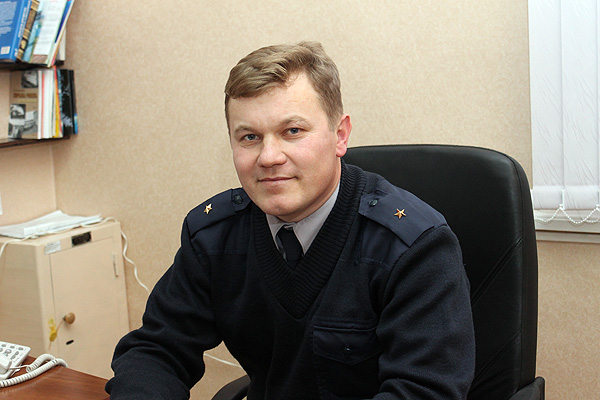
“Perhaps she has withdrawn because she is offended by these judicial authorities, and thinks that the whole system is rotten from top to bottom. But people are different everywhere. She is a person, maybe a good one in life. She has many friends, they constantly come here in droves on dates, bring packages. And I am a little indignant: why is she behaving so openly here?! It turns out that she behaved differently in freedom, since she has so many friends?” And after a pause, he actually answers his own question: “How would you feel? You lived and lived, you lived to be 40 years old, and... As they say, don’t swear off prison or poverty.”
— When people come to you, do you study their affairs?
- Naturally. The convicts come in, introduce themselves, and their personal files are examined. They are given instructions on what rights they have, what rights they do not have, and what restrictions exist.
— When you read cases, do you ever get the feeling that a person is imprisoned for something that he did not commit?
“For us, the court’s decision is an axiom that does not need to be proven. Guilty or not guilty - there is a court decision. I have no doubt whether Nogina is guilty or not. I don't discuss this topic. You can talk about this like the media.
“But aren’t you trying to help ensure that people whose guilt is in doubt leave here as quickly as possible?”
- This is the right to parole, but this does not mean that you should certainly be released. It's like a bonus. Are you given a bonus just like that or because you are a specialist and bring income to the company?
“But whether I receive a bonus or not does not determine whether I will be in prison or free.”
“I always tell convicts: prepare yourself for the end of your sentence.” So that when the court refuses, you would be mentally prepared.
Perhaps Nogina also heard these words. But she was never able to prepare for the fact that she might be denied parole a second time. Her lawyer was not prepared for this, her friends and her volunteer assistants were not prepared for this. All the participants in the fight for Nogina, with whom I spoke recently, spoke of Marina’s release on parole almost as a fait accompli. Moreover, recently 10,000 people signed up on the website change.org for an appeal initiated by Novaya Gazeta journalist Victoria Ivleva to the Chairman of the Investigative Committee, Alexander Bastrykin, demanding a review of the case.
The decision of the commission and the first penalty, which appeared exactly before the court hearing on February 7, make the chances that Marina will be released negligible. Why the correctional facility administration changed its mind so suddenly is a mystery. After all, for the first time they did not object to the early release of their ward.
“We, of course, thought that we would be going home now,” says Nogina’s lawyer Valery Rylov. “And the only conclusion I can come to from what is happening is that the man who killed Alisa Suvorova got nervous and is trying through the FSIN to force Marina to admit guilt. And if he has access to the FSIN, then we can assume that this is a person from the authorities. Most likely, law enforcement.”