
Translated material
"I wanted to protect Carroll"
Nina Demurova wrote a book about Lewis Carroll, the author of the “canonical” translation of Alice's Adventures in Wonders. The New Times talked with her about a trip to India, about a crazy hatchman, about life principles and about the principles of translation
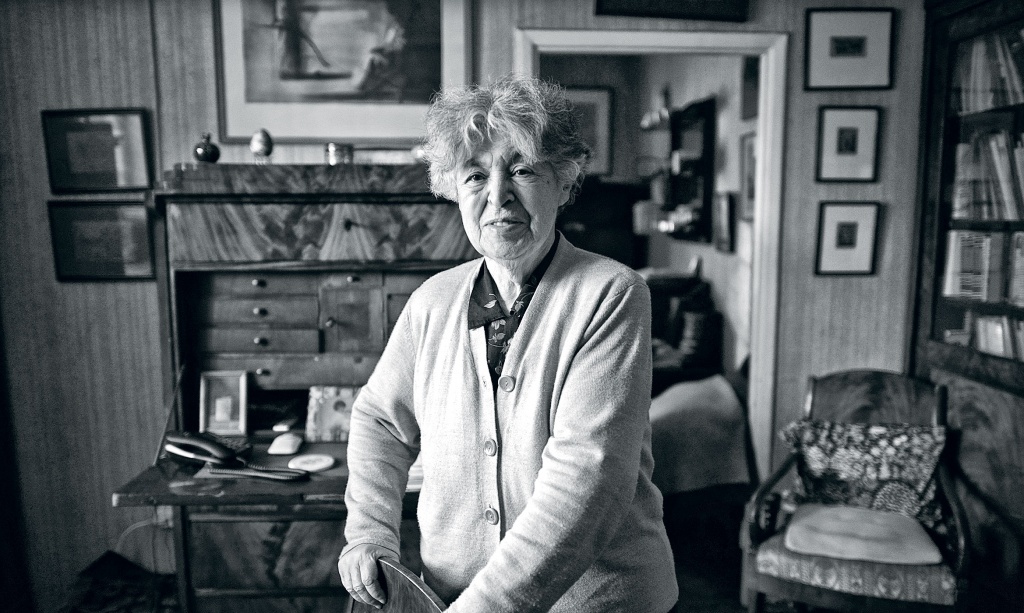
Nina Mikhailovna Demurova (born in 1930) - literary critic, translator from English. Lewis Carroll's work specialist. The author of the translations "Alice in the Wonderland" and "Alice in the Zlavrka." She also translated the works of Chesterton, Poe, Dickens, J. M. Barry, Appaday and others. Honorary member of the Lewis Carroll Society in England and the USA Your love of children's English literature - “Rod from childhood”? I grew up in a family where they loved reading. Mom loved poetry very much, knew the poets of the Silver Age well, read it by heart, she had an album, as it should be in those days. Dad also loved literature, Pushkin and Lermontov were his beloved poets. Especially Lermontov: he wrote about Georgia, and dad grew up in Tbilisi, in a Georgian family. Dad had such a theory that some books should be read in the summer, while others should be read in winter. In the summer, he always re -read Dickens, especially the “Notes of the Pickwick Club”, which he admired, and Lev Tolstoy, “War and Peace” was his favorite winter reading. I intercepted some habits from him-at nine years I tried to read the Notes of the Pickwick Club. Of course, I did not understand every second line - who are “mission”, “Mr.”, “jury”, “alibi” ... But I think that my love for English literature began with this. And in the end she entered the Moscow State University, at the English department. How did your parents and environment perceive Soviet reality? Parents cherished us - there were no conversations with us. When Stalin died, my mother was silent, but of course we were very happy - by that time I had already graduated from the university and understood what was happening. With us, our friends were arrested, for example, Simon Markish, the son of the famous Jewish poet Perez Markish. First, the father was arrested, then the whole family, they were sent to Kazakhstan, not allowing Simon to finish his studies, although he was in the last, fifth year. We lived on Smolenskaya Square and quite often walked around Arbat; There, I remember, old women often met “from the former”, as they were called. I remember how it went somewhere, and in front of me is an elderly woman who muttered: “They will come in the Black Vorona, in the Black Vorona ...” The country of Wonders
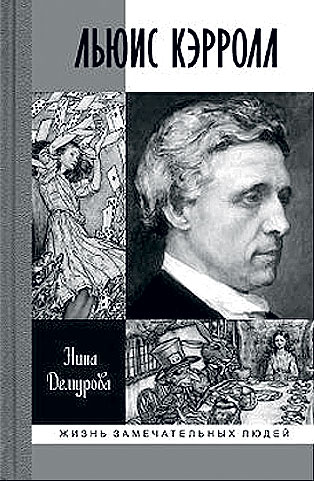
Nina Demurova’s book about Lewis Carroll published in the series “Life of wonderful people”. 2013. In those days, going to India was probably almost how to get to the country of Wonders? It was after the death of Stalin, in 1956. I was accidentally invited to work on a joint Soviet-Indian film about Athanasius Nikitin, the first Russian to visit India and, upon his return, wrote the book “Walking for the Three Seas”. A very expressive book. The script was invited to write Maria Nikolaevna Smirnova, who was then a famous screenwriter thanks to the film "Rural Teacher", laureate of the Stalin Prize. And I was friendly with her daughter - we studied in graduate school together, I visited them at home and even taught her English a little. When Maria Nikolaevna was offered to go to India, accompanied by an official translator, she said: “Why should I? Will knock on me. So I will take Nina better. ” And it turned out! It was wonderful - I visited India, spoke English, translated endlessly. We arrived at a very interesting time, shortly after India gained independence. Meet with Javaharlal Ner. We were accepted as if we were the first Russians since the time of Athanasius Nikitin: people came to our hotel, brought flowers and treats. We met Raja Kapur, his father Protkhviraj Kapur, who was a famous actor and creator of the Indian theater, with the wonderful writer R.K. Narayan, whom I later translated. A lot of things managed to see, we drove along the route of Nikitin. But my main impression is a feeling of amazing lightness that I experienced there. Later, I realized that the pressure that we felt in the Soviet Union ourselves, perhaps, without realizing, suddenly disappeared when we saw these good faces, these huge eyes, police officers who sought to help us. This feeling of lightness I remember very well. Did you manage to go to Carroll's homeland in Soviet times? I have been invited to England at the conference more than once - after all, I wrote a lot about English literature, but I have never been released. Our party organization opposed this. The first time I went to England in 1988. You were not a member of the CPSU? No no. I discouraged in every possible way, said that I was not ready. With the Bulgarian-English and who decided to publish Alice? This book, it would seem, does not fit well into the Soviet children's literary canon. It was a happy chance - Alice did not fall into the hands of Detgiz, did not pass "in instances." In Soviet times, there was such an organization, “intercronus”, which ordered the translations of Czech, Bulgarian and other classics to our brothers from the social camp. Once, some official from the intercnigi looked at the list of books published by Sofia-Press, saw Lewis Carroll's book and ordered the translation of Alice from the Bulgarian language. The director of Sofia-Press Angel Stoyanov wrote a very polite answer that this book should be translated from English. But six months later, the order came again - and again from the Bulgarian! Then the angel realized that he would have to look for a translator from English on his own. By a happy coincidence, I turned out to be, and the book was published in Bulgaria. "
The translator decided to replace Wilhelm by the conqueror with Napoleon, and as a result, the mouse talks for a long time about "our victory at Borodino"
“But by that time there were other translations. And not one. Indeed, there were old translations, but they were made on the principle of Russification - the English realities were replaced by the Russians. The first anonymous translation of“ Alice ”under the name“ Sonya in the Kingdom of Diva ”was published in 1879, during the life of Carroll. The translator (I think that it was a translator - then children were translated by the unknown) The Russian children of the conqueror, who is mentioned by Alice, on Napoleon, and as a result, the mouse in this translation tells about “our victory at Borodino.” I think that Russian children laughed, but still these texts were too far from the English original. Yakhnin, let's say, very rudely translated: he wanted to be funny, inserted his jokes, which did not look like Carroll very much: he did not engage in gross laughter, he has more and more subtly. Zakhoder also had his own intonation-such an October-pioneer enthusiasm. This, in my opinion, is absolutely not necessary. I would like to convey the author’s style, its construction of phrases, intonation. I myself did not translate poetry and worked with Dina Oryol, a wonderful translator (niece of Marshak). We came up with such a move: Carroll parodied the poems well known in England, and we decided that we would write parodies into English poems well known in our country thanks to the translations of Marshak and Chukovsky. Remember: “Here is the house that Jack built”? We had: “Here is the house that the beetle built” - well, and so on. Gloomy times of the book about the girl Alice for the Victorian era - is the phenomenon extraordinary? In the time of Carroll, children's books were different. In children's literature, moralizing reading was very common. There were almost no such funny books - nothing like Alice. When the book came out, the critics were at first at a loss, someone even suggested that the author is crazy. But they quickly changed their minds, and enthusiastic reviews appeared. It does not seem to you that the educational effect is sometimes easier to achieve, avoiding boring and reflective intonation? For example, Carlson influenced me much more than Tolstoy's children's stories. In Alice, of course, there is an educational moment, although you can’t seize it directly. I think that this book was very influenced by the British, in particular, their sense of humor. Now your book is about Carroll. Why did you decide to write it? I did a lot of Carroll - I read his correspondence, diaries, memories of friends and colleagues, children with whom he was friendly. As a result, I created the image of a very special writer and man. I wanted to tell about him and protect him. We are now very fashionable for all sorts of indigenous accusations, in particular, in pedophilia. I wanted to protect Carroll from them, who had nothing to do with these sins. He was a very pure and kind, and very religious man, wrote on theological topics, read sermons - after all, he was a priest. Now the wave is such - everyone is accused of pedophilia. Everywhere they want to find some dirt. And no one reads Lolita Nabokov as it must be read: the last chapter in which the hero repents and stigmatizes himself is important there. "
Nobody reads Lolita Nabokov as it must be read: the last chapter is important there, in which the hero repents and stigmatizes himself
“And what is your general feeling of what is happening in the country? I’m afraid that we are entering a very gloomy time. For example, we had a good education - they are sequentially destroyed in an effort to lick the people to obey. Preparing for our meeting, I re -read“ Alice ”, and much seemed to me even too relevant. For example, this is, for example, the Royal War. He is in prison, and the court will only begin to go to the future environment!