
Translated material
Former deputy prosecutor of the Moscow Region Ignatenko is charged
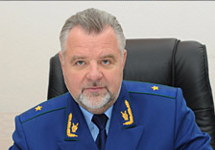
The former first deputy prosecutor of the Moscow Region Alexander Ignatenko was charged with the “gambling case”. This was reported by Interfax with reference to his lawyer Alexander Asnis. Ignatenko extradited on Thursday from Poland was interrogated in the TFR.
"In our opinion, procedural violations were charged under article 290 (bribe) of the Criminal Code, so Ignatenko refused to testify," Asnis said. According to him, Ignatenko was charged under an article on fraud. However, this case was stopped at the same time, as required by the Polish side, making a decision to issue a defendant to Russia. "We do not know the full amount of the charge, so he did not testify," the lawyer said.
On Friday, the Moscow City Court will consider the extension of the arrest of Ignatenko, RAPSI reports with reference to the head of the press service of the court Anna Usacheva. "The petition for the extension of Ignatenko was in custody to go to court," she said. Usacheva clarified that since he has been detained for more than 12 months, the investigation will be considered by the Moscow City Court, and not the district courts of Moscow.
Earlier, the lawyer of the ex-prosecutor Alexander Asnis told the publication that he did not see the grounds for the further maintenance of Ignatenko in custody. “All the defendants in this case have long been free,” said the defender. “Moreover, after the intervention of the Prosecutor General’s Office, the arrests of several accused in the case were already recognized as illegal.” Asnis noted that his client was in custody in Poland for more than a year, and the Moscow City Court should take this circumstance take into account.
Ignatenko in 2011 became a defendant in the case of underground casinos and was put on the international wanted list. He was detained on January 1 at the Polish resort of Zakopan. In February, the District Court of the city of Novova-Sonch allowed its extradition to Russia. The Court of Appeal in Krakow in March approved the decision. The final decision on extradition was made in the Ministry of Justice of Poland.
On January 24, the Prosecutor General did not approve the indictment and returned the "gambling" to the stage of the investigation. The head of the department, Yuri Chaika, agreed with the opinion of his deputy Viktor Grin that there was not enough evidence in the case. Earlier, Grin refused to sign an indictment in the case of former police officers Farit Temirgaliev and Mikhail Kulikov. They were accused of receiving a bribe of 75 thousand dollars from the organizers of the illegal gambling business. Deputy Prosecutor General did not find sufficient evidence that the defendants received money from the former head of the Department of the Moscow Regional Prophet Dmitry Urumov or entrepreneur Ivan Nazarov. The Investigative Committee appealed Green's refusal at the Seagull, but he supported the decision of his subordinate, the newspaper writes.
Earlier, according to the same circumstances, several former prosecutors near Moscow, accused of “roofing” of illegal gambling establishments for bribes, were returned to the Investigative Committee of the Investigative Committee of the Council of People's Commissars. In November, Grin filed an idea to the Supreme Court for the illegality of decisions on the arrest of the defendants of the case Oleg Sudakov, Kulikov and Temirgaliev. However, the court rejected the supervisory appeal. Earlier, the Armed Forces in a similar situation supported the Prosecutor General and recognized the arrest of three organizers of the underground gambling business.
In February 2011, a scandal with illegal gambling business flared up. Then the FSB said that the department, together with the investigators, discovered in the suburbs a large network of illegal casinos, which brought revenues from 5 to 10 million dollars a month to its owners. In total, ten employees of law enforcement agencies were arrested as part of the case, including former prosecutors of several districts of the Moscow Region. However, at present, Ignatenko remains the last detention of the defendants.