
Translated material
Vyacheslav Medvedev: The Internet that we feed
Vyacheslav Medvedev  Under the cap
 Under the cap
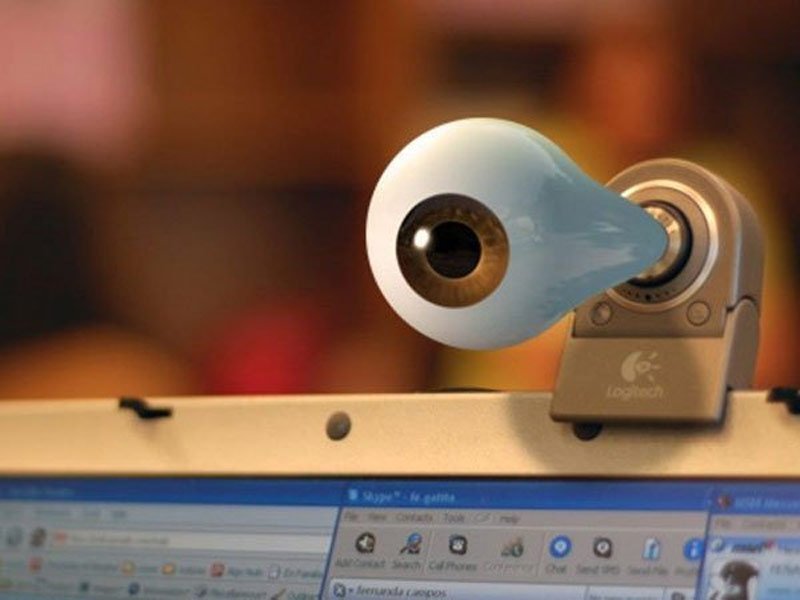
If you are paranoid, this does not mean that you are not following you.
In ancient times, there was a bike that in one of the licensing agreements at the end there was the phrase “The one who reads this agreement to the end will be paid $ 100,000”. It was also said that the reward was paid to the client only.
In real life, communicating with people, we subconsciously expect from them to comply with the same norms and logic, within the framework of which we act ourselves. And in the same way we behave at the computer - when installing and using programs, as well as on the Internet - when registering and working in services. Yes, of course, when installing programs and at the first entrance to the new service, we are offered to familiarize ourselves with a license agreement, as well as sometimes also with a confidentiality policy. But how many do this?
As a rule, when registering on many, many sites, we do not look subscribing to any user agreements and begin, without thinking about the consequences, to use the proposed services. We place personal information there, personal photographs, documents, contacts, projects not intended for other people's attention - all that we need for a daily convenient life in the modern society of the Internet.
We work in the office and at home, in transport and on business trips - information should always be available, everywhere and so that we do not make any efforts to receive it. Without thinking about any safety, we store all the documents you need for work on Google Docs, rent mailboxes in Gmail, develop new products using Google Code , communicate on Facebook ... Yandex.Disc, files@mail.ru , Google Drive - not to count the services that entangled us with free convenience.
And everything would be fine, but let's think - due to what are all these services profitable for their owners? Development, release of new versions, error correction, round -the -clock technical support of users around the world - why is the cheese that are lured by is free?
Will we open license agreements?
For example, take “ The conditions for using Google ” and read them from beginning to end.
“When working with our services, you allow us to use our personal information in accordance with Google's confidentiality policy ... Some of our services allow us to disseminate the content. Moreover, all intellectual property rights in relation to these materials remain with their owner. ”
In general, this is normal. We all leave information about ourselves (for example, when registering) and one way or another it is used to ensure access to the service. It’s not quite, however, it is clear that there is “spread the content”: where and among whom it is spreading? You can understand quite widely if the boundary conditions are absent. And they are absent there.
But then even more interesting. “By uploading or otherwise adding materials to our services, you provide Google and its partners with a license operating around the world, which allows us to use this content , place it, store, reproduce, change, create derivatives on its basis (for example, translations, adaptations and other methods of optimizing materials), publish it, open it, openly reproduce, display, and also display, and also display it. spread . The listed rights that you provide to us are used exclusively to ensure the work of existing services, their promotion and improvement, as well as to develop new ones. The specified license will act after you refuse to use the services . ”
In Russian, speaking, everything that you posted in Google Docs can be used not only by you-this time. Employees of the company have access to your documents (including confidential ones) officially and at an arbitrary moment. Does someone think that all his documents lying on the Internet are essentially public?
And not only is all the laid out - it can also be arbitrarily used not only Google , but also its partners - these are two. It can be changed, transmitted to partners (who knows the entire list of Google partners?), Openly play and spread. Friends, more privately, would be to lay out something valuable on the market square.
But, reluctantly, did you agree with these conditions? Then here is the finale.
“We reserve the right to change these or additional conditions of use in case of amendments to the legislation or updating the services themselves. You need to regularly track information about such adjustments. We will report on the changes in the conditions on this page. Information on the change in additional conditions is subject to the framework of the relevant services. ”
That is, when your files are changed, you will learn about it only if you show truly inhuman vigilance. Raise your hands, who checks the invariability of licensing agreements? But no one is going to notify you about anything! For what?
Excerpts from “Privacy Policy” can be so fascinating that they do not even need additional comments. Judge for yourself.
“When it is created (Google - V.M.), we request you personal data , such as a name, email address, phone number or credit card details. Those who want to use all the possibilities of joint access, we also ask to create a publicly accessible Google profile , in which you can indicate your name and add a photo. ”
“We collect data on how and what services you use. This happens at a moment when you, for example, visit websites advertised in AdWords or Admob, or view and interact with our ads or content. ”
“We collect data on devices, such as the model, the version of the operating system, unique device identifiers, as well as data on the mobile network and phone number.”
“When you use our services or view the contents provided using Google, some of your actions can automatically persist in server magazines. The following information is recorded:
- detailed information about the use of services, including search queries;
- data on telephone calls, including phone numbers for incoming, outgoing and redirected calls, date, time, type and duration of calls, as well as information about the SMS route;
- IP address;
- Data on hardware events, including failures and actions in the system, as well as on settings, type and language of browser, date and time of request and URL transition; ”
“In Google services with geographical functions, we collect and process data on your actual location, including GPS data sent by a mobile device. We also use various technologies for determining the coordinates, for example, interrogate devices sensors for information about the nearest Wi-Fi access points and mobile towers. ”
“We collect and store data (including personal) on your user devices using funds such as a browser web storage (including HTML5) and data cache used by applications.”
“Data (how Google - V.M.) are used about how the services of Google are used in cases where the user interacts with the services for our partners. It can be Adwords, Admob or Google functions placed on third-party websites. ”
“We combine all the user data (including personal) obtained from all our services.”
Thinking? All information about your device, its address, your location, your calls, your interests and addictions - everything is collected and analyzed. Do you doubt it? And in vain.
Have you downloaded scans of documents and images? Not a question! Google Drive supports the technology of recognition of objects in loaded images and allows you to search for words on scanned pages. Everything that is needed will be found. Naturally only for your convenience.
Moreover: “We are sending personal data to the processing of Google subsidiaries, as well as to proxies and business partners in accordance with our instructions, confidentiality policy and other security requirements.”
But that's not all!
“We can provide generalized depersonalized data to all users and our partners, such as publishers, advertisers or related sites.”
Please note that if previously it was only about partners - now we are told that your data is available to all users. Here, of course, it is written that the data is depersonalized, that is, your name and surname are removed from them, but will this console you in the case of a sudden information leak? The "impersonal" itself is also not a guarantee of confidentiality, in which case. The opportunity to find you depend on the desire and the number of money allocated for this. You should not forget about this either.
Well, a conclusion similar to the “conditions of use”: “From time to time, our privacy policy may change. ... All updates of the confidentiality policy are reflected on this page ... ”Follow the news yourself.
But maybe this applies only to your data? As if not. Google Play , "Developer Agreement on Product Distribution" :
“5.1 You provide Google with a non -exclusive license without paying fees operating around the world, to copy, display and use products for administrative and demonstration purposes in connection with the placement of products on Android Market.”
I do not know what it means “for administrative purposes”, but this phrase looks suspicious.
Maybe this only Google is interested in our data?
The word is provided by an agreement from F Acebook .
Do you think Facebook is created for you? Read what is written there: "Our goal is the publication of advertising valuable for advertisers and users."
“You provide us with the following special permission, taking into account your settings of confidentiality and applications , to all the materials that the rights of intellectual property are extended, such as photographs and videos ...: You provide us with a rebellious, which is transmitted in the order of the royal -free, global license to the use of any materials, which are distributed by intellectual property rights. Placed by you on Facebook or in any way connected with Facebook (hereinafter-"License for Intellectual Property"). "
Combating with Facebook, you also voluntarily give the right to use your data. “Your name and photography of the profile can be associated with commercial, advertising or similar materials (for example, brands that you like) that are provided or improved by us. You give us permission to use your name and photographs of the profile in connection with these materials, taking into account the limits you set. ” Yes, you can slightly limit the availability of your data in the confidentiality settings, but how many percent of users did this do?
What is interested in Facebook ?
- “We get data about you every time you interact with Facebook, for example, when you view the chronicle of another user, send or get a message, look for a friend or page, press, view or interact with the site in a different way, use Facebook mobile applications, buy Facebook loans or make other purchases through Facebook.
- When you publish photos or videos on Facebook, we can receive additional, related data (or metadata), for example, date, time and place of shooting.
- We get data from a computer, a mobile phone or other device that you use to enter Facebook, including when several users enter the same device. This information may include your IP address and other information, for example, about your network operator, location used by the browser (including identifiers) or about the pages that you visit. For example, we can get GPS data or other information about your location ...
- ... data may include the date and time of visiting the site, Internet address or URL that you visited; Technical information about your IP address, browser and operating system, and if you are included in the Facebook system, user identifier.
- Sometimes we get information from our partners (including advertising partners), customers and other third parties, which helps us (or them) provide advertising, analyze the network and improve Facebook in general. For example, an advertiser can tell us information about you (in particular about how you reacted to an advertisement on Facebook or on another site) to evaluate the effectiveness and improve the quality of this advertising. ”
“When we get your location of GPS, we compare it with another information about your whereabouts (for example, your current city).”
Note that the licensing agreements of Russian services (for example, http://legal.yandex.ru/confidential and http://legal.yandex.ru/rules) where they are more loyal to their users - there really is no information distribution. The only thing you can pay attention to is the double -readability of paragraph 6.1 of the Yandex User Agreement: “All objects available using Yandex services ... as well as any content posted on Yandex services, are objects of exclusive rights of Yandex, users and other copyright holders.”
Once again, for doubting and believing that their data cannot be of interest, I will say. In order for the company to become successful, it must offer a specific user exactly what he needs. It is for this that information is primarily collected and analyzed. All companies monitor the market, but companies providing free services and products should monitor potential customers. And if there is information, then there are those who are interesting.
Some had paranoia about the fact that the state was following them? Come up with illusions - everyone is watching you and sell information about you to those who ask for it. You have been trading for a long time. Yes, yes, of course - in anonymous form ...