
Translated material
What scientists can occupy
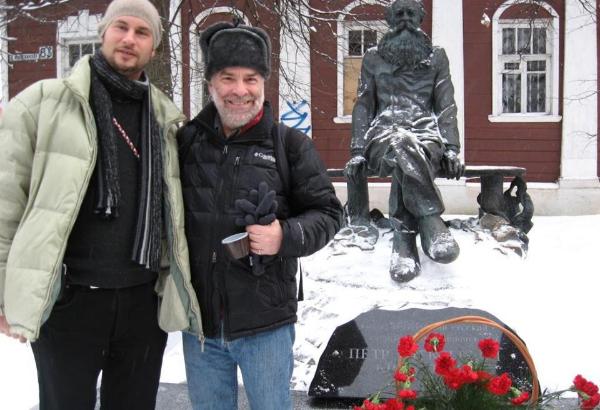 Denis O'Hirn (right)
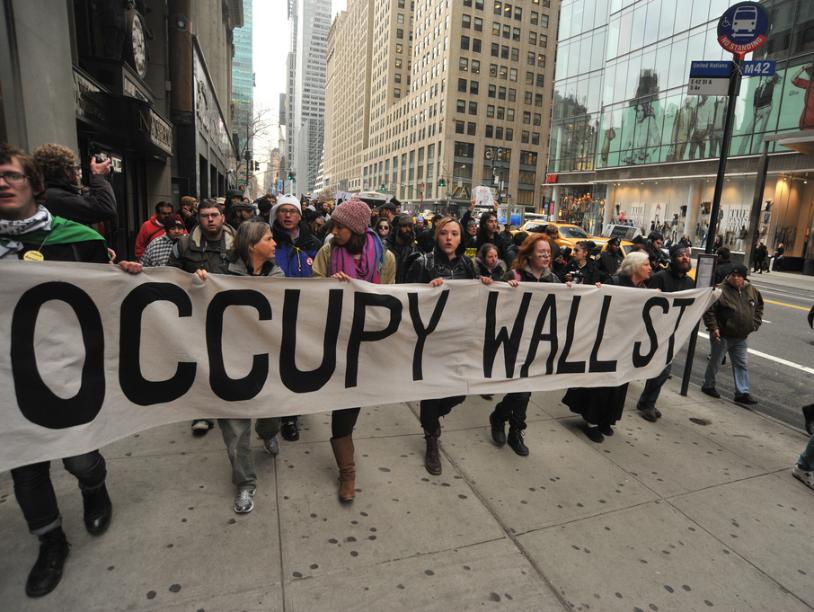
 Economist and sociologist Danis O'hearn , professor of the Department of Sociology of the University of Bingemton, was a guest of the seminar “Self -government and self -organization in the OcCupy movement: the experience of a limited protest”, organized in 2012 by the International Memorial and the Analytical Center of Yuri Levada. Denis O'Hern told Pro Science about the dissemination of ideas and the participation of scientists in this process.
How does modern science study the world movement of mass "assemblies" like "occupy Wall Street"?
In sociology, a lot of work was carried out to clarify how ideas and actions are spreading around the world. For example, what role does personal communication play between people living in different countries, and what is the role of more indirect receiving information - through books, newspapers, the Internet and so on. Sociologists consider this as different forms of communication between people who lead to the formation of various kinds of networks. The volume of literature on this topic is still not large enough. But already at this stage it can be considered proven: the spread of ideas begins with the fact that personal relations are established between people, a network connection begins to form.
Important here is the ability to travel. For many people in recent years, this has become easier - and this is one of the positive aspects of globalization. Moreover, this is not just about travel, but about migration, and then about returning to homeland-which was very rare 100-150 years ago. So, although such connections were established (and such movements of people, ideas and actions were performed before), today all this is much more intense.
The situation with the availability of information has also changed a lot: today it is much easier for us to watch the video and read about what is happening in other countries, so now people have much more opportunities for establishing various kinds of network contacts, and ideas and methods of action - for speedy distribution through these networks.
“Occupy” is just an example of an idea that spread through this high -speed network channels with lightning speed. But this became possible thanks to the diverse connections that were established between people around the world in the framework of anti -globalist and sapatist movements, the movement of landless ones, which engaged in the self -capture of the lands that began in Brazil, the international movement for food safety and so on. All these global movements do not replace local initiatives, but combine them differently into a single whole.
How do you see the ratio between science and the political movement?
The obvious connection between science and the political movement is that it was the development of technology to so a significant extent that it facilitated the people of travel and communication. This has happened over the past 10 years, ensuring the spread of ideas and initiatives.
On the other hand, the same technologies have largely strengthened the state’s capabilities in terms of tracking these movements and establishing control over them. And we exist in a situation of constant tension: on the one hand, the state seeks to saddle a protest, on the other hand, people find new ways to share ideas.
How many scientists take part in the "occupy" movement?
So many. In America, from the 60s and 70s, there is a powerful movement of scientists who are not indifferent to what is happening in the country and the world involved in this kind of progressive activity. In general, the progressive scientific movement is very strong.
What can you say about the system of functioning of university science in the USA? Is everything in order with her or should something be changed?
American universities provide the opportunity to implement many progressive scientists: in university work, they may be more than anywhere else, they can exercise the right to freedom, guaranteed by the first addition to the US Constitution. Freedoms and autonomies of academic life in the United States are much more than in most countries. This is good.
On the other hand, the Academy as a result turns into a safe harbor. University workers do not need to occupy anything - they already possess a certain space. And this means that in this way they are neutralized. Very, very many scientists who have excellent political ideas, but they almost do not put them in practice in any way, because it is convenient for them to remain in the safe space of science, to do what they are interested in, to be published in such publications, whose readers will not challenge the status of the CVO. The mass of scientists so use the possibilities provided by the scientific environment.
That is, there is a struggle between the university as a platform where a high degree of freedom can be realized, and the university as a space where complete neutralization occurs, when freedom of speech does not help people hear what they really need.