
Translated material
Ilya Karpyuk: Private it
Ilya Karpyuk 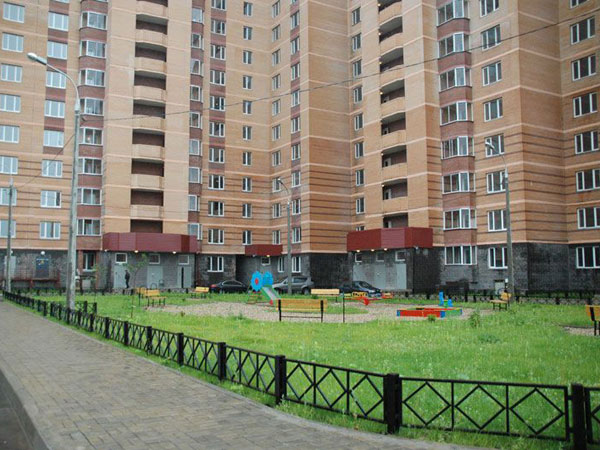 Free housing photo: Stroy-servis-plus.ru
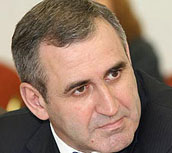 After such words, Sergey Neverov doubts that the State Duma will adopt a law on an emergency, which will move the deadline for the end of free privatization from March 1, 2013. The Secretary of the General Council of United Russia, the Vice Speaker of the State Duma Sergey Neverov, has already stated that the deputies will quickly accept the proposal of President Vladimir Putin to extend the period of free privatization of housing for all categories of citizens.
 Photo: BPRICE.UA
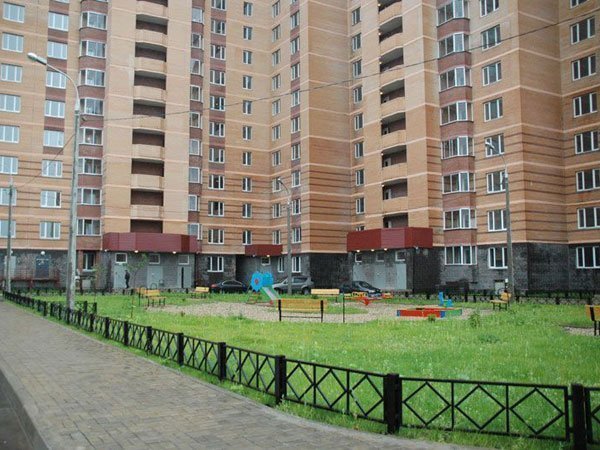
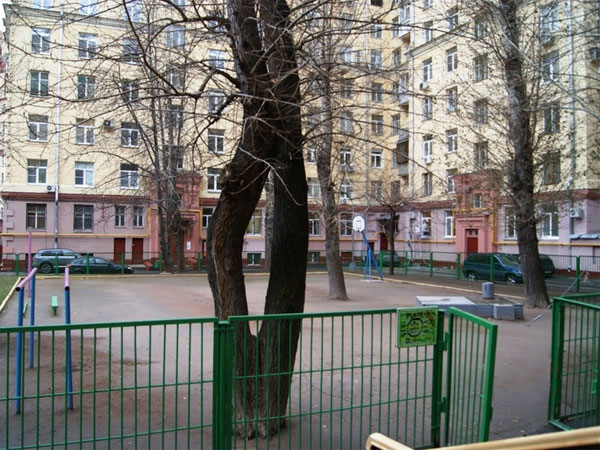 The house territory. Photo: estate.ru
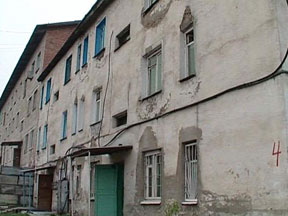 Old housing
 Free housing photo: Stroy-servis-plus.ru
President Vladimir Putin is confident that the State Duma deputies should think about the extension of the deadlines for free housing privatization. This was announced on the air of the Russian 24 channel by the press secretary of the head of state Dmitry Peskov. According to him, Putin considers it appropriate to extend the terms of free privatization for all categories of citizens "approximately for two years." Peskov noted that citizens had a lot of time to complete all the formalities for privatization. “But, nevertheless, we expect that in this case this point of view of the president will be realized,” the press secretary said.
After such words, Sergey Neverov doubts that the State Duma will adopt a law on an emergency, which will move the deadline for the end of free privatization from March 1, 2013. The Secretary of the General Council of United Russia, the Vice Speaker of the State Duma Sergey Neverov, has already stated that the deputies will quickly accept the proposal of President Vladimir Putin to extend the period of free privatization of housing for all categories of citizens.It is worth noting that there were not just a lot of time to privatize housing, but a lot. The state began to transfer apartments to citizens for free in 1992 - the person born at that moment in 2010 has already reached the age of majority, and he still had three years to think about whether to privatize the apartment. However, whenever the next term allocated for free privatization comes to an end, the government recalls those who have not yet managed to make a decision.
The privatization of apartments was conceived in the early 1990s to create a support base for the existing government. The first mayor of the capital Gabriel Popov openly said that after Muscovites received real estate ownership, they will never vote for the Communists.
The Russians really liked the idea of ownership of apartments. Today, when they scold privatization, for some reason they recall only factories and oil towers, and they are tactfully silent about apartments. To turn the voucher into two “Volga”, it was necessary to be an outstanding investor or simply successfully invest this security in the shares of the conditional Gazprom. In order for the apartment to bring money, there was no need to do anything - just wait a bit. Today, some apartments in the center of Moscow, given to the state for free, can be sold for millions of dollars. And outside the capital, the apartment can be exchanged not only for two "Volga", but also for several decent foreign cars.
Despite the obvious benefit, not all Russians took advantage of their right to one free privatization of housing. Some are waiting for them to allocate a more spacious apartment as part of social assistance, and they plan to privatize it. Some simply save on taxes and utilities - a social hiring fee is noticeably less than for the maintenance and repair of a residential building.
Photo: BPRICE.UAFor twenty years of free privatization of housing, Russians have a persistent confidence that they have an integral right to receive one free apartment. It is extremely dangerous to play with such moods of citizens, so the government is trying to somehow make it clear to people that this will not continue forever, but somehow it doesn’t work out, and the State Duma is now preparing for the third postponement of the end of free privatization. Initially, the law was indefinite, then the end of the “freebie” was scheduled for 2007, then it was pushed first by 2010, then for 2013. Putin today proposed to delay the completion of privatization until 2015.
The Socialist -Revolutionaries even proposed to remove the deadlines for the end of free privatization from the law. However, in December 2012, the government sent a negative review of the bill to the parliament, after which it has extremely little chance of acceptance.
Oddly enough, not only those who have not yet exercised their right, but also many municipalities and regions are interested in the extension of free privatization. On the one hand, it is probably a shame that a person can easily declare his ownership of the apartment, which was built for state money and on state land. On the other hand, after receiving the apartment, the owner becomes responsible for the maintenance of the house, and in addition to a wonderful taxpayer - an apartment, unlike salaries, is difficult to hide.
So far, the tax on apartments is small, but very soon it will significantly increase. It is unlikely that it will be unbearable, but still the difference between two hundred and two thousand rubles is very noticeable. Today in Russia there are two types of real estate tax - property tax and land tax. Since 2014, it is planned to gradually combine them and levy tax based not on the estimated value of the BTI, but from the cadastral value, and it is close to the market.
To combine two concepts - an apartment and land - you need to do a considerable job. Rosreestr and regional authorities must allocate a plot of land, adjacent territory to each apartment building. After this site receives a cadastral number, all the owners of the apartments automatically become co -owners of this land. This means that, firstly, they will pay tax for all their property, and secondly, they can also assign responsibility for the maintenance of not only houses, but also a plot of land. It is likely that this will lead to extremely deplorable results, but it was along this way that all countries of Eastern Europe went after abandoning socialism and, it seems, nothing else was invented for Russia.
The house territory. Photo: estate.ruAnother noticeable “bonus” of privatization of apartments for regions and municipalities is liability for the overhaul of houses. In the 2012 autumn session, the State Duma adopted amendments to housing legislation on the overhaul of houses. Now it will not be a state to save money for overhaul, but the owners of the apartments, the state will only help them. The owners of the apartments will have two ways of accumulation.
In each region, a fund will be created in which apartment owners will be able to invest their money. From this “common boiler”, funds will be allocated for overhaul in need of houses. People who do not want to pay for the repair of a neighboring house and wait, when finally the leadership of the fund will reach their hands and to their home, will be able to accumulate money on their own, on a special account, which will be created for their home. The choice will need to be made in May-June 2014. If the meeting cannot be held, then the house will automatically take off in the “common boiler”. It will be possible to change the solution only once every two years.
Old housingThe variant of the “common boiler” is not very different from the fact that it exists today - only targeted contributions are included in it, and not state money collected through taxation. The money and municipalities are already barely enough for heating, and they are not enough for overhaul decisively. Hence the idea that the owners of the apartments themselves should provide, and the state, if anything, can report money to a “common boiler”.
The option of a separate account for each house is more similar to a system created in many states of Eastern Europe, including in the former Union republics - Estonia, Latvia and Lithuania.
The state and municipalities in these countries also help the partnerships by the owner of the housing. For example, the Slovak government pays up to 50 percent of the cost of repairs in houses that were built under socialism and are now unusable due to mistakes of designers or builders. Hungary municipalities annually hold contests among the HOA and distribute grants to priority directions. So you can subsidize energy efficiency in one year, and in the other - the creation of cycling in the yards. In Estonia, the government can compensate for up to 10 percent of the overhaul, and in Lithuania - up to 30 percent. Also, the state can conduct a technical examination at its own expense and give recommendations. So, in Latvia, an “energy passport” is created for each house, and in Estonia the government can pay up to half the cost of the energy audit.
In the countries of Eastern Europe, it is not at all necessary to accumulate money for repairs. To do this, it is enough to take a bank loan for future fees from apartment owners. So, in Estonian banks, the share of HOA loans for the repair of houses is up to 12 percent. In Estonia, with the participation of the state, a special agency was created, which insures it for 1.1-1.2% of the loan amount per year. However, such loans are considered to be quite reliable among Estonian banks, as they are provided with mandatory monthly payments of apartments. Moreover, in order to receive loans, members of the HOA do not need to leave the apartment as a deposit - for banks there is enough bill of HOAs. At the same time, some municipalities, such as the Tallinn City Hall, subsidize interest rates, which makes loans for homeowners even more affordable. Large municipalities also conduct training at their own expense who decided to do their home.
Housing privatization is only one of the methods of throwing off the state of responsibility for the maintenance of houses and yards. After the 1917 revolution, the government tried to lead everything that could be reached out - as a result, an anecdotal situation developed, in which a drunken plumber turned out to be a legal representative of the state. This was relatively convenient for the population - so that it would not happen, one could complain to the regional committee of the CPSU, and after 1991 - to the governor and the president. However, obviously, the president, the governors, and the mayors are tired of responsible for the twisted light bulbs in the porches and a flowing toilet. Gradually, citizens find themselves in a situation where they themselves have to think about what to do with a broken tile in the entrance and a dried shrub in the yard.
See also: the State Duma will accept the laws on privatization on February 19, the State Duma will accept Putin’s proposal to extend the free privatization of housing Ilya Karpyuk, keep his city himself