
Translated material
Wagner in the vein
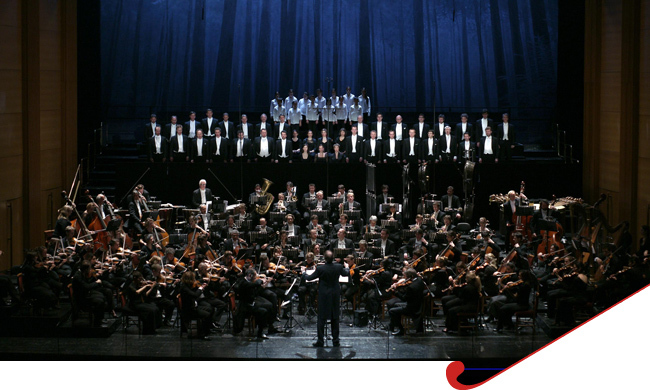
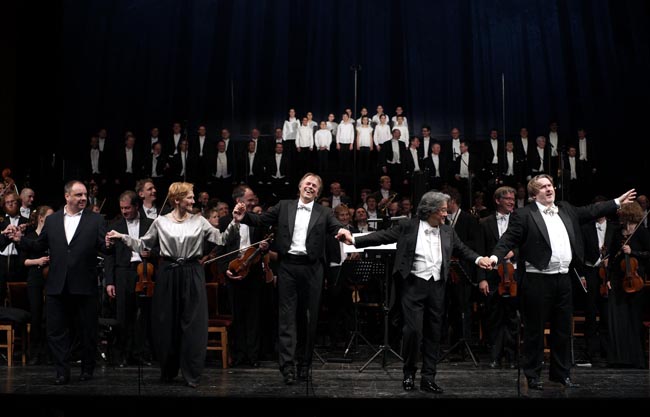
The first important event of the anniversary year of Richard Wagner took place at the beginning of the month in the Madrid Royal Theater: most of the largest opera houses in the world are preparing to celebrate the 200th anniversary of the Ring Lord either with new staging tetrailogy, or large-scale retrospectives of other Vagnerian musical dramas and operas, the legendary teatro Real Morch Morge He chose to honor the composer’s memory with a single project-the concert performance of Parsifal with conductor Thomas Hengelbrock and the vocal-instrumental Balthasar Neumann Ensemble in the main roles.
The semantic subtext of this completely radical curatorial gesture was obvious from the very beginning: while practices and critics puzzle their heads and spears in discussions about how to put Wagner, let's better think about how to play and sing it. Not without the usual ambitiousness, commenting on his plan on the sidelines, Mordier resorted to direct historical parallels: the Madrid performance of the Parsifal -on the instruments of the Wagnerian era and in the interpretation of an authoritative HIP collection specializing in the baroque classic repertoire, he sees the same revolutionary precedent for The current opera process, which a quarter of a century ago, became the interpretation of the Mozart scores under the direction of Nikolaus Arnoncur.
© Teatro Real
The main composition is not the first time for the first-time romanticism by Balthasar Neumann Ensemble (among other things three years ago, Hengelbrok, who played in Baden-Baden), Hengelbrok strengthened the musicians of the Bayreite festival orchestra, with which he performed the year-long summer " Tangaiser . " The instruments they have mastered in Madrid are twenty percent of copies, for eighty - original, the end of the 19th century. The strings, of course, are residential, play on them, of course, without vibrato. Of the surprises - unusually gently and light sounding pipes and thrombones: by listening to the Hengelbrokovsky Parsifal, it becomes clear that the chapters dedicated to Wagner from the orchestration textbooks should definitely be rewritten.
 © Javier del Real / Teatro Real
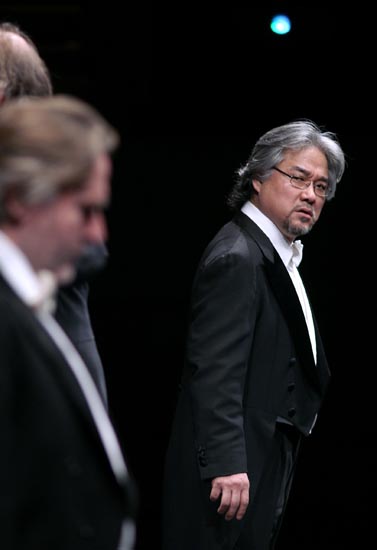
In the literal and figurative sense, the Wagnerian singers in such comfortable acoustic circumstances, withdrawn a conductor for an advance, should no longer spend efforts on issuing a record number of decibels in order to lie down with bones, but still shouting the orchestral tutti . The tuning fork, according to which Hengelbrok sets up his Parsifal, is the phenomenal amphoretas Matthias Gerne, expressed in the sound of sacrifice and humanism. Listening to in the Wagnerian party of this reference chamber singer, one of the best today's vocal cycles of Schubert, you involuntarily recall the December LoEngrine in the Milan La Skala with Jonas Kaufman, who brought to the interpretation of the title role, the ease of breathing of the German Liew , in today's executive context of Madrid. Parsifal fits into a glove.
© Teatro Real
And at the same time, it is difficult to find an interpretation more far from the textbook interpretation of this score than the Balthasar Neumann Ensemble version. Hengelbrok seeks to look at the Wagnerovsky Opus Ultimum “like for the first time”: with maximum attention, respect and openness to the author’s text, giving the audience the opportunity to stay with him one on one, as if self -confusion and suppressing his artistic ego (not without a fair, however, the eccentric bells of the bells of the Javanese ensemble Gongs).
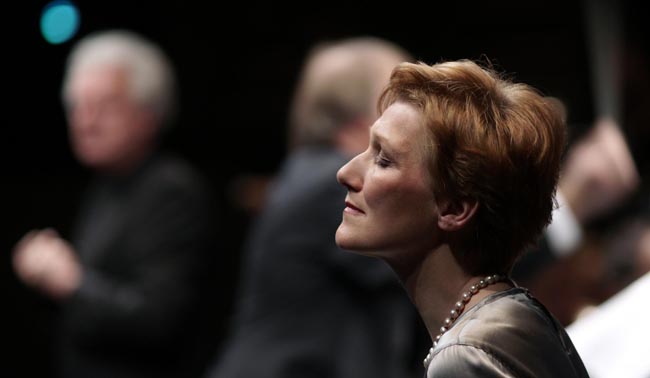
At the first approximation, the results are truly stunned-the rumor does not immediately get used to the fact that well-known notes are formed in completely unfamiliar music. In the culmination of the first act, the choir sings with such a sound as the Collegium Vocale Gent Philip Herrevye is usually performed by Henry Schytza. In the Magic Garden of the clingzor, the priest girls seduce Parsifal with such light and rampart, weightless-clean voices that it is familiar to hear in some Bakho cantata, but by no means in Wagner’s opera: everything that has been sophisticated for decades, thoroughly heard and talked.
 © Javier del Real / Teatro Real
Gerard Mortier and Thomas Hengelbrock are far from the first to try to reopen Wagner again, playing it in the old way, which does not interfere with Parsifal from Balthasar Neumann Ensemble to look not just the next milestone of modern Wagneriana-along with Highlights Roger Norrington and London Classical Players (1995), the “ gold of the Rhine ” by Simon Rattla and the “Orchestra of the Enlightenment Century” (2004) and “ Flying Dutch ” Bruno Vail and Capella Coloniensis (2005), but one of the staging foreign pun on the tree of European culture. Still, the “solemn stage mystery” is a special score, it played its fatal role in the history of the last century, having a strong influence on the formation of Adolf Hitler and the entire Nazi ideology.
© Teatro Real
With enthusiasm, talking about how the performing fate of Parsifal and the tragic conflicts of the twentieth century were closely intertwined, Thomas Hengelbrock was sprinkled with quotes from letters and memoirs of the outstanding German conductor Felix Wayngartner. An eyewitness to the world premiere of the Wagnerian score, Weincartnner left detailed evidence of those metamorphoses that happened to her after the death of its author.
Perhaps the most exciting part of these testimonies is dedicated to how the widow of Wagner Kozim insisted that he was dissatisfied with the first conductor of Parsifal, so that the accepted relay from Hermann Levy Felix Mottl was half the time set up during the life of the composer, at the same time, at the same time, which is characteristic, to the racial uncleanness of Levy. “Jewish musicians,” Kozim lamented in 1888, “do not feel the sacred atmosphere of Parsifal at all.” As a result, Hengelbrock Veinggartner quotes, "the pace proposed by the goat and picked up by Mottle completely destroyed the entire vocal relief of the score." Hengelbroke has its key episodes - Verwandlungsmusik of the first act and the final Karfreitagszauber , “Miracle of Holy Friday” - actually sound twice, or even three times the usual faster. The matter, however, of course, is not so much in a pace as in the fundamental change of software code and ideological optics.
 © Javier del Real / Teatro Real
The absolute majority of the parsifal darkers, from George Sholti to Christian Tileman, as if guided in their interpretations by the author’s commentary on the Malera Eighth Symphony: “Imagine that the Universe begins to sound and ring . There are no human voices, but the planets and the sun are spinning. ” Of course, there is nothing like this in reading Balthasar Neumann Ensemble : no national metaphysics, no totalitarian oppression whose centuries -old cargo threatened the colonnade of Parsifal, and, most importantly, nothing that would try to become more than music under the guise of just music. ” Instead of all this, a combination of ease and maximum distinctness for the tradition of Parsifal: the Wagnerian Opus Misticum appears in Hengelbrok an intimate paragraph of the miracle of resurrection from an ideological ash.
© Teatro Real
This, perhaps, is the main revelation of the Madrid “Parsifal”: there are enough precedent cases of re -registering the holes of music in modern performing practice (the most obvious of the Caurents of the Theodore and the great Bratsov cycle John Eliot Gardiner), but the examples of interpretations that expose the work of global sociocultural mechanisms, - here Once, two and counted. Hengelbrok's Parsifal is one of them.