
Translated material
Euroconse for the Prime Minister with the Orchestra
Hard budget, unemployed assistance program, megaregulator, stabilization mechanism - European policy lessons for Russia
Hard budget, unemployed assistance program, megaregulator, stabilization mechanism - European policy lessons for Russia
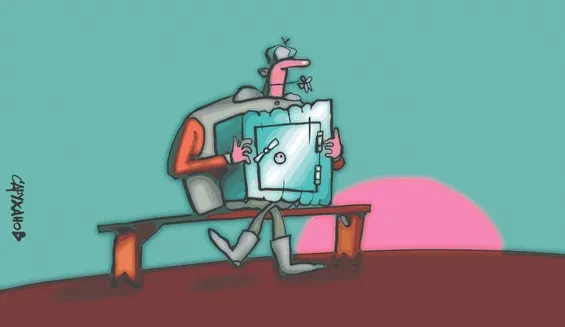
At the last summit of the European Union, Chapter 27 of the states agreed on the total budget for the 7th next years. And in the end, after stormy debates, it flashed at the “minus 3 percent” level in relation to the current budget. This minus became historical: for the first time in the history of the EU, the new budget turned out to be less than the previous one. I emphasize that we are talking about the general budget of the EU, and not about the individual countries mired in crisis, where the reductions are forced, large -scale and painful. And at the summit on this issue there were hot discussions: the leaders of many states insisted not on reduction, but on increasing general programs - otherwise there would be no economic growth without additional investments, which is so that Europe that has floundered in the recession. But a different point of view won: the legs must be extended by clothing. As soon as the European economy does not demonstrate growth and, according to authoritative forecasts of the IMF and other financial organizations, it is unlikely to demonstrate them this year, the budget cannot swell for no reason.
It would be nice to learn this logic to the Russian authorities, which have been building their financial policy in recent years, completely regardless of reality. The crisis is not a crisis, a budget deficit is not a budget deficit, anyway: pensions - we increase, military spending - also, social obligations - we increase. And we also plunge on ourselves - and primarily on the budget, of course - highly used "entertainment": the APEC summit, the Olympiad in Sochi, the Universiade in Kazan, the World Cup. And all this with unrealistic reasonable calculation of expenses. Until now, such tactics have been “rolling”: the high price of oil, the main nurse of our budget, kept at a high level and made it possible to make ends meet. But this oil luck will not last forever ...
But what Europe does not save on is on the programs of assistance to the unemployed, primarily young. The EU creates a special fund to combat unemployment among young people, where it invests 5 billion euros. The average level of unoccupied youth in the old world during the time that has passed since the beginning of the crisis increased from 7 to 11%. And therefore they take measures there. In Russia, the problems of unemployment do not seem to exist: it is officially believed that it is less than 6%, that by world standards it can be considered a well -being. True, independent experts offer to multiply the official figure by three - this will be closer to reality. And just young people are a very vulnerable social group in the labor market. Those who had to deal with this problem are well aware: when young people - graduates of universities and other educational institutions come to get a job, the first thing that personnel officers ask them about them - this is the experience of which they have nowhere to take. And in this matter, Europe also sets an example for us: there they do not hide the true scale of the problem and do not see anything shameful in spending considerable funds on its solution.
More recently, 11 countries received permission from the European Union to introduce tax on financial transactions on their territory. Its size is quite symbolic: it is expected to amount to 0.1 percent for transactions for trading shares or bonds and 0.01 percent of transactions with derivatives of tools. The main goal of it is not so much the replenishment of the treasury (although over time, when all the EU countries introduce it, the total income from tax can be about 60 billion euros annually), but the struggle with speculative operations. Indeed, thanks to this, the tax will be much more difficult to build chains of fake operations, leading money to the shadow. Yes, the minority of the EU countries has so far been decided to introduce this tax, because the need to pay it scares off investors and thereby objectively reduces the investment attractiveness of the relevant countries. However, 11 states nevertheless decided that it would be more important to unravel the shadow financial schemes and reduce the speculative component in them. It seems to be for Russia, with its essentially offshore economy (which has been recognized recently even at the highest level), it would also be more important ...
Perhaps we will more willingly learn another European lesson associated with the creation of a financial mega -regulator. Such, according to the decisions adopted in December 2012, should be the European Central Bank. He received exceptional supervisory powers and can directly, bypassing national central banks, intervene in the work of the 1000 largest banks of the Old World, if he sees the threat of their bankruptcy. It is difficult to draw direct analogies with the Russian Central Bank here, however, on the basis of the latter, it is quite possible to create a mega -regulator, giving it also supervisory functions of, say, the Federal Commission for the Securities Market. The general with the European approach is not in the details of the authority, but in principle: to regulate the financial market, “one head” is desirable, so that the requirements for its different sectors do not contradict each other at least. This is now being achieved by Europe, Russia also needs this.
And finally, the last lesson that Russia first taught Europe (and soon, perhaps we will have to study with our students). We are talking about creating a European stabilization mechanism, in which the EU countries have already agreed to invest 700 billion euros - and, perhaps, this figure will still grow up. There is simply no other way to cope with crisis blows.
In Russia, this “common fund” in the form of a reserve fund thanks to oil money, thank God, is available. And all the years that there is a reserve fund, the efforts of various lobbyists do not weaken to encroach on this “nurse”. Naturally, under the slogan of investing in the development of the country. So recently, the Ministry of Economy proposed to let money from the reserve fund (after it exceeds 7% of GDP) to irrevocable infrastructure projects. And in this zeal, not only European experience teaches us (EU countries in difficult economic conditions tear off funds from our own budgets to create a common stabilization mechanism), but also our own: after all, thanks to the accumulated reserves, Russia was able to overcome the crisis more successfully.
As for the notorious development, we perfectly see in which it flows literally in every place, where billions from the budget are allocated with a generous hand. In banal corruption, the scale of which is already such that even representatives of the power corporation, in fact, have built this corruption system, cannot be dismissed from it. There are numbers with criminal stories scandals: around the funds allocated for the APEC summit, around the GLONASS system and defense order as a whole, around the Olympiad in Sochi, now around the financing of Skolkovo. With such appetites of the official class, the requirement to print the reserve fund “Development” is virtually equivalent to the proposal to add budget money for the cuts for interested persons ...
Such are the lessons. If a European choice is not suitable for our leadership, then European experience could certainly be useful.