
Translated material
How to choose a Duma so that it is not a fool?
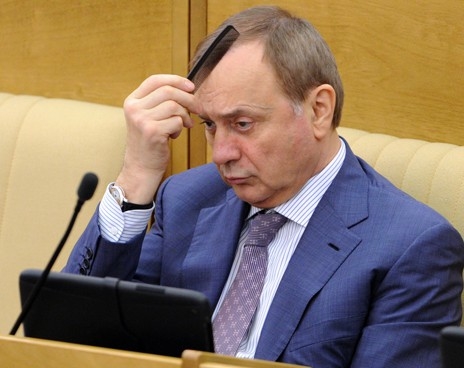
In December 2011, then President Medvedev, addressing his final message to parliament, promised to reform the electoral system used in the Duma elections. In the last year’s message - already from President Putin - the promised reform finally gained contours. It turned out that the new system would not be so new. Most likely, we have to vote almost according to the same rules as before the transition to the polls exclusively on party lists. A mixed system used from 1993 to 2003 will be restored. Let me remind you that half of the deputies - 225 - were elected in single -member districts according to the majority system, and the other half - on party lists. Both parts of this electoral system have serious drawbacks. The main drawback of the majority system is that the votes fired for the losers of candidates go nowhere. In essence, only the votes of the winners are taken into account. Suppose we need to elect deputies in 10 districts. There are 100 voters in each district. Three parties participate in the elections - A, B and V. in the districts from the first to the third, these parties receive 60, 10 and 30 votes, in the districts from the fourth to the sixth - 60, 20 and 20 votes, and in the districts from the seventh to the tenth of 10, 50 and 40 votes. Therefore, the party and winning 6 seats, the party B - 4, and the party does not win anything at all.
The majority system
| Vote | Places | |
| Party a | 400 | 6 |
| Party b | 290 | 4 |
| Party c | 310 | 0 |
Is it true or not? If we calculate the votes received by candidates from each parties, it turns out that the party has 400 of them, the party B - 290, and the party B - 310. Having entered the second place in terms of voter support, this party did not receive representative office. And this, of course, is wrong. But this is how the majority system of the relative majority works. With this system, one batch can overtake another by the number of votes, but to give in to it by the number of deputy mandates. In the XX century, this happened three times in the UK. This is an obvious distortion of the will of voters. Elections for party lists are deprived of such a drawback. Each party receives approximately the same share of deputy mandates as the percentage of the votes it received. If the elections in the previous example were carried out according to party lists, then to determine the number of mandates, each batch would be calculated by a quota by dividing the total number of votes (1000) by the number of mandates (10), and then the number of votes of each batch would be divided into quota (100). We get 4.0 from the party A, 2.9 of the party B and 3.1 of the party V. So the party A will have 4 mandates, the party B - 2, and the party B has 3. One mandate remains. We transfer it to the party B, in which private is with the greatest residue. The final distribution is 4: 3: 3. The correspondence between the shares of votes and places is almost complete.
Party lists elections
| Vote | Places | |
| Party a | 400 | 4 |
| Party b | 290 | 3 |
| Party c | 310 | 3 |
The harsh truth, alas, is that in Russia elections on party lists are completely discredited. If you believe the December survey of the Public Opinion, only 4% of our fellow citizens believe that the Duma must be elected exclusively by party principle. It must be admitted that for this state of affairs there are good reasons. Russian parties are amorphous and irresponsible. The lists that they put forward are stuffed with hundreds of unknown characters, for many of which no voter would vote in their right mind. For them, in fact, no one voted. They did not even vote for the party lists themselves, but for party leaders, for the so -called steam locomotives: some of them did not even plan to sit in the Duma. Is it worth it to be surprised that the current ones - chosen only according to party lists - the Duma sometimes behave, to put it mildly, eccentrically? After all, they are not obliged to us, voters. Only their party leaders. Thus, both parts of the system, which is supposed to be restored in Russia, are bad in its own way. Unfortunately, there is no reason to hope that their shortcomings are equal to each other. The ten -year practice showed that with a mechanical connection of two principles of representation, these shortcomings are more likely to aggravate. But the worst in front. In the 2016 elections, if they really go through a mixed electoral system of this type, United Russia will win in all single -mandate districts. Firstly, all promising business executives, directors of schools and hospitals, rectors and other audience will be driven into United Russia, which traditionally wins in single-mandate districts. Secondly, the rates are so high that they will simply be pulled by percentage or two to victory. This is very convenient: you throw a percentage of your percentage, throwing thirty from the opposition. And according to the party lists, United Russia will receive, although more modest, but also the majority, because the mass of the voices will be given to parties that do not overcome the barrier. And now - 75% of the places. Especially for fans to talk about the fact that since the elections are falsify, the system does not matter, I emphasize: these 75% of the United Russia are only at the expense of the electoral system. Most likely, the results will be faked. But more from administrative excitement: the real political feasibility of falsifications will be reduced to pulling the very 1.5–2%that V.E. Churov seems to consider an acceptable level of dishonesty. I think that the vicious practice of recent years has excluded the possibility of meaningful application of the party and script system in Russia. It is not suitable either in its pure form or as an element mixed. I talk about this with regret, because I have always been a supporter of proportional rules. But here it is necessary to accept reality: meaningful elections in modern Russia are possible only when voting in single -mandate districts, for specific people. Does this mean that we are doomed to the majority system, with all its obvious shortcomings? Not necessarily. A completely viable alternative could be compiled by a system that the name of majority and compensation. In its structure, this system is close to mixed, but with one significant difference: voters vote only in single -mandate districts, for candidates, and not for party lists. Winners are determined by the principle of the relative majority. Thus, parties A and B in the above example retain their district places - 6 and 4, respectively. However, the votes filed for the losers of candidates are also taken into account. For this, 10 additional places are allocated, their total number doubles (up to 20), and the proportional quota decreases to 50. For the distribution of additional places, the number of votes received by each parties is reduced by the work of quotas and the number of mandates won by it. Parties and this gives 400 - 300 = 100, parties B 290 - 200 = 90, and the batch voices of the batch in the same amount, 310. Then the proportional distribution gives 2 additional seats to parties A and B, and the party B with the final - as proportional - the ratio of 8: 6: 6. Turning from an example to reality, it is easy to imagine that 225 State Duma deputies would be elected in single -mandate districts, and an additional 225 seats would perform a compensation function. Compensation places can be filled out according to the preferences of the parties, or can be transferred to the strongest of the candidates who lost in the districts. This is a separate question. Now it is more important to emphasize another: the majority and compensation system allows you to really combine the advantages, and not the disadvantages of majority and proportional principles.
Majoritarian and compensation system
| Vote | Places | |
| Party a | 400 | 8 |
| Party b | 290 | 6 |
| Party c | 310 | 6 |