
Translated material
Give the currency
State control of accounts in foreign banks
February 13, changes entered into force in Part 1 of Art. 15.25 Administrative Code of the Russian Federation: a sanction is introduced for the direct receipt of money to the foreign account - from 75% to 100% of the amount of the illegal foreign exchange operation. What to be ready for - The New Times was told by the senior partner of Pepelyaev Group Ivan Khamenushko
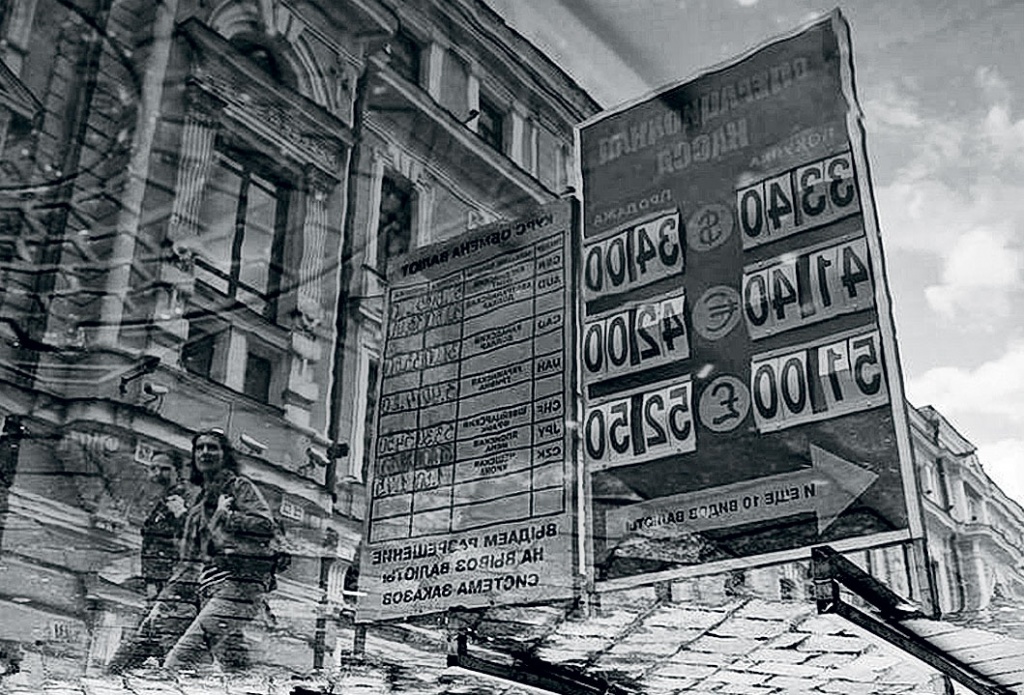
The state strengthens control over the accounts of Russians in foreign banks
The main consequence of the innovation will be the risk of holding residents who have accounts abroad. And we are talking not only about Russian companies receiving income to foreign accounts, but also about individuals, ordinary citizens. Everyone who has income abroad: salaries, interest on deposits, income from renting real estate, income from the sale of property abroad, dividends, income from operations with securities, now they should receive money to their Russian accounts. It is not directly prohibited to receive income to a foreign account, but such an order is not apparent. The previous edition of Part 1 of Art. 15.25 Administrative Code did not cover cases of such violations. New - will be punished with fines.
Total control
Part 1 of Article 15.25 of the Code of Administrative Offenses establishes liability for illegal foreign exchange operations. Her new edition, which entered into force on February 13, expands this concept. In particular, those operations that should go through the accounts of “authorized banks” now include illegal ones, but have been held, bypassing such accounts. Authorized banks are those banks that have a Central Bank license and function in Russia. These are either purely Russian, for example, Sberbank, or the daughter of foreign banks who are registered here and act on the basis of the legislation of the Russian Federation.
Why is this necessary?
For more control over the movement of funds. For the regulatory authorities, it is clear that there is a group of operations - for example offshore, which cannot be tracked. How to get to them? You can oblige all residents - both individuals and legal entities - it is uniform to report the remains on foreign accounts. But someone will report, but someone does not.
Therefore, we went along the path to the simple for the state, but complex for its citizens. The residents were obliged to transfer all the money first to Russia, and only then, if necessary, to foreign accounts. With such a system, this money in automatic mode becomes visible: they fall into the statistics of the Central Bank and the payment balance. And here are two positive points: firstly, the flow of money is displayed in the payment balance, and secondly, not everyone will then transfer this money to foreign accounts, and they will settle in Russian banks.
From the point of view of state currency policy, this measure is explained. For ordinary mortals - very uncomfortable.
"
We went along the path to the simple one for the state, but complex for its citizens. Residents ordered all the money to transfer all the money to Russia, and only then, if necessary, to foreign accounts
"
An exceptional case
There are no analogues of such a scheme in Europe and the USA. Abroad do not focus on the very fact of the export of capital from the country. For example, the United States always has a negative balance of payment balance. The outflow of capital from the country is compensated by interest, dividends and income abroad and, in the end, financial influence around the world. They fight with another problem - it is important for them that taxes are paid with this money. Therefore, the United States cooperate with tax services and banks of other countries, forcing them to disclose information.
How does this work
The innovation does not affect the payment of taxes. Everything will work according to the old schemes that exclude double taxation. Difficulties and inconvenience will be the following.
For example, you work abroad. You can no longer receive money to your local account. You will have to go to the employer and say: “Mr. Smith, do not pay me more money to my foreign account, but transfer to my account in Sberbank.”
If you receive dividends on the shares of foreign companies for a foreign account or have any other income abroad, then you must provide a structure that pays you money, details of the Russian account. For business, this works in the same way: the company asks partners to transfer money from transactions to Russian accounts immediately. If for some operations you need money in a foreign account, then you can safely transfer it from the Russian account by notifying the tax authorities about the availability of an account abroad.
In general, this should not make big problems for business. Ordinary people will be inconvenience. For example, a person worked out a foreign contract, was going to return to his homeland and sells a car abroad, because he no longer needs it there. He says to the buyer: "I can’t accept your money on my own here, pay me to a distant unknown Russia." The buyer will simply be scared and will say: "I will not contact you, well, you are with your Russian score." That is, in household situations, this will create inconvenience.
Unlucky law -abiding
First of all, law -abiding citizens who did not know about the change in legislation or attached significance to it will fall into the field of view of the state machine. If a citizen wants to honestly pay taxes in Russia from foreign income, he will notify the tax service of the availability of accounts. And the tax in Russia is also an agent of currency control. And she will say: “Okay, well done, you paid taxes. But you have incorrectly credited funds to a foreign account. You enrolled them directly, but this cannot be done. ” Then a protocol is drawn up, which is sent to Rosfinnadzor. Rosfinnadzor, who is usually not associated with individuals and will not bother, will say: “I can’t do anything. Here the protocol has come, and according to the law you need to be fined - from 75% to 100% of the amount transferred to the account. ”
Thus, the goal stated in explanatory notes to this amendment - the fight against offshores, the struggle against the export of capital or corruption - will not be achieved thanks to it. Those who really hide the money will not affect the innovation. And ordinary people will suffer. At the same time, there is a stable feeling that they did not want to turn the situation in this way. This is just the result of inaccurate formulations in the law.
Photo: Reuters