
Translated material
Kapkoland without brakes
The “effectiveness” as a phenomenon at the same time economic and cultural was spoke in 2010-with the adoption of the Federal Law-83, the law on “improvement” of state institutions. The leadership of schools, hospitals and museums was forced to make money on their needs on their own, not hoping for the state treasury. Then, thanks to the scandalous textbook of Alexander Barsenkov and Alexander Vdovin “History of Russia 1917-2009”, Stalin began to be called “an effective manager” . All these signals meant that Russia finally switched to hard corporate rhetoric. It doesn’t matter what Tiran was Stalin, the main thing-he won the war, built factories-roads, minimized the costs of labor. It doesn’t matter how good the museum or the theater is - the main thing is that the penny is sutured.
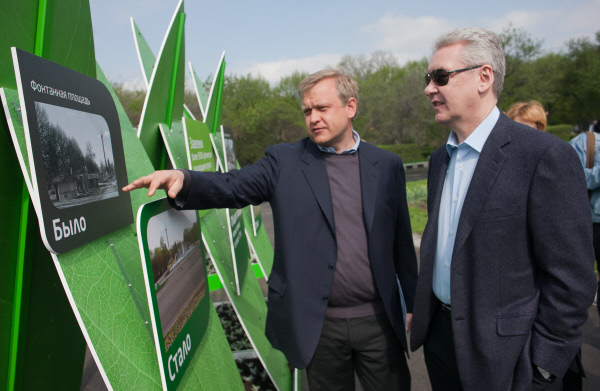
In the cultural sphere, the concept of “efficiency” was brought by Sergey Kapkov, when he took the post of director of the park named after Gorky. He already had experience with a political strategist, a deputy, as well as the head of the Department of Culture of the Chukotka Autonomous Okrug - he took the last position in 2001, at 26 years old. In the story with Gorky Park, apparently, the former Governor of Chukotka Roman Abramovich was not without the former Governor of Chukotka: the husband of Dasha Zhukova wanted her “garage”, who just in 2012 to leave the Bakhmetyevsky garage, to fall into the appropriate environment, where, of course, there should be no drunken paratroopers or carriers. Remembering how well Kapkov coped with his work as the head of the Chukotka Department of Culture in the early 2000s, Abramovich as the main sponsor of the reconstruction of the Gorky Park most likely lobbled his candidacy.
The result of Kapkov’s stormy activity as director of the Central Bank of the Central Prospect of the Central Executive Committee hit literally everyone. Again they started talking about "power with a human face." This coincided with the fashion for the arrangement of urban spaces and the hope of urbanism, which will solve all problems. Kapkov himself modestly called himself a "project manager", but he did not delay the head of the park. At first, a position was specifically created for it - the deputy head of the Moscow Culture Department for the work of the parks (now it is abolished, but a whole structure has grown from it - the Moscow City Park), and then they were completely appointed the head of the entire department.
A high position did not become an end in itself for Kapkov: he wanted to change the system of leadership of cultural institutions itself. In his first interviews, he proclaimed three principles of culture : accessibility, quality and effectiveness. The availability meant that in the face of the cultural institution everyone is equal: the indigenous Muscovites, and foreign tourists, and disabled, and old, and young. Whether it is a museum or park, a culture institution should correspond to time - such marketing moves as the pages of the institution on social networks, mailings, a convenient and beautiful site have become inevitable. The cultural industry should work perfectly, "starting from exhibitions, where everything can be touched, and ending with the quality of everything - wardrobe, presentation of material, interesting programs." Under the effectiveness of Kapkov understood “respect for budget money from subordinate institutions”.
The leaders of the old quenching decided that the new rhetoric should correspond to at least in words.
The new Minister of Culture began to use the same rhetoric. First, from Vladimir Medinsky, as the author of books in which the “myths about Russia” were exposed, they were waiting for ideological control, and he suddenly stated : “I see my role today as a manager who should provide conditions for the development of the entire direction of the ministry.” And he added: “Probably easier and more pleasant to be the Minister of Culture of the United States, where the whole culture is private and is quite functioning without a state participation.” The new minister began to act in the spirit of these statements, trying to minimize the state -course in culture at the financial level.
Humanitarian scientific institutions - art history, cultural studies and others, which Medinsky called “ineffective” and requiring reforms, were almost the first to fire. Then, with the initiative to create on their basis , the “humanitarian“ Skolkovo ”” was made by Kirill Razlogov, the director of the Russian Institute of Cultural Studies, who, apparently, hoped to lead such an association. But in the ministry his proposal was partially rejected (the “humanitarian“ Skolkovo ”” will most likely not be), partly understood it, by deciding to optimize the costs through a strong reduction in the states. The employees of the institutes have so far managed to defend their institutions, but what other surprises were prepared for them Medinsky is unknown.
It is interesting that with the advent of Medinsky, the Ministry of Culture began to respond to “public opinion”, expressed, however, mainly by managers. Of course, it is difficult to call the rally, but Sergey Kapkov, the director of the Garage Anton Belov and the chief donor of the Strelka Institute, Alexander Mamut, perfectly fit this role. It was on their initiative that the “public discussion” of the architectural project of the new HCSI building began, which, in the end, ended with the fact that the old project was rejected , and the GCCs allocated a new section for construction - behind the third transport ring, on the Khodynsky field. At the same time, the “effectiveness” of the GTSIA himself was questioned into question. In parallel with the Ministry of Culture, the Ministry of Education and Science realized, deciding to identify “ineffective” universities, and the level of income from all possible sources served as a criterion.
 © RIA Novosti in the piggy bank of such cases can be added a recent scandal with the appointment of Andrei Nelidov, the head of the Kizh Museum-Reserve, who was opposed not only by professionals, but also the inhabitants of Karelia, apparently, remembering his acts as the head of the republic , when he actively fought for the autocratic power, introducing changes to the Karelia Constitution, or tried to depart the local operator of the local The television channel because he shot him with "too red face." The concept of the development of “Kizhi” presented by him meets the spirit of “efficiency”: let's spit on UNESCO and the law on security territories, we will build a business center, a hotel and, for example, an ethnic group near architecture monuments. As well as a new church to shut up the mouth of a protesting Russian Orthodox Church. In addition, religion is a profitable, “effective” and status area, as it became clear lately. Tourists, meanwhile, are still in the “Kizhi” shaft: in 2011-200,000, and in 2012-160,000 visitors, while there is a visit to the island-no more than 200,000 people a year. True, for the presented “concept” at public hearings, not Nelidov was blown up , but his deputy Ivan Romanov. He called the reserve a “tourist product”, stated that “the main task of the museum is to attract visitors,” could not say a word about the boundaries of the “security zone”, but explained his tongue -tied words by the fact that he was the manager - “not a specialist, but a manager”.
"Ah, what a delicious pumpkin soup!" - Visitors to the exhibition of James Tarrell admired.
Once in front of the threat of personnel cleaning and reorganization, some leaders of the old hardening decided that the new rhetoric should correspond to at least in words so that they would not befall the fate of the already “modernized” institutions. For example, the director of the GCS Mikhail Mindlin was received: the concept of the development of the Museum of Modern Art, which he recently presented, says that the institution based on the GCS will necessarily reach the level of self -sufficiency - due to two cafes, baguette and carpentry workshops.
All these checks and appointments finally approved the rule that both Vladimir Medinsky and Sergey Kapkov are guided by: an effective institution needs an effective manager. In Moscow, according to such a scheme, the leadership in the ZIL Culture House was changed (the new director was appointed Elena Zelentsova, a manager from “creative industries”, and the DC was renamed the current cultural center now) and in the Mayakovsky Museum. The last story raised especially many questions, especially since the museum used to work quite effectively, which even Kapkov admitted in one of the first interviews as the Minister of Culture of Moscow. But literally a year later, the head of the Department of Culture for some reason doubted the leadership of the Mayakovsky Museum and began a new crusade: the then director of the museum Svetlana Strizhnev, which Kapkov literally forced to sign the statement “of his own free will”, fell under the shelling. Nadezhda Morozov was appointed in her place, whose arrival caused the discontent of almost all museum employees . Why Kapkov so radically changed his opinion remains a mystery. Perhaps the whole point is that Strizhnev, in which the current exposition appeared in the museum, did not want to dilute it with new multimedia exhibits, so impressing Kapkov. According to Strizhneva, Kapkov proposed hanging plasma panels in individual halls - for “interactivity and modernity”, which she categorically refused, explaining that Mayakovsky’s museum retains the atmosphere of the era when there were no TVs. Perhaps this approach seemed “ineffective” to Kapkov: will the youth come to the museum where there are no new technologies? But so far there are no these new products in the museum, and visitors are a lot. Excursion groups are scored until the end of March. In addition, quite interesting events have been held in the museum: poetic evenings, lectures and discussions.
 © ITAR-TASS I must say that multimedia elements are effective only at first glance. Firstly, a lot of money is needed to install them. Secondly, they become obsolete-both carriers and formats-much faster than traditional elements of the exposition, and require constant updating, which costs, perhaps even more expensive than the acquisition of new things in the collection. So it is quite possible that “effective managers” contradict themselves, not understanding what they want, or, more likely, just fools everyone's head.
Until recently, there were no negative connotations in the word “efficiency”. It seems to be nothing wrong that the culture will be effective, but the question is how to measure the efficiency of culture. When it comes to any industry, of course, everything is measured by money and production indicators. But cultural institutions, especially experimental, academic and those whose task is to preserve, cannot be self -bumping in principle. And the matter is not only in the inert Soviet heritage - cultural institutions do not earn almost anywhere in the world. Moreover, it is not only about small museums, but also about giants such as the Pompidu center, Tate Modern and even the Louvre, which has been the most visited by the most visited museum in the world for several years. But our “effectiveness” is stubbornly understood as an output to self -sufficiency, although the criteria here should not be quantitative, but qualitative.
Although with high quality, not everything is clear either. Take, for example, the activities of Sergei Kapkov. Of course, he speaks of the income of institutions subordinate to him, but his main goal is still different-to make a culture fashionable. Being fashionable is the first step towards "effectiveness". So far, the Kapkov’s ranking is the leaders of the multimedia art museum and the updated “arena”. He regularly visits both museums and almost always remembers them with a kind word. “Fashionability” affects the number of visitors, and therefore the number of tickets sold. And everything seems to be fine, but in the end to the perpetual, including the Middle Hand, such as the exhibition “Mick Jagger. Photo album ”, many people come, and really good events remain unnoticed. The work of the “effective” art manager, most often understands nothing in the area that he is engaged, comes down to a skilled marketing policy-so that people come, so that they would not be bored.
Will the youth come to the museum where there are no new technologies?
“Effectiveness”, reduced to fashion, implies endless euphoria, approximately as in an ideal shopping center from fantasies of marketers. The viewer should always be interesting and fun: for this we need interactive expositions, where everything can be touched, multimedia things. Whatever they show visitors, they must leave with a smile after a pleasantly spent time. Managers think in such a paradigm: if the viewer was not fun for the first time, he will not come to the second.
Now each fashion museum considers it his duty to open a restaurant or cafe, inviting a good chef there: if the exhibition does not like it, then even if at least the food will please. In the first building of the Garage, for example, there was a cafe of the same name, about which they wrote almost more often than about exhibitions. "Ah, what a delicious pumpkin soup!" - Visitors to the exhibition of James Tarrell admired. Perhaps that is why, remembering the success of the Cafe “The Great” at the GTSIA, Mikhail Mindlin decided in the still not-built building of the Museum of Modern Art to open two cafes with 500 seats at once, clearly expecting that for food they will come more often than at the exhibition of someone from Moscow conceptualists. Olga Sviblova thought about opening a restaurant on the roof of her museum, but limited herself only to a terrace that worked for a couple of months last fall. He went through all five floors of the museum - you have the right to lie down in a deck chair and observe the life of the inhabitants of Ostozhenka. Well, in Kizhi you can finally go-not for boring Russian spirituality, but for the sake of the jazz festival in the open air, which is so PR Romanov.
How to manage to notice art with such a variety of entertainment and art is a question. It doesn’t matter to managers what questions the artist or curator raises - the main thing is that people come and leave money in the institution by buying a ticket or eating pumpkin soup, and preferably - both. It turns out that the cultural landscape of Moscow (later, possibly all of Russia) threatens to turn into continuous Disneyland, when you can’t experience anything but joy, even if there is nothing to rejoice at all.