
Translated material
"In Uganda, it is better to die than in Russia"
 Photo: Reuters
Joan Marston - Executive Director of the World Palliative Assistance Organization for Children - has been working in Africa and India for a long time. She came to Russia for the first time. Publicpost talked with Marston about how children's palliative care is developing in Africa and whether Russia has a chance to catch up with Africa.
| Palliative assistance to children is active comprehensive assistance to the body, mind and soul of a sick child with an incurable, limiting life life, as well as support for his family. PP is aimed at improving the quality of life of the patient. PP begins when the disease is only diagnosed, and continues regardless of whether the child receives a special (aimed at cure) therapy or not. PP requires a multidisciplinary approach. WHO, 2012. |
- You have been in Moscow for several days, have talked a lot with doctors and representatives of charitable foundations. Did you manage to allocate problematic points of children's palliative care in Russia? What did you complain about the most?
Problems in Russia are the same as in many other countries. You have excellent programs and people who are actively engaged in palliative help to children. Just what is is not enough. In Russia, there are practically no people trained to provide palliative assistance to children. You have well developed pediatrics, but palliative help is the work of the team, so one specialty is not enough. We need qualified medical sisters and social workers. Palliative help consists of three things. The first is a state policy, which ultimately should form a strategy for the development of palliative assistance. The second is an education for medical workers. There must be some kind of basic program for all and specialized education. This is not in Russia. The third part is access to drugs. And most importantly, access to tablet forms of morphine and opiates, because we work with children and cannot make them painful injections.
- In Europe, the organization of palliative assistance is based on cooperation between the government and charitable foundations. How does this scheme work and how active is the government involved in this story?
In almost all countries, the initiative first comes from public organizations and only then the government is connected. There are a huge number of different funds in South Africa, and only one of them is funded by the state. Even in the UK, where the palliative care system is very well developed and has national proportions, the state has recently allocated money. Of course, there are countries such as Italy and France, where there is a whole state strategy for providing palliative care.
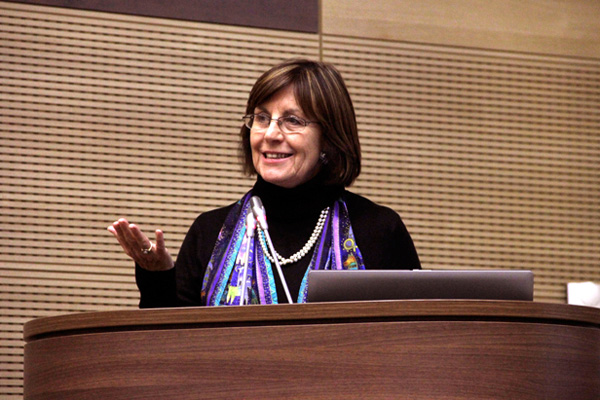
Joan Marston at the conference "Management of pain in pediatric palliative care." Photo: rcpcf.ru
- In one of your reports, you shared the experience of creating palliative centers in Africa and noted that money is not so important. If the main thing is not money, then what?
Firstly, the desire of people, and secondly, knowledge and skills. In Africa, we studied ourselves, literally on children, attended hospices in England, adopted experience from them, read literature. It was simultaneously training and research. Now in Tanzania and Uganda there are centers that can serve as a model of palliative assistance. In 2004, I wrote a training course, and now we are working on these programs in other countries, we are working with them in Zambia and in Kenya, we will soon work in Malaysia.
- Why don't you use ready -made British programs?
They are beautiful, but too expensive. In countries that do not have resources such as Great Britain, palliative assistance can and should be much more economical. A great example in this regard is Malawi. This is one of the poorest countries in the world. They started by selecting people from a regular hospital and formed a palliative team from them. Then a woman joined the team who was not a specialist in the field of psychology or palliative assistance, but was simply very kind and responsive. This woman was taught to play with children, and this was her main task. Ultimately, this team turned out to be so strong that it began to notice its work. Now all the central hospitals of Malawi work according to this model. They are supported by the government. In addition, they provide palliative assistance at home and conduct training for health workers.
Malawi, of course, cannot be compared with Russia, this is a very small country. But now Malawi is becoming a role model for many countries. And the main thing in this story is that the budget was very small, all that they had at the very beginning are several enthusiasts.
- And what, success is possible only in small countries? How to build such a system as in Malawi, only on a large scale?
I worked in India, a country with a billionth population. There, the government issued a decree according to which the center of palliative care should be in each region. Money is allocated for this. A strong public organization is needed, which would lobby for the government. In Russia, you need to conduct a major study and calculate how many children in Russia need palliative assistance. And to contact the government with this statistics, because the government perceives information at the level of numbers. Indeed, in fact, people who need palliative help are a very large part of the electorate. Imagine: a thousand children are two thousand parents, four thousand grandparents and so on. Officials understand these things very well.
- When you worked in Africa, did you have problems with access to medications, in particular, painkillers? For Russian medicine, this is a very painful question.
Of course, in Africa and all over the world there is a certain problem of access to drugs, but basically the government tries to be open to dialogue, and the situation is getting better every year. Now it is much easier for patients to get, for example, tabletized morphine, because its use is recommended by WHO. In Uganda, nurses who work in palliative care have the right to write out tablet morphine, and it can be obtained in ordinary city pharmacies.
- What place in the world does Russia occupy in the level of palliative care? Is there any rating?
We have prepared a map of the level of palliative assistance, it is almost ready. There are a small number of countries where the level is high, there are not many of them. There are programs and wide access to help. These are Great Britain, New Zealand, Australia, Canada and South Africa. In second place are countries such as Uganda and Malawi, there is special training and a wide network of palliative care centers. Russia is at the third level. You have very good programs, but they are in no way interconnected, there is no system. In fact, there are many countries at this level. For example, in Denmark there is no palliative help at all. But there are countries that are very actively developing and will soon break into the leaders. These are France, Germany, Romania, Belarus. In Belarus, palliative assistance at an excellent level, because they have powerful state support.
- How to convince officials that palliative help needs to be developed and that it is worth investing in it?
A dying child is a silent problem. The voice of a sick child and his family is not heard in society, the family is in itself, everyone is emotionally worn out. People just do not want to think that children are dying. It is necessary that families tell their stories, and the media include and broadcast these stories to society. We worked with one family, and I advised them to keep a kind of diary, write down the smallest events that happen to them, and share it with other parents. You can find support in the government. You need to look at people who make decisions in your country. Maybe among them there are people who have affected this trouble, who understand what it is. It is necessary to find an indifferent person in the government who would lobby and promote issues of palliative assistance.
We thank the "Charity Fund for the Development of Palliative Assistance to Children" for help in organizing an interview.