
Translated material
Survive on the island of Freedom
Cuban socialism has been living in the last months: the Fidel Castro regime began to crumble as soon as the grip of the great commandante weakened. As the great myth of the social camp is scattered, The New Times watched in Havana, where he was almost simultaneously with Dmitry Medvedev
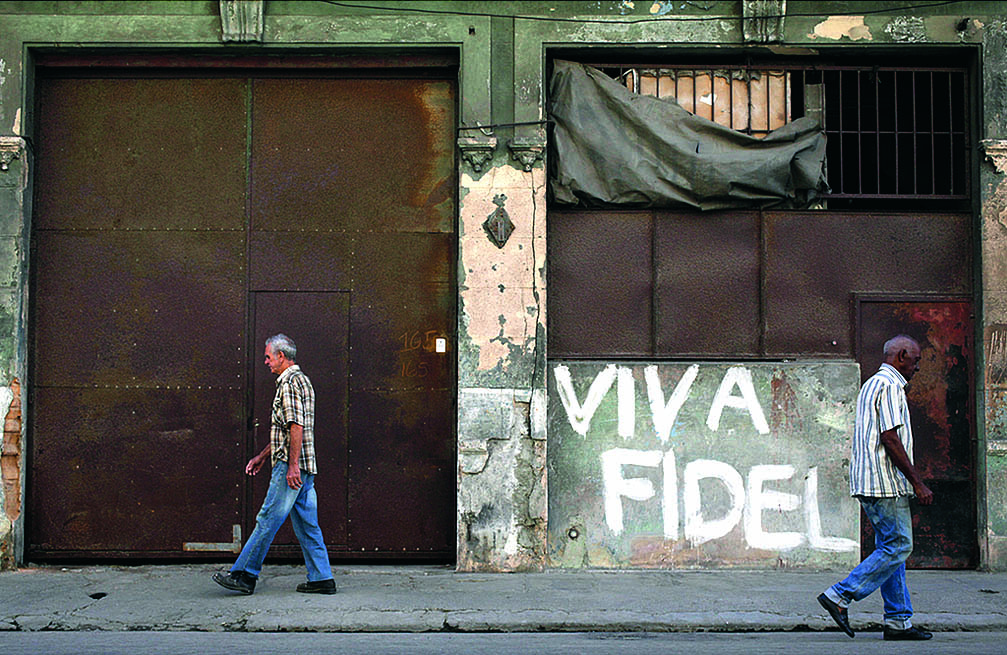 |
| The name Fidel is still written on almost every fence |
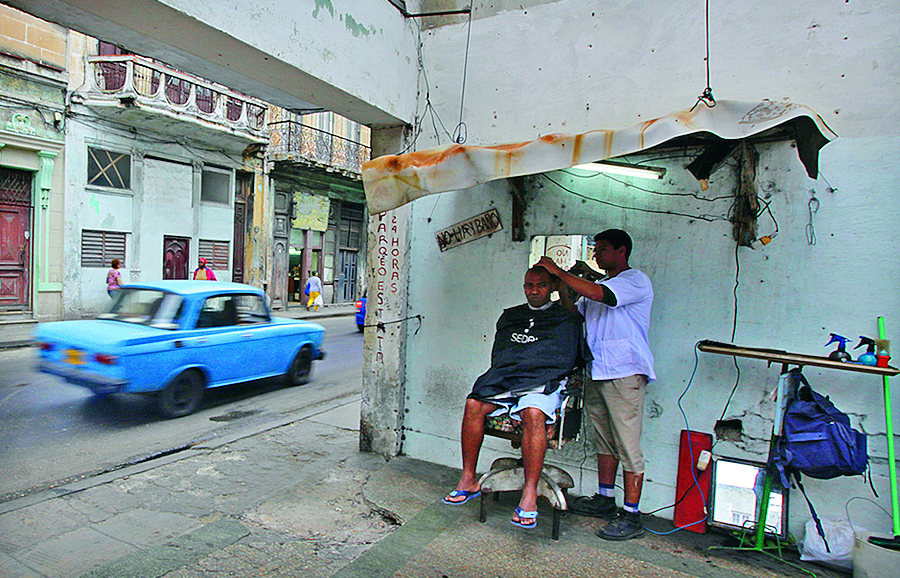
At the peak of the tourist season, the old Havana is a holiday city. Musicians sing to Guantanamer and Komfante Che Guevara, crowds of tourists stagger along the narrow streets, you are invited to the Salsa festival, then to the sale of cigars ... But moving a little away from tourist routes, you feel on the set of a film. Delivered colonial facades of the late 19th century, multi -colored boys in pioneer ties play football: half runs in sneakers, the other - barefoot, gently placing shoes along the curb of the site. Nearby stands a black, polished to the shine of the Cadillac in 1954. Schoolgirls pass by: tight white blouses, short beige skirts, high golfs, bare knees. The sun (or sofits?) Graces every little thing: blue paint crumbles from a fragile colonnade; Brackers of unprecedented sizes are dried on an elegant, worthy of Juliet Balcony; An old man with twisted wrinkles of cheeks sells wrinkled tomatoes from the cart. Here a real cube begins, where cigars do not smoke and do not go in a cabaret, over which, like three parks from Goya’s painting, three leaders soar - Fidel, Raul and another, alien, Hugo.
** | | | --- | | 
Reforms at the ODRA
After 50 years of the construction of socialism, the brother of Fidel Castro Raul decided to "actualize the socialist model." Mobile phones were legalized in Cuba (leaving the Internet by ban), partially returned the concept of private property - now you can sell cars and housing, allowed to travel. A seriously ill Fidel Castro seems to be aware of all the transformations: accepting the power from the weakened hands of the commandant in 2008, Raul invited the parliament to vote in order to consult with him on all issues. But how much it is informed and is in full consciousness a question. “Raul has neither authority nor charisma, only his brother’s shadow allows him to stay afloat,” explains The New Times, an independent journalist and blogger Renaldo Escobar. - Fidel ruled the country manually, not consulting with anyone. His beloved phrase in relation to his subordinates was: "Yes, I will tear your eggs!" Raul cannot say this to people. ”
But the Cubans understand: Raul - 81, which for life will come after his death - a riddle. “The Cuban authorities, like Saturn, devoured its children,” another blogger, Joani Sanchez, notes in a conversation with The New Times, “, surrounded by Castro, there is not a single politician or public figure who would have at least some authority. The system breathes on the incense, but we do not have our own Gorbachev. The most likely scenario is a military coup. ”
However, the health of Fidel or Raul, according to political scientists, is not at all as important as the state of the Higher President of Venezuela Hugo Chavez, recently operated on Havana, with complications. Chavez spends more than $ 10 billion on Cuba annually - this amount is four times higher than the country's income from tourism and amounts to about 10% of the Cuban GDP. The main form of subsidies is oil. Cuba daily buys 100 thousand barrels at catchy prices, some of them are processed at the Soviet -based refineries and goes to re -export. “Now the successors of the UGO in Venezuela* assure that they will retain the Prokubin policy,” the president of the Cuban Council of Human Rights, Juan Carlos Gonzalez Laywa, told The New Times, “but no one knows what will happen. The death of Hugo Chavez will become even more shock for Cuba than the collapse of the USSR. ”
| *Officially, Hugo Chavez handed over the reign of the board of the country Vice President Nicholas Maduro |
However, Cuban oil does not help fight poverty, which, according to Roberto de Heses, Herra Peres, an opposition journalist and publisher of the underground ballot “Let's say” (Hablemos Press), and forced Raul Castro to start reform. “These are all half-reforms, attempts to slightly correct the system in order to stay in power,” said the opposition of The New Times. “But as soon as the comrades go to the cemetery, everything will collapse.”
| | | --- | | 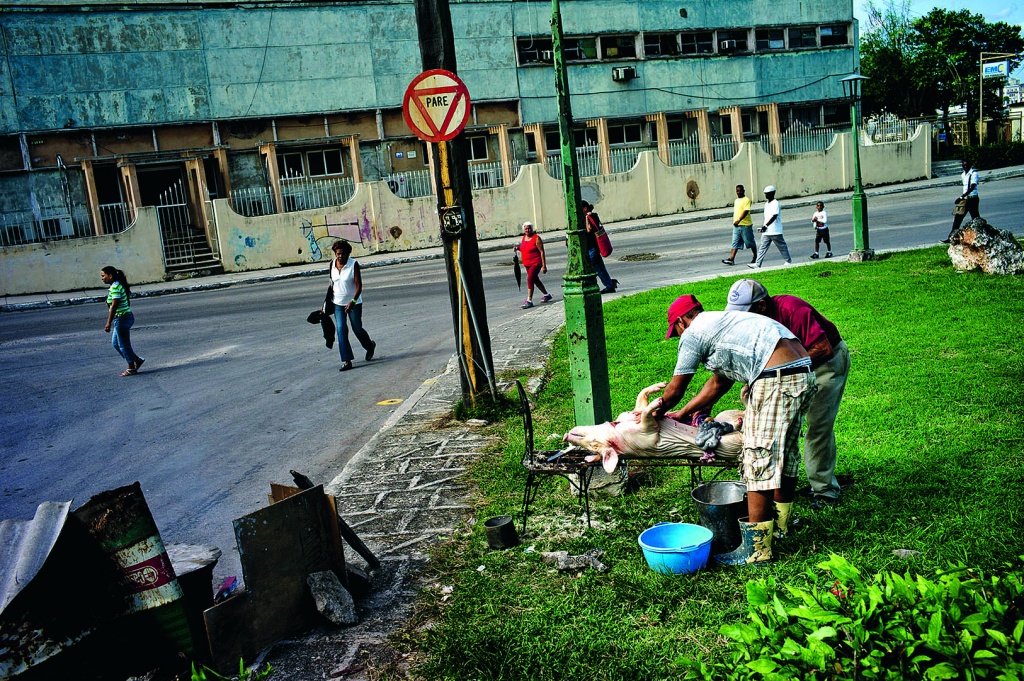 | Peasants sell their products right on the street
Peso peso discord
In the area of the Havana Center, which is not far from the Old City, the same colonial, half collapsing houses, only the streets of Pisire and not a single European. The 36-year-old Lesvan, who works as a security guard in one of the large hotels, accepts us in his house with high ceilings, saving from 50-degree summer heat. After the 1959 revolutionary grandparents (weaver and tailor), grandparents were forced to share: the most part of the house was given to the “poor”, leaving only two rooms with a total area of 15 meters. To somehow stay with his mother and wife, Lesovan divided the rooms horizontally, making two floors. “There are no windows at the top, but even better in the heat,” the owner boasts. There is no hot water in the house, the electricity is turned off from time to time, in the kitchen gas tiles on cylinders and the Eureka washing machine, in the living room - an ancient paved sofa, knitted chairs, wiped rugs on the floor in the living room. For some reason, the old kinescope TV cheerfully advertises in English the US Air Force: “Come to us. Our army is fighting for freedom and democracy around the world. ” Having caught the author’s surprised look, Leslava explains: “Cable TV. On the series put the credits in Spanish, and they leave advertising so. ”
Lesvans were lucky: he and his wife have a job. In Cuba, according to various estimates, up to 2 million unemployed - about 30% of the economically active population (official statistics indicate 3.8%). The salary of Lesvan is 600 pesos, the scraper's wife receives 300. Total on the young family 900. Only now you can spend these pesos everywhere. There are two currencies in Cuba. “There is Puta and there is Puta,” Lesvana laughs, “there is Peso and there is peso.” Like most Cubans, Lesvans receives money in the national currency (Moneeda Nacional), while the convertible Peso (Peso Convertible or CUC - Cook) uses free walking, it is to tourists in exchange for dollars. The convertible peso costs $ 0.87, and Moneda Nacional changes to Cook in a 1:25 proportion. That is, the salary of the Lesvan family is 36 Cook, or $ 45.
The economy of the Cuban family is complex. Every day you have to juggle with two currencies and think: where, what and what to buy. Or rather, do not buy - get out.
"
Favorite phrase Fidel in relation to his subordinates was: "Yes, I will tear your eggs!"
”As a lively embodiment of the left idea, Cubans receive books with coupons for the main products that are cooked in special stores accepting national peso. The prices here are quite“ communist ”, but the lowest quality and the number is limited. Rice, for example, costs 0.2 peso ($ 0.01), there are still coffee, vegetables,“ but rice is provided for 3 pounds per month per person, a person per person, a person, a person. - Says Lesvans, - and the Cubans eat it every day for a maximum of two weeks.
On the cards, Lesvan spends about 200 pesos. 700 pesos ($ 35) remains, for which you need to live the remaining two weeks, which is not just difficult - impossible. A liter of milk in an ordinary supermarket costs 1.2 cukes ($ 1.5), a pound of rice - 1.9 Cook ($ 2.4). There are also peasants selling fruits and vegetables on the street, but also at quite market prices. In the dry remainder for the most modest food for two, you need at least $ 100 per month. This is not counting the clothes and means of personal hygiene, which are not in consumer cards.
Supermarkets are for the thunder what is called. The art forgotten in Russia to take all places on the windows and shelves by a couple of goods, usually in the form of glass or canning cans, in cube, two types of sunflower oil, pickled tomatoes, pasta are used in a cube. For the entire confectionery department, one box of chocolate sweets at a price of 6.5 Cooks ($ 8.1). Sometimes the products suddenly disappear, for example, in February, in the entire Havana, it was impossible to find a toothpaste (it was excluded from the cards a couple of years ago). "What do you brush your teeth?" “Soap,” says Lesvana.
| | | --- | | 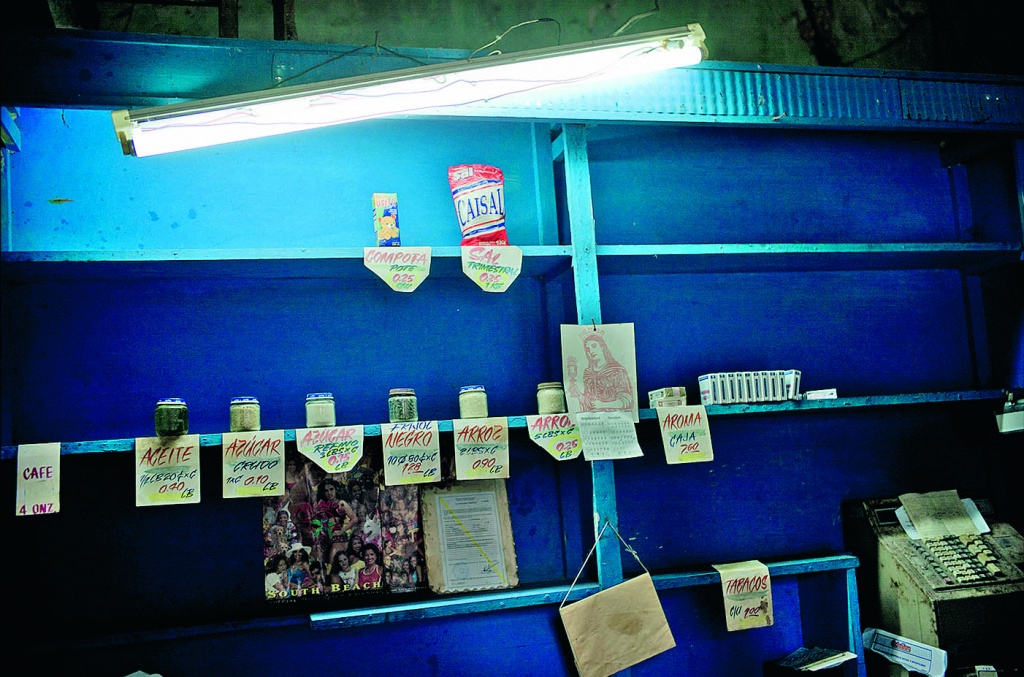 | | On cards, you can be cooked in special stores |
The country of thieves
In Cuba you understand the price of things. Money here is meaningless, soap, aspirin and sneakers are important. “Favorite Slogan Fidel:“ All the children are shod in Cuba, ”says Joani Sanchez,“ but the worst sneakers cost 10 Cooks ($ 12.5), that is, creeping! ” Washing sponges for washing dishes, diapers and gaskets, relatives are sent by mail from abroad, a CD with music is the best gift for any Cuban, because you can’t download anything-the Internet is prohibited. You can install it illegally, but then you will have to give 60 Cooks ($ 75) in a month, and this is few people can afford.
To meet the same $ 100, the Cuban goes to the black market. Rather, the black market itself comes to him: products stolen in factories, shops, ports and presidential palaces are spread to the homes. Cuba is a country of theft, stealing here means to survive. For relations, you can buy everything: from iPhone to condoms, but all this is also worth money, although cheaper than in the supermarket. The same rice in the black market costs 10 pesos ($ 0.5). “Each supplier sells its products,” explains Lesvan, “some are vegetables, others - clothes. But sometimes you have to go to the store: the market is unreliable - now densely, then empty. ”
When Lesvans ask a naive question, what he steals, being just a hotel guard, he willingly explains: “The guard must make sure that no one will steal. Colleagues share. " And then he shows the floor, covered with breech carpet. The same carpet and the neighbors. “How else, Chico? I have a sick mother, she can’t walk, she needs medicine, and she has a pension - 300 pesos ”($ 15).
| | | --- | | 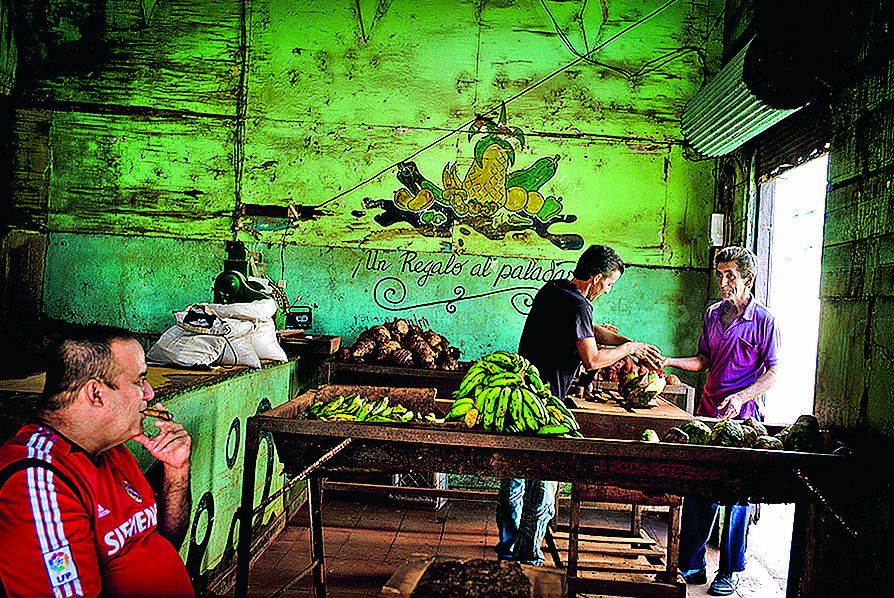 | | As a result of Raul Castro's reforms, private shops appeared in Cuba |
A pharmacy for himself
Mom Lesvan, in the past, a professor of computer science at the University of Havana, proudly reports that medicine in Cuba is publicly available and completely free. “Like in the USSR,” she says.
When you begin to understand, you understand that it is true, as in the USSR, free is very conditional. “Cuba is famous for its specialists,” agrees Joani Sanchez. - And there are clinics in the most seedy villages. But there are hands, but there are no materials. The best neurosurgeon in Latin America may not have a thermometer. The hospital may be the last model of a tomograph, but not be aspirin. ” As a result, operations come not only with their anesthesia, but even with rubber gloves for the surgeon. They buy it all not in pharmacies, but in the same black market. The question of how to determine whether the Social Aspirin is surprising Cubans. “So the tastes are clear,” they answer.
And, of course, not a single visit to the doctor can do without “gifts”: when salary of $ 15- $ 25, the medical staff can not be done without help. True, foreign business trips are helped out: Cuba officially exports doctors to Latin America and Africa. For two years of work in Angola or Venezuela, you can earn a car.
Of course, not all Cubans suffer due to a lack of medicines. “We have hospitals for the military, hospitals for high -ranking officials, a hospital for Chavez,” Joani laughs.
The same thing is in education. Cuba is one of the leaders in terms of literacy (99.8% according to UNESCO), with a population of 11.2 million in a cuba, half a million students. But the altar of science has to be placed on the altar of science, not counting different contributions. The microbiologist Carmen, working as a waitress, says that the kindergarten for her three -year -old Alexandra is free, for food for children's cards you need to pay only 40 pesos ($ 2) per month, but parents divided other expenses with each other: “One mother brings soap, the other pencils, on me - washing powder. It turns out about 150 pesos ($ 7.5). ”
"
In the next two years, up to 400 thousand people will leave by truth and by crook. If not for a visa, the outcome of the Jews from Egypt would seem like a Sunday walk: the island would be depopulated
" Laureal wealth
One of Raul's largest reforms is the transfer of land to peasants. If earlier they were employees and received a salary, today they are tenants. True, in return, they are obliged to buy fertilizers and compound feed from the state, as well as sell 60% of their products at low prices. “This is an example of the uselessness of Raul's reform,” says Joani Sanchez. - Cuba before the revolution was one of the leading manufacturers of sugarcane and rice, and today we buy products in China and Brazil. 70% of agricultural lands are abandoned, the country is overgrown with weed thorns. But the most important thing: the land is leased for only ten years, the peasants are not interested. ”
However, the peasants also learned to spin: they sell the state worse, the rest is worse in private shops. The owner of the grocery kiosk Jorge is one of 400 thousand Cubans who rushed into the abyss of entrepreneurship. The main problem when opening a business is money. There are no loans here, so in the stall, the construction of which cost $ 3,000, I had to invest all my savings and even take from relatives. “I worked in trade for many years,” says Jorge, “and this is a bread business.” It was not difficult to get a license, although here it was not without whims. “I have a dressmaker’s wife, we first wanted to open a clothing store in order to put his own to the state junk. But the Ministry of Labor told me that there are so many such stores. ”
The goods of Horhe are purchased from resellers directly working with farms. But you can’t do a big margin on the intermediaries, and there is no wholesale market in a cube. The output is the same black market where part of those 60%that the peasants sell at low prices go. Horhe by local standards is a rich man: his revenue sometimes reaches 5,000 pesos ($ 250). “It’s just difficult to find workers,” Horhe complains. - I pay them 80 pesos per day ($ 4), this is four times more than in the state -owned enterprise. I have one requirement - so that they do not steal. And with this the problem. "
| | | --- | | 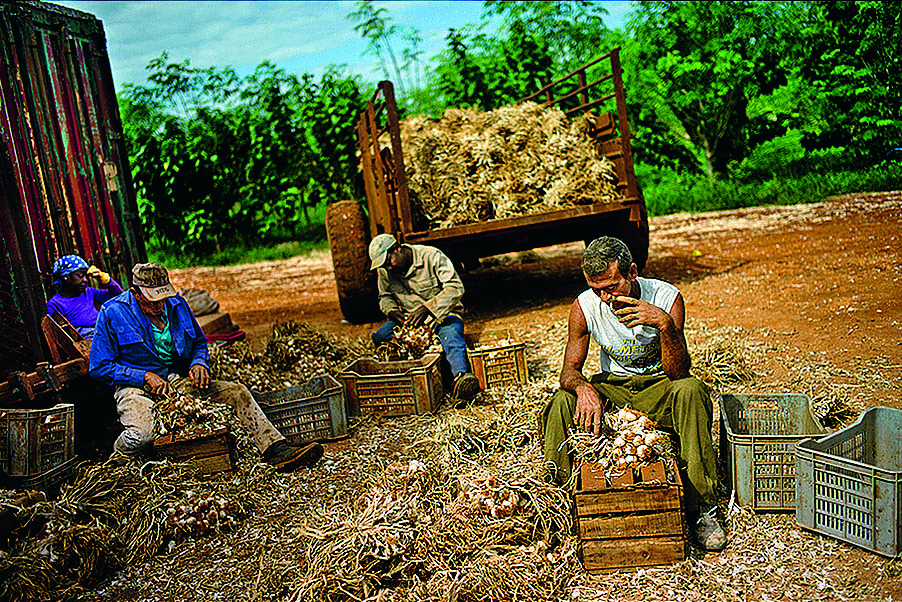 | | The peasants are now tenants of the land, but for a long time? |
Almond romance
But even Jorge with his incredible earnings for Cuba rides by public transport. There are no traffic jams here, not many can afford the car, although Havana is a city-museum of cars by which you can trace the whole history of the island. Here, for example, “Chevrolet” and “Buyiks” of the 50s, on which Frank Sinatra perhaps traveled. They say there is even one "seagull". And here are “Muscovites” and “Lada”, which were imported here until the collapse of the USSR. The 90s are clearly sagging-not a single “dozens” of the “Lada”. But in the 2000s with the Era Era, more and more used “Peugeot” and “Nissan” appeared.
Almost all the rare cars that are called “almanes” here (from Almendra - almonds) are route taxis. The fare is 10 pesos ($ 0.5). For comparison: the average account for a tourist on a regular taxi is 10 Cooks ($ 12.5).
When private property was banned, Cubans had to dodge in order to sell their cars. It was possible, for example, to arrange a fictitious marriage, rewrite the car for a new spouse, and then get a divorce. Today you can sell used cars, but new ones still cannot be bought-this privilege is given only to the elect: actors, athletes, and generals. Those, however, immediately sell them in exorbitant prices. As a result of such a “free” market, the old “Zhiguli”-“penny” of the mid-80s cost $ 15 thousand, and the ten-year-old low -iority from Kia-all $ 35 thousand! Of course, it is easier to steal a motor in the state salon from the same “kia” and insert it into the 1953 Oldsmobile, which some do. By the way, cars are also being refueling in the black market, where a liter of gasoline costs 0.8 Cook ($ 1), unlike 1.9 Cook ($ 2.3) at a gas station.
| | | --- | | 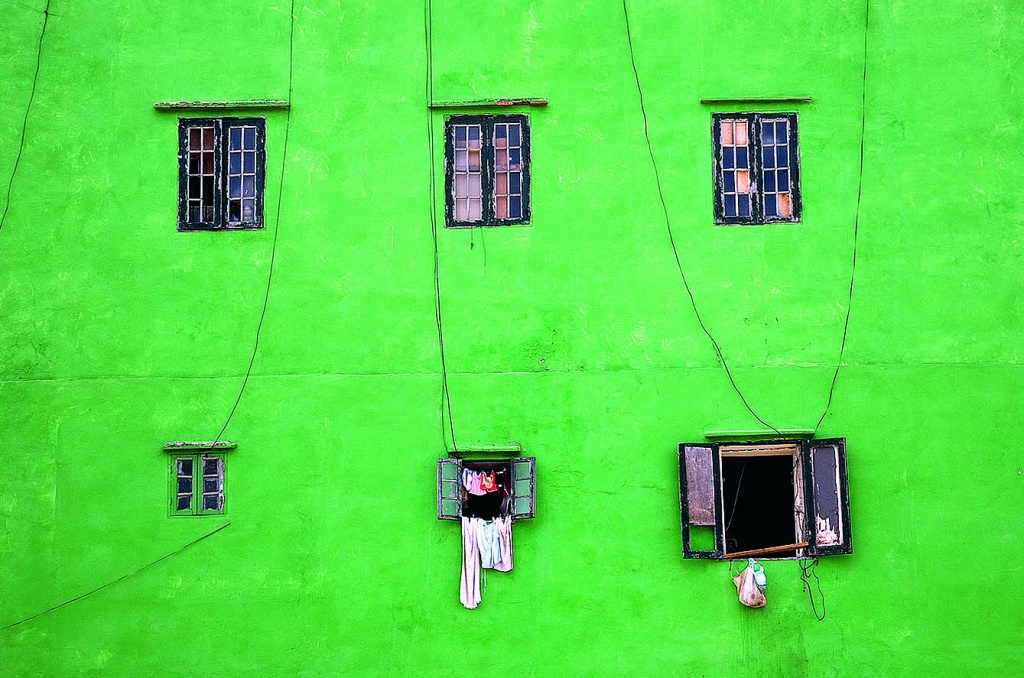 | | Havana center |
Cuban dream
In one, communist ideology succeeded: Cubans are people with a dream. The interlocutors of The New Times amid complaints about the lack of shampoo, they suddenly talk about their hobbies. The laboratory assistant of one of the Gavan hospitals Marseille goes to photographs, which is working as a repair of mobile phones and computers, Amilkar teaches French in the French cultural center, and the drummer Jose, nicknamed El Negro, restores the second floor of the parental house to make a music studio there, make money and go to the Brazil championship in 2014.
But most Cubans dream of one thing - to leave. On the one hand, it has become easier - the visiting visa is no longer needed, and the term of the permitted absence increased from 11 to 24 months. However, the issuance of passports is still in charge of the Ministry of Internal Affairs, limiting the departure of specialists, doctors, athletes.
The second obstacle on the way of Cubans is a visa. The neighbors are in no hurry to open their boundaries, moreover, the visa was introduced even by visa -free Ecuador. Of the 2 million Cubans living in a foreign land, 1.8 million live in the United States, from where they send about $ 1 billion to their homeland annually. “According to our estimates, in the next two years, up to 400 thousand people will leave by truth and by crook,” said Juan Carlos Gonzalez Laywa. “If it weren’t for a visa, I assure you, the outcome of the Jews from Egypt would seem like a Sunday walk: the island would be depopulated.”
The opinion of Juan Carlos with his example is confirmed by Lesvan. A year ago, he and his wife decided to tear: they sold the house and fled to Argentina. После пятимесячных странствий по Латинской Америке в поисках работы чета была арестована в Мексике и депортирована на родину.…
Из Гаваны уезжаешь со странным чувством: все вроде красиво, но возвращаться сюда не хочется. Или хочется, но не сейчас, а когда все мальчишки в том дворе будут гонять мяч, не снимая кроссовок. Собираешь пакет в отеле для одного из местных собеседников (мыло, шампунь, зубная паста) и думаешь, что и сам стал частью этой системы: украл-таки из номера рулон туалетной бумаги. А как иначе, чико?
фотографии: The New York Times, Вивиан дель Рио, Reuters