
Translated material
Alexey Muravyov: nine on the Paranets
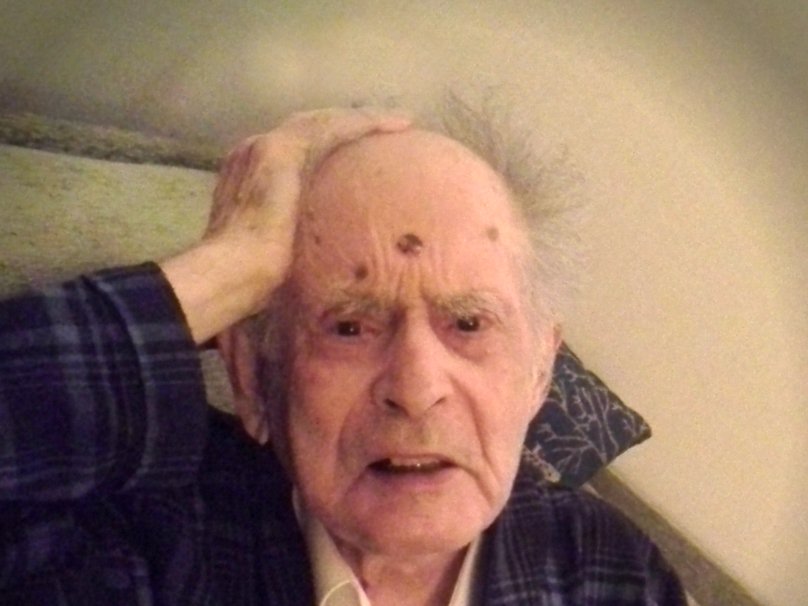
Alexey Muravyov 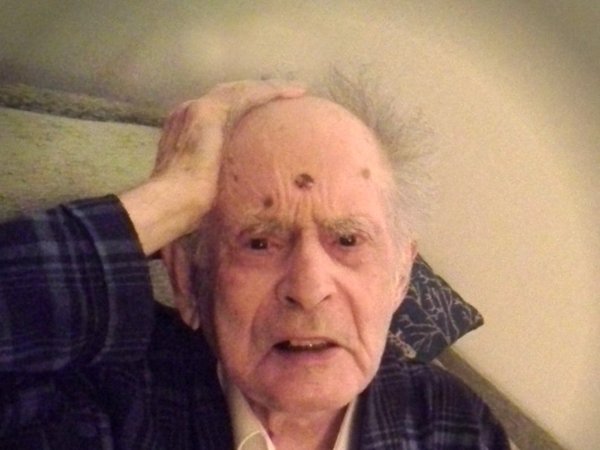 Grigory Pomeranz
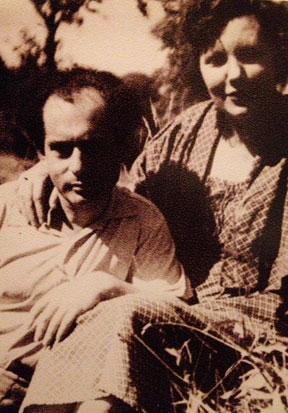 Grigory Pomerantz and Irina Muravyova
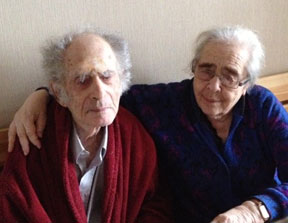 Grigory Pomerantz and Zinaida Mirkina
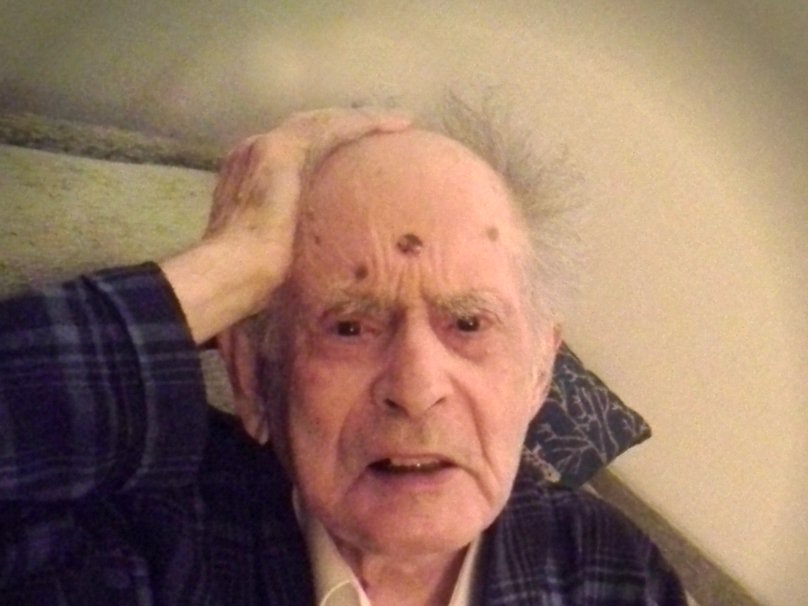 Grigory Pomeranz
Nine days have passed since the death of Grigory Pomeranz. For some, he was a philosopher, for others-an essayist writer, for the third-a spiritual authority, for me-a grandfather. But a sense of great loss united many people who began to search, read, re -read books, essays and lectures of the Pomeranz, combining many of his hypostases, more precisely, hypstasizing our many. Paradoxically, it turned out that the number of people for whom Pomerantz turned out to be important and even very important is really huge. The media spoke about him for several days. The authorities were silent: apparently, the thinker was too non -component, we are not unwinding into any of the new paradigms. In my life, he gently appeared at the very beginning and walked nearby, looking kindly at me and giving advice only occasionally. I heard many of them only now and I am embarrassed from this.
He was not an ordinary dissident, but was not a loyalist, although he worked in a Soviet institution. He was a philosopher, but was not a "professor of philosophy." He suffered a lot from lack of freedom, but was an internally free person. Its meaning and its role are pulled into apophatics, described in paradoxes, this is the main thing that comes to mind. Trying to look as if objectively, I lose, speaking of it, the last refuge of objectivism - tough scientific coordinates. This is probably because Grigory Solomonovich was a quiet voice of conscience and a teacher of freedom. So it was always with Paranets: at each new round, he gained more and more inner freedom, further leaving the “anger of the day”, from relevance and, in general, speaking the language of medieval scholasticism, from excessiveness. Accordingly, interest in his figure is inversely proportional to this activation, inclusion in the active agenda. Simply put, the interest in the Pomeranz now means interest in the eternal, expressed in the categories, several immanentic metaphysics.
Grigory Pomerantz and Irina MuravyovaThe time to write the intellectual biography of Grigory Solomonovich Paranets has not yet come. I just don’t see how to do this without driving it to the existing format. He was not the sixties and was not a "regime fighter." Wrong can be called a cultural scientist, a writer, and a publicist, and a philosopher. But all these frames are external to him. He was a thinker, and his living thought, expressed in books, essays, journalism, public lectures and articles in the media, continues the stylistic traditions of Russian thought of Chaadaev, Vyazemsky and Dostoevsky. Its oral genre, lectures that he gave alone and together with his wife, poet Zinaida Alexandrovna Mirkina, made this literary thought somewhat more interactive, as they say now, but did not change either his function or its meaning.
But it is still necessary to outline the coordinates. Pomerantz was born on March 13, 1918 in the Polish-Jewish Vilna, who had not yet become Lithuanian Vilnius. In 1925, the family moved to Moscow. In 1935, Pomerantz entered the Faculty of Philosophy of IFLI, and after the abolition of this faculty "as unnecessary" he switched to the department of Russian literature. Having graduated from IFLI in 1940, Pomerantz went to work at the Tula Pedagogical Institute. In 1941, the Pomeranz volunteered to the front, was determined by a freelance liths, but he had to command. In 1942, he was hard (as written in his military ticket) was wounded, crushed his knee, returned to duty, was injured once again and remained the whole war in the ranks. He fought near Stalingrad, reached Berlin, met Victory Day in the Sudeten Mountains with the rank of junior lieutenant. Under Stalingrad, he joined the CPSU (b), in 1946 the Pomeranz was excluded from the party with the wording “For Anti -Party statements” and demobilized with the “wolf ticket”. Until 1949, Pomerantz worked in various small positions, waited for his arrest and was arrested on October 30, 1949 and ended up in Lubyanka. According to the famous article of the Criminal Code of the RSFSR 58-10, he received 5 years, which he was serving in Kargopollag. After the death of Stalin, in the summer of 1953 he fell under an amnesty. For three years, Pomerantz taught literature in the secondary school of the Cossack village of the Krasnodar Territory. In 1956 he was rehabilitated and returned to Moscow. He worked as a bibliographer in the library of foreign literature, and then moved to the Fundamental Library of the Social Sciences of the USSR Academy of Sciences (FBON, now INION), where he remained until retirement. The external biography ends on this, the spaces of life of the front-line soldier-lacher-pensioner narrows to the field of spirit, but the spirit itself expands to universal proportions. Through such a transformation, Pomerantz came to inner freedom and philosophical peace. A significant role here was played by his companion Zinaida Mirkin.
Pomerantz began to write at the end of 1950-60. After the death of her first wife and my grandmother Irina Muravyeva (“subject” (the first version of “experienced abstractions”), “happiness”, “memory of Ira”, “dandelion fluff”, “language of the gods”, etc.). Then there was the experience of the first semi -underground seminar for young people (the Muravyov brothers, Kotrelev, and also separately - Krasin and Osipov). In parallel - the circle of senior, partially camps - Leskis, Fedorov, Kuzma (Anatoly Bakhtyrev). The first publications in Samizdat, followed by "perfect openness and freedom from fear." Pomeranz took the next height. Then - participation in the magazine "Syntax" and friendship with "Baratic" artists, "Lianozovites". Since 1962, Pomerantz has been writing and publishing in articles on oriental studies and comparative cultural studies (in the center of his interests - the spiritual life of India and China), acts with reports and lecture courses on this subject. In 1965, Pomerantz made a report on the cult of personality and history.
In 1976, according to the decision of the KGB, the publication of the scientific articles of the Paranets ceased, the period of silence and a quiet conversation begins. It is conducted in the Samizdat magazine "Search", under his own name, without resorting to pseudonyms. Pomerantz lives under the cap of the KGB, and in 1985 in the apartment where he kept his archive, a search is taking place. The archive is confiscated, some of the works disappeared. After the collapse of the Soviet regime, Pomerantz gradually switched to the publication of books and articles in glazes and magazines. He became actively published in the 1990s, first in the magazine "Century of XX and Peace", then in "The Art of Cinema", "Light", some newspapers. The first book of Grigory Pomeranz in the homeland “Open Abyss. Meeting with Dostoevsky” published in the publishing house “Soviet Writer” in 1990. Its bibliography has about 20 books, many came out the second and third editions. In 2000 It becomes a cult figure for a small segment of liberal intelligentsia, although its meaning, generally speaking, is much larger than this group. And many understand this, but it is not possible to explain clearly.
Pomerantz talked a lot about freedom, he understood it well. Of great importance was the perennial - since 1967 - his polemic with A.I. Solzhenitsyn. It is interesting that the Pomerantz refused to publish his part of this conversation in his homeland until the journalism of Solzhenitsyn began to appear in the domestic media, and in the 90s, twice opposed the Russian press against boorish controversy with Solzhenitsyn. But the awareness of the national gathering of Solzhenitsynsky as non-freedom, as a narrowing and even as “cyclicism” was decisive for him. His philosophy is religious philosophy, a kind of philosophy of all -unity. He believed that the Universe does not come down to time, space and matter, infinitely divided in seconds, centuries, millennia, meters, kilometers. She has another person, integral in all her manifestations, a holistic hypostasis of reality, inner light. For the Ward, the existence of God is completely fundamentally, but God is understood by him through the introduction. Having gone into religious philosophy, he, like Dostoevsky’s beloved by him, chose a literary path as the most corresponding to the Russian mentality.
Grigory Pomerantz and Zinaida MirkinaReligion was the field where we could not converge for a long time, for I thought tough and specifically, and it was wide and, as it were, “above the ground”. In this sense, my faith is in Hebrew, and it is widely wide. In our situation, collapsing, the crushing of institutional Christianity and the transition to a new form of existence of the Christian religion, I ended up all the time in the rearguard, he was ahead of me. Probably so right - I do not strive forward, I do not have enough dynamics. But the Pomerantz was definitely a Christian for confession, a couple of weeks before the death we spoke to him about faith, and he definitely tied his faith with Trinity and Christ. The two main dogmas of Christianity were experienced internally and adopted in depth. But he did not survive the dogma about the church, although I would say that he internally saw the horizontal connection that Christ spoke of in the Gospel.
Our last big conversation with him, which I want to remember here, revolved around the fact that Russian history and Russian thought are viciously linear, almost all lines are at a dead end. And they cannot get out of this linearity, despite individual breakthroughs: Dostoevsky, Daniil Andreev ... G. S. told me: “Each time we start from scratch. The earth is round, and we still think in a straight line. The achievement of the result by us is false, for we all the time return to the point with which we started. We need to find the direction in which we will create new milestones. It is not in motion, for all movement is cyclical. We must find a direction from rest. ” Pomerantz called such a development “from a star, from light in the chest”, it is internal collecting that can give a way out of a vicious circle. These slightly enigmatic “words of the sage” show in a sense the result of his philosophy. You need to be prepared constantly. You need to be alone. Sew new pockets to the old front -line overcoat, we are already following us. The steps of history are heard on the stairs. We must get out of the vicious circle, so told us, the remaining Grigory Pomerantz, standing in the doorway.