
Translated material
A new corps of Central Russian texts has been created
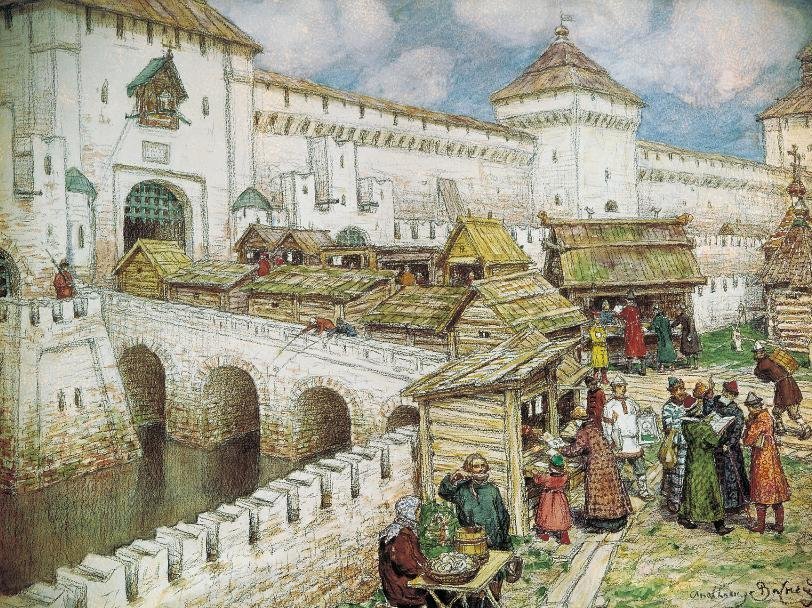
The developers of the National Corps of the Russian Language announced the opening of a new historical corps within the framework of this project. This is the corps of Central Russian texts of the XV - early XVIII century, the volume of which was three million of usage. The corps included literary works, annals, lives, business letters, articles, household correspondence.
At the moment, a search for accurate forms (without morphological marking) is available in the Central Russian Corps. The researcher can also make his proportion, limiting the search by the works of a particular author, the genre, the time of creation, functional style (household, official, business, hybrid or Church Slavonic texts), as well as look for in the text of a particular work.
The main corps of the Russian language is also replenished, where texts of various periods were added, including artistic prose and memoirs of the 18th - early XXI centuries, as well as texts of the media and electronic communication. The volume of new texts amounted to 20 million of usage, thus the total volume of the main building increased to 230 million. Recall that in addition to the main corps, the “National Corps of the Russian Language” includes the proportions of the texts of the media of the 1990-2000, oral speech, the accentological case, the multimedia corps, the corps of parallel texts, the poetic corps, the body of dialectic texts and the training building of the Russian language.
Philologist Boris Orekhov told Pro Science about what the "Central Russian language" is and where the boundaries of the language are generally held:
“ The term" Central Russian language ", of course, is very conditional. And in addition, it is not too successful: confusion may occur with a medium-Russian (in a geographical, and not in a temporary sense) dialect zone, that is, the Vladimir-Volga and Novgorod groups of dialects. Still, usually speaking about this period of the evolution of the language, simply “Russian language of the XV-XVII centuries” (for example, a multi-volume dictionary of the everyomatic Russian language of Moscow Rus' of the 16th-XVII centuries is published). But in order to understand the logic of the development of the national corps of the Russian language, this term is suitable.
The fact is that at the moment a good case is assembled for the last three centuries, that is, for the language, if you simplify the matter that can be called modern. What is written in this language is generally clear to us, its modern native speakers: we learn words, we understand what they mean and in what grammatical relationships are with each other. The next step should be the coverage of historical material.
It is known that the Russian language of the XI-XIV centuries has already been noticeably different from the modern one and therefore it is usually called the Old Russian, thereby emphasizing the very significant distance with how we say now. The roots in Old Russian language are mostly the same, but often they mean a little or quite another than now. There is another morphology, the system of verbal times and even the composition of phonemes is distinguished. Work on the transformation of the monuments of this period into the corps is complex. But it is already going on and very soon the ancient Russian part will become an integral part of the large national corps of the Russian language. But the progressiveness of the movement is important.
Until the Old Russian period, it is necessary to overcome the step from the XV to the 18th century, which occupies the middle position between the very unlike our Old Russian period and the modern language that is quite understandable to us. Hence the "Central Russian": in some ways it is the same as the language of the last centuries familiar to us, and in some way carries too many archaic features. There is an indicative publishing tradition of the texts of the Central Russian language, which are given in the translation rather reluctantly - in the calculation that the reader will still understand what was written. The works of ancient Russian literature (XI-XIV centuries) are usually translated.
The period of language development, of course, has no clear boundaries. The evolution of linguistic objects is continual, and researchers who are easier to divide their material are introduced into discretion to understand what mechanisms operate in it. This is best illustrated by a well -known paradox about a pile of sand. If you remove the grain of sand from it, at some point a bunch of remaining sand can no longer be called. This will happen clearly earlier than only one sandstone remains from the former heap, but at what exactly the moment, it is difficult to say. Three grains of sand is also not enough for a heap. Ten? Fifty? The border is unclear, unsuccessful. Also with the language: no one can say at what moment a sufficient number of roots changed its meaning towards the modern one, and quite old forms have disappeared in the grammar so that we can say that we have a new stage in the evolution of the language. ”