
Translated material
Anna Sakoyan: suspended
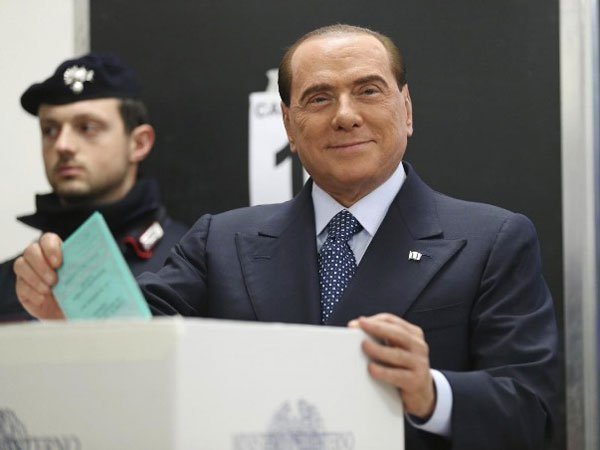
Anna Sakoyan 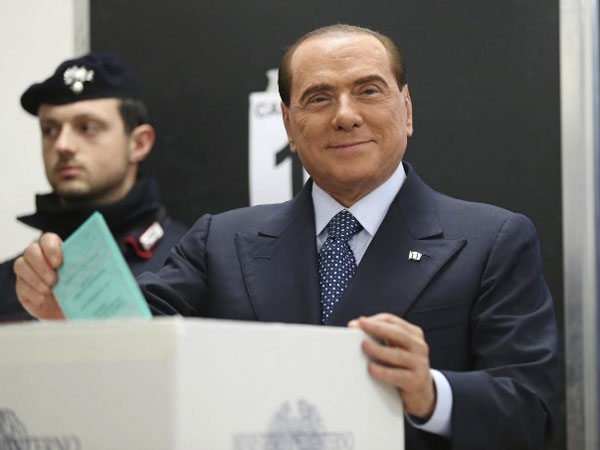 Silvio Berlusconi Photo: FrontIerenews.it
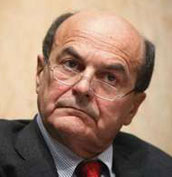 Pierre Luigi Bersani
 Mario Monty
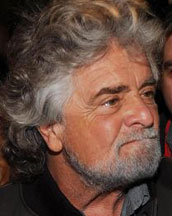 Beppe Grillo
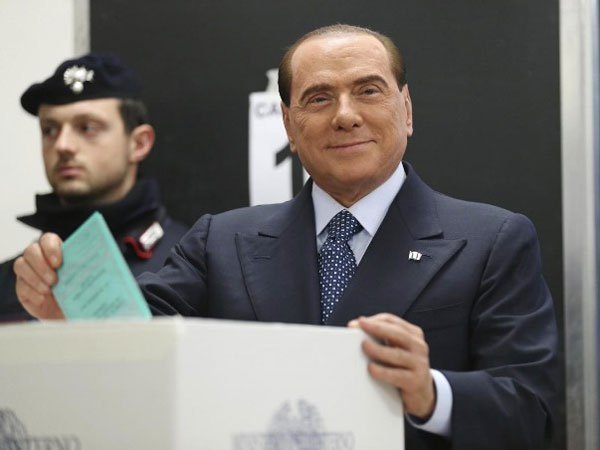 Silvio Berlusconi Photo: FrontIerenews.it
On February 24-25, 2013, early parliamentary elections were held in Italy, the result of which caused a strong resonance at the international level and, as a result, gave rise to numerous issues, forecasts and interpretations. The media for the most part formulate the result of the vote as a “suspended” parliament, which, probably, will have to dissolve in the shortest possible time, after which there will be new elections.
In the post -war political history of Italy, the situation of the suspended parliament arose for the first time. Up to this point, the electoral system, according to which the party, which gained the majority of the votes in each ward, receives additional places to achieve 50% of the presence, did not allow the equilibrium of the opposing forces. In this case, usually in the lower house and in the Senate the same party was the leader.
Pierre Luigi BersaniIn this case, it turned out that in the lower house the championship was received by the left-centric coalition Pierre Luigi Bersani, and in the Senate-the right coalition of Silvio Berlusconi, who returned to politics. This means that the Senate now, in principle, can impose a veto on every initiative emanating from the lower house - in other words, a path situation has developed. Moreover, in other political contexts, alliances are formed in such cases, due to which the required predominance of opinions is obtained, then in Italy, as political scientist James Walston from American University of Rome, it is hardly possible: the confrontation between the original competitors can often unite in parliament peacefully.
In addition, the current Italian elections were marked with a record low turnout - 75% - despite the fact that traditionally the appearance of voters in Italy exceeds 80%. Still, from the point of view of some publications (for example, Washington Post ), a surprise was the return to the policy of Berlusconi, which they were already used to considering a political corpse. Finally, for many observers, a big surprise was that the Party “Movement of the Five Stars”, founded two years ago by Satyric Beppe Grillo, was held in parliament with very high results (25% of the vote in the lower ward). The main appeal of this party was the abolition of anti -crisis budgetary reductions introduced by former Prime Minister Mario Monty, as well as the strict criticism of the Italian political establishment and the EU policy.
And Mario Monty, with his centrist coalition in both wards, scored 10% of the vote.
What is the alignment
Mario MontyMany international media , following the opinions of experts, are inclined to interpret what happened as a reaction to a package of anti-crisis measures taken by Mario Monty, who in 2011 replaced the Prime Minister Silvio Berlusconi. This package included increasing taxes, increasing the retirement age and reducing budget expenses (as a result, benefits) in order to improve the country's economic situation in the eurozone and reduce public debt. International figures (including Barack Obama) and, first of all, the leaders of the European Union (including Angel Merkel) supported these measures in every possible way, and Monti was in their good account. Italian citizens, for their part, were unhappy, although the prime minister promised them in the future to reduce taxes again when the country entered an acceptable economic level.
The promises of citizens were not convinced , and the results of 2012 showed a significant increase in unemployment. “People warned that if they [leaders] will adhere to such a policy, then they will bear serious political costs and receive a strong oncoming reaction,” commented London political analyst Simon Tilford. A predictable way, who spoke on the scene, was the first thing to generously give out money , which expected to attract the sympathy of voters.
One way or another, the main confrontation was expected between him and the left-center of Bersani. Therefore, experts made a strong impression on Beppe Grillo's game with such serious voting support. “Grillo was a crushing success; The rest of the situation is still unclear, ” said the political observer Stefano Folly. Further, he believes, there is either a complete impasse, or nevertheless the formation of new alliances. According to another political observer, Massimo Franco, in this story there are two key points: "The first is an unexpected and strong take -off of the" Movement of the Five Stars "and the second is a depressing result of the election."
Beppe GrilloA few words about Beppe Grillo and his movement. Firstly, Grillo is originally known to compatriots as a satirist, who performed a lot on television. Secondly, Grillo's main campaigning was unfolding on the Internet, and its main audience was young people. By the way, one of the requirements of his party is the unlimited general accessibility of the Internet. Grillo also has an updated blog daily (and more than once) in which materials are published in three languages: Italian, English and Japanese. Thirdly, his movement expresses the idea of resistance to the establishment, which is solidarized with the external pressure forces in the EU person and does not act in the interests of his citizens. Here is an excerpt from the blog (published on February 26):
“Can it be so that the balanced budget, even if it is necessary, really open the way to the“ future ”? Could it be that the European Central Bank, with his desire to buy more Italian bonds, will play the role of a fabulous fairy? No, enough! We need to go back and live a real life - a life that always made Italians so rich, despite their poverty; Return to the ability to believe in the future, to the beauty of your land, to trust your joyful and happy "star". All this is aimed. It is buried under the gloomy oppression of the priests of money - deaf and blind to everything except the accumulation of currency. Economists and bankers became the gentlemen of Europe, and they made Italy a laboratory of their power, where they began to replace politicians who have now become absolutely secondary and corrupt. ”
In other words, a protest is formulated against the pressure of the European Union on the participating country, and this rhetoric is massively supported in this country, which, part-time, is the third largest eurozone economy.
What's next
Due to the great uncertainty, further scenarios mainly break up into two groups: either the forces of the current parliament will agree among themselves, or the parliament will be dissolved. One way or another, the current situation showed that the Italian electoral system needs urgent structural reforms, which will further avoid such dead ends, said Brussels economist Nicolas Veron. Massimo Franco expresses a fear that if the parliament is not re -elected, then the political “tsunami” in the person of the Grillo movement can overwhelm the parliament and thereby aggravate political turmoil in the country. This, in turn, will lead to an economic recession that will affect the international market.
James Walston summed up the situation with the words: “In Italy, the system of two blocks developed. And now we are observing a system of three blocks ”(the third block means a force that led to the success of the Grillo party). “Most analysts believe,” writes Washington Post, “that Bersani will try to conclude an alliance with the Law -Center Monty in order to ensure a stable government, based on the fact that both sides under the banner of“ centrism ”receive enough votes. However, if Bersani is inclined to the left and can find the intersection points with the Monti, then a significant part of his party is in more left -wing positions and can rebel. ”
See also: the levocentrists won the elections in Italy Berlusconi will get drunk in case of winning the parliamentary elections in Italy after the resignation of the prime minister dismissed the parliament