
Translated material
Homofob does not play hockey
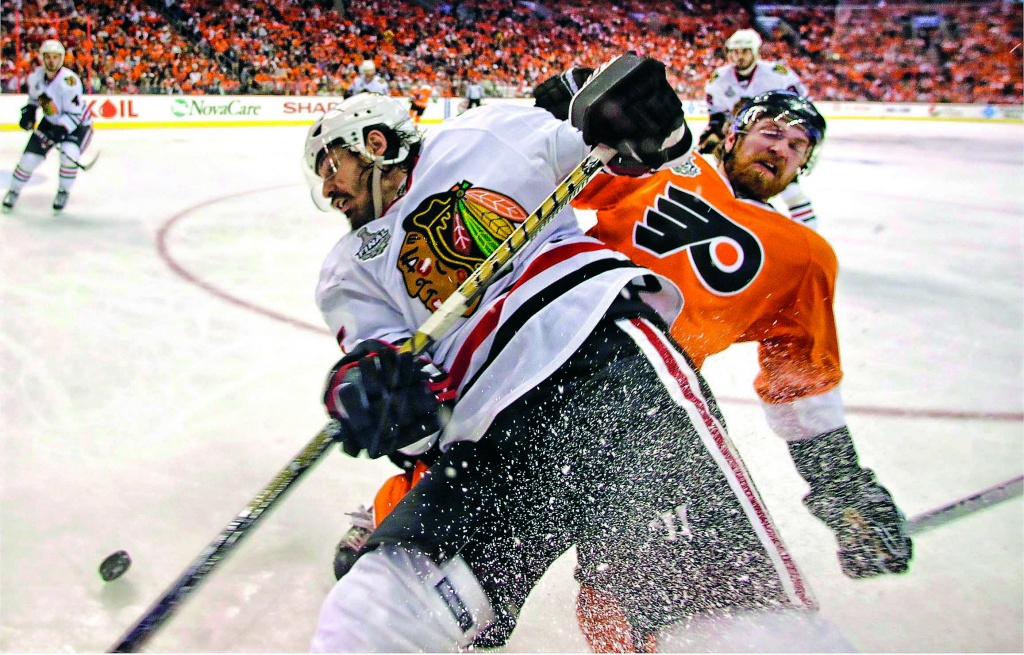
The holder of the Stanley Cup Brent Sopel (left) brought the Cup to the Chicago gay parade in 2010 in memory of the deceased Comrade Home-Gosualist
** A year before the Sochi Olympiad, the situation around LGBT-Menorities in Russia deteriorated sharply. This is stated in the open letter of the Gay Games Federation to the Presidents of the Russian Federation and the IOC-Vladimir Putin and Jacques Rogge. The authorities' refusal to organize the Pride House-the cultural center for Olympians and homosexual fans-and the discussion of the homophobic law in parliament is considered by the federation as the links of one chain. How the athletes are life today,Including those who are going to Sochi - The New Times found out from the first lips **
In the Summer Olympic Games in London in 2012, open gays were 23 athletes, including two paralympics. And not a single Russian. 23 - this is twice as much as at the summer Olympics in Beijing four years before. After each Olympiad in the media, new Coming outs appear. There are many athletes of non -traditional sexual orientation in Russia, but only now their names are known only to a narrow circle - not one of those with whom the New Times managed to talk, and did not dare to openly be called. “My friend travels with me almost all the competitions,” says Elena K. (name changed), one of the Russian athletes, a representative of winter sports with the best result in Russia in her form, “if I get to the national team, she, of course, will go with me in Sochi. The team everyone knows that I am a lesbian. I am afraid of household homophobia, you know in which country we live. ”
Fear of strong
Household homophobia and fear of public censure are the main motive for silence among Russian gay olimpians. “There are no gays in Russian sports, just as there was no sex in the USSR,” one of the interlocutors of the magazine laughs. The initiatives of the State Duma perceive everything very painfully. “I am not afraid that I will not get to the Olympic team, if I publicly talk about my orientation - the leadership of the Russian Olympic Committee needs awards. But why do they believe that they have the right to prohibit us without visiting our skin? - says Elena K. - In the country that supports homophobia, any law on the prohibition of propaganda of homosexuality puts you outlap, makes you a target. ”
However, the interlocutors of the magazine do not deny and the danger simply to fly out of the national team, not to get to the Olympics and other large competitions. This fear does not even pass the Paralympic. “People who may be more healthy than me are more healthy than me. This is not at all an equal competition, a blind competition with Bezruki, ”says The New Times on the basis of anonymity athlete, a winner of the Paralympic Olympiad in London in 2012, awarded the Order of Merit to the Fatherland by Vladimir Putin. - getting into the national team is incredibly difficult. And if I am now publicly admitted that I am a lesbian, I’m sure that there will be an occasion to throw me out. ”
But even few friends are opened to friends or partners: it is not a fact that comrades will accept you, what can we say about the fans. So, in the "Selection-12"-the manifesto of the fans of St. Petersburg "Zenith"-with direct text it is said that the fans will not accept black players and gays.
| | | --- | | 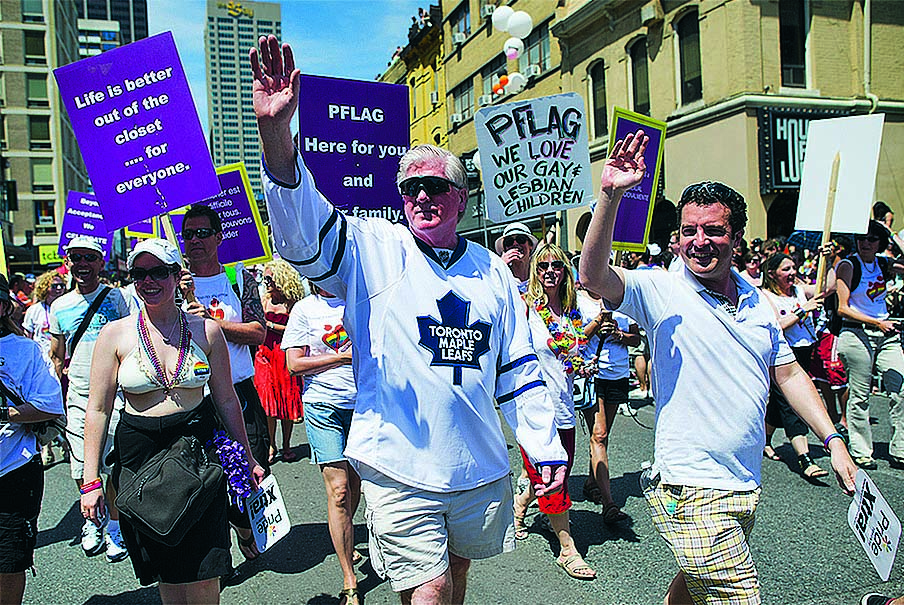 | Brian Berki (in the center), General Manager of the US Male Hockey team at a gay parade in Toronto in July 2011
"You can play"
In February 2012, a movement for the equality of gays in hockey ( YoucanplayProject.org ) was created inside the NHL. The stars of the American and Canadian hockey, NHL players, starred in a series of videos under the general motto “If you can play, you can play” - it is hockey players, contrary to the stereotypes, and became a model of tolerance in team sport. The founder of the Brian Berki movement, the general manager of the US Male Hockey and Canadian Club Toronto Maple Leafs, the 13-fold owner of the Stanley Cup, will come to Sochi in 2014. Burki is the father of Gaia. His son Brendan was 19 when he played for the Hockey team of the University of Miami. In 2007, on the eve of Christmas, Brendan admitted to his father that he was gay. Father and older brother were very worried: how will the hockey career of Brendan develop? Two years later, Brendan spoke about his sexual orientation to team colleagues - this was the first public coming out in hockey. The young man was ready to leave sports, but the general opinion of the players and the coach met the advertising phrase that has become today - You Can Play. Brendan did not leave the bands of Canadian and American newspapers, and letters of support from around the world were pouring to him. In 2010, the young man died in a car disaster. Shortly after the tragedy, the players of the US Olympic hockey team performed at the Olympics in Vancouver, it was engraved on their personal plaques: "In memory of Brendan Burka." Then the Chicago Blackhawks hockey club, the winner of the Stanley Cup, sent his defender Brent Sopel with the Cup to the annual Chicago gay parade in memory of the deceased comrade. On another gay parade-in Toronto-the father of Brendan, Brian, also came out.
In February 2013, a similar association for the equal rights of athletes, regardless of their sexual orientation, appeared in basketball: it was created by the Star Lesbians of the star player of NBA Kenneth Farid.
"
I am the Olympic and I am gay, so what? I would like the President of Russia not to sign a law that forbids people to be themselves
" They will not be condemned, so they will be dried
What are gay sportsmen afraid of besides the oblique views of others? The answer is obvious: judges. “Where there are judges,” explains Elena K., “gays risk much more. And there are not even any territorial boundaries. Judges of the Homophobes can be from anywhere. For example, skiers and biathlonists were more fortunate - a pure result is important in their sport. Many of my European friends do not hide their orientation, they are champions in the world. ”
The judges did not prevent Johnny Weir Voronov, a three-time US figure skating champion, is not just an open gay: barely in New York, the same-sex marriages were legalized, Johnny issued relations with his partner, adding Russian-Voronov to the American surname Weir. “Yes, this is true, my federation asked me not to stick out my sexual orientation,” said The New Times, “this, they say, could negatively affect the judges. However, it was: when I was 16, the American sports agency refused me to participate in the Youth Figure Skating Championship without hiding the motivation at all: "You will not bring us enough money if you are gay."
Many are forced to hide their orientation after the end of his sports career. “I know the history of the Russian badmintonist, who, after leaving the sport, took part in the international gay games**, and then she was fired from work,” says the New Times, Elena K.
| *The first in history of the World Olympic Games for representatives of sex minorities were organized in 1982 in San Francisco Tom Vaddell, an American Olympic-deciduous. However, the Olympic Committee of America through the court forbade Vaddell to use the word “Olympic”, since then every four years in the world, gay games have been held in the world. In January of this year, British Prime Minister David Cameron confirmed the application for a gay IGR in London in 2018. |
But Konstantin Yablotsky, a candidate of sciences, a chemistry teacher at a school for children with disabilities, a judge of the figure skating federation, for the first time took part in gaygrah in 2010 in Cologne, where he won a gold medal in figure skating. “At the opening ceremony, we saw 52 athletes from Russia,” Yablotsky told the magazine. - We went under a tricolor to the arena, where the German Foreign Minister, open Gay Gido Westerwell with his spouse, was photographed with us. It struck us. All this was in a direct broadcast on German television. Journalists generally perceived us as heroes, representatives of a homophobic country. After I won gold at gay games, they called me from the Russia 2-Sport TV channel, congratulated and asked to urgently find a video material on my performance: it was my Coming Out. Teachers at the school where I work to this day, they supported me, said: "We are going to work with a proudly raised head." But the troubles began with my work by the judge of the figure skating federation: they suddenly began to lower me in status, ceased to be invited to significant competitions. But I am convinced: through the sport, the guys of another sexual orientation should talk about themselves, open, fight for their rights and stop being afraid. ” Elena K.: “Of course, we need to talk about this with Konstantin and Elena. I think about opening. If I get to the Olympics in Sochi and speak with a good result, most likely I will open. And then others will pull up. I want to be proud of myself as I am, just like my colleagues from other countries. And in the Pride House in Sochi, I will definitely go if it still works. ”
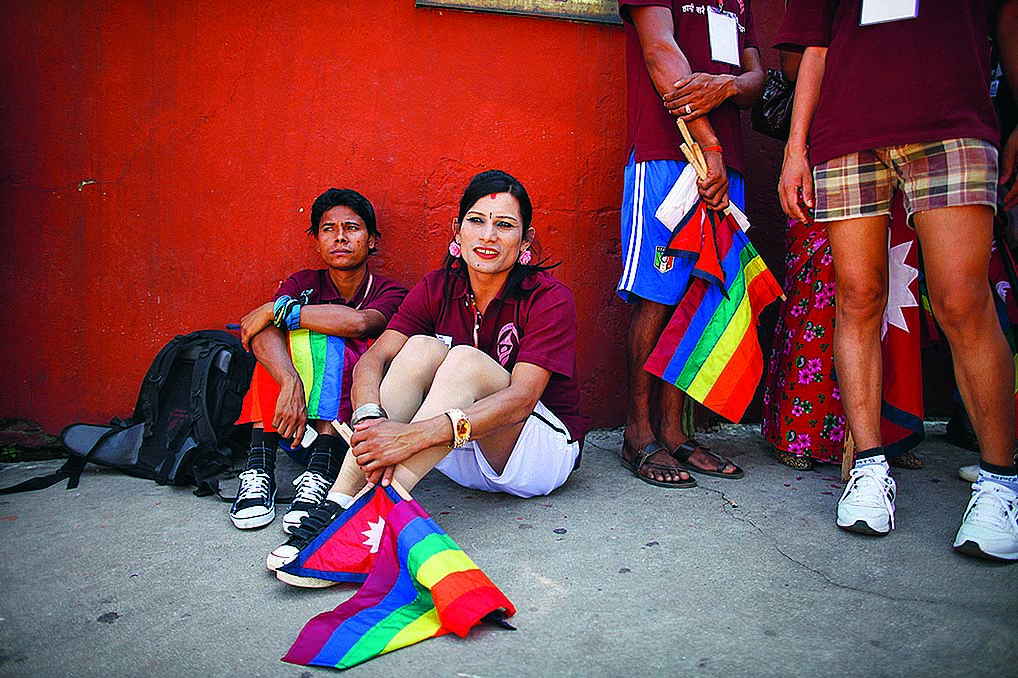 |
| The opening of the first South Asian gay games to Kathmandu (Nepal), 2012 |
Pride request
At the Olympiads in Vancouver in 2010, in London in 2012, as well as in Poland, during the European Football Championship 2012, Pride House (House of Pride) worked, in which we could get acquainted with the history of well-known gum athletes, learn about the fight against homophobia in sports. The events of the London Pride House, for example, were sponsored by the European Commission and the Ministry of Family of the German Earth North Rhine-Westphalia, and one of the official ambassadors was a Paralympic athlete, LGBT activist Claire Harvey, who played for the Great Britain volleyball team.
However, in March 2012, the Ministry of Justice of the Russian Federation, and then the Pervomaisky District Court of Krasnodar, refused to organize the Pride House in the Olympic Sochi-2014. Judge Svetlana Mordovina referred to the fact that the work of such a center contradicts public morality, laws in the field of protection of motherhood and childhood, leads to the promotion of homosexuality and can provoke social and religious clashes. In London, pickets opposite the Russian house, about which the Russian Minister of Sports Vitaly Mutko, said that he was “the least concerned about the issues of homosexuals,” and he only thinks about the medals of the Russian team.
“One of the PRIDE House tasks in London,” said Mark Naimark, vice-president of the Gay-Igr Federation, “the creation of a working group that could create the same houses at all large sporting events, including in Sochi.” Despite the fact that the Pride House in Sochi did not receive the official permission, European and American sports LGBT organization does not intend to concede, this is a fundamental issue for them. The interlocutors of The New Times said they are negotiating with several national Olympic houses - to arrange the Sochi Pride House under their roof.
Today, the GAY-IGR Federation is trying to amend the Olympic Charter, the 6th article of which lists the types of discriminations unacceptable in the Olympic movement: among them there is no mention of sexual minorities. The interlocutors of The New Times from different countries unanimously repeated that it was homophobia that prevents thousands of people in sports. In schools, clubs, on courts, in the fields and lockers, the right to sports is violated daily. And this means that each publicly -humorist athlete opened to the fight against homophobia.
So far, the issue of discrimination on the basis of sexual orientation remains relevant, each Olympiad should have a Pride House, the GAY-IGR federations. “There are no, for example, at home for blacks, the issue of racial oppression was removed, however, in my opinion, too early,” concludes Mark Naimark, “will someday become unnecessary and Pride House. But there is still a very long way ahead. ”
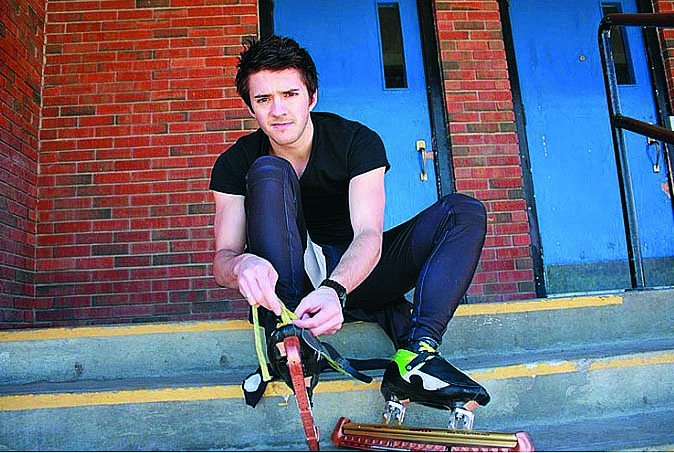
Blake Skignerup, 27 years old, skater from New Zealand:
"I would like the rainbow flag to flutter over Sochi"
My family, friends, even some colleagues-sportsmen always knew that I was different. Many advised me to open, but I focused only on sports results. I said to my family, which always supported me, I said that I am not going to publicly report anything about myself.
During my first Olympics in Vancouver, I went to the Pride House. I did not immediately decide, I sat opposite in Starbax - I thought. And then he entered, looked around, looked at the exhibition, spread a couple of words with some people, I was asked who I was, I answered, we took a few photos. In general, I made my Coming Out to people whom I saw for the first time in my life. The decision was instant and very easy. At the Olympics, I was with my friend, and it was there, in the Pride House, I realized that I could now openly hold his hand. This is very important: you should have the right to hold a loved one’s hand. I am the Olympic and I am gay, so what? - This is what I wanted to tell the whole world. Three years have passed, I have been preparing for a performance in Sochi. Of course, I would like the President of Russia not to sign a law that prohibits people to be themselves. I would like that over Sochi, as above Vancouver and London, the rainbow flag fluttered next to the Olympic.
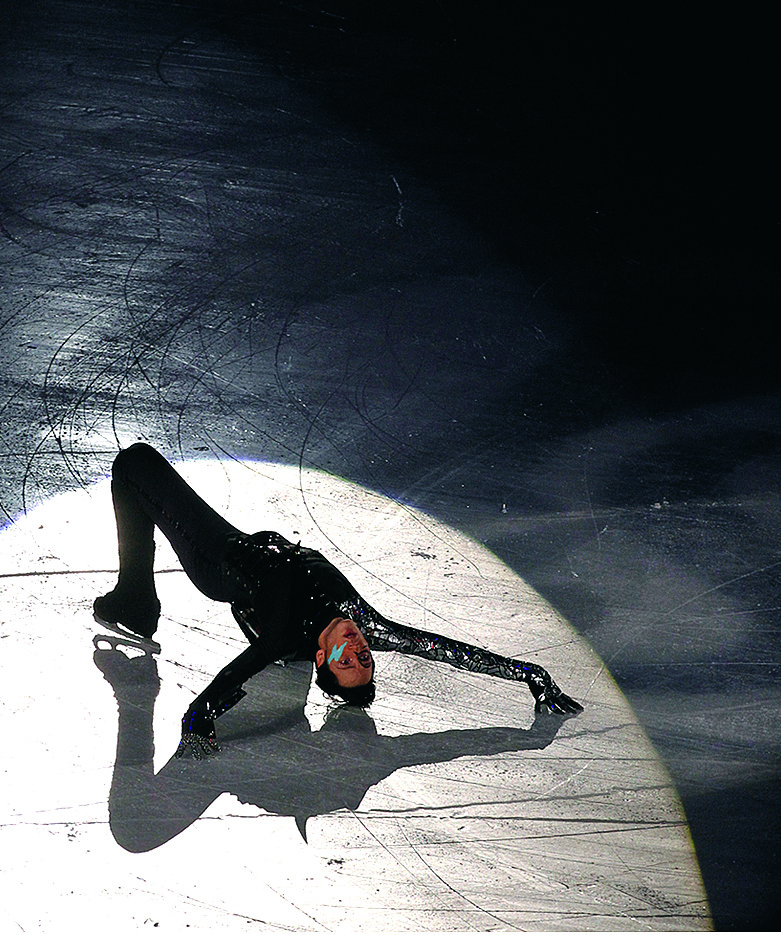
Johnny Weir Voronov, three-time US figure skating champion:
"We are strong, smart, we deserve the same respect as everyone else."
I never needed a coming out because I had never been “in”. When I turned 18, I told my mother that she should not have illusions about the future daughter -in -law. My family and my friends always accepted me as I am, in this sense I am a happy person. I often came across homophobia, but I was lucky that people in New York are special, they don’t need to explain that I am gay because I was born, this is my nature, and not my choice.
Publicly, I began to speak out not for myself, but for those who suffer because of their sexual orientation. It was important for me to show them that we, like everyone else, can be Olympians, we can realize dreams, achieve success, live openly and be ourselves that we are not crazy, not sick. We are strong, smart, we deserve the same respect as everyone else.
You know, in Russia, amazing people work in figure skating, I trained with Tatyana Tarasova, Galina Zmievskaya, Viktor Petrenko. My orientation never confused anyone. In my first week of working with Galina Zmievskaya, she asked me a funny question: “Johnny, you are the first student of the gate in my life, I don’t know if I can scream at you, like my other boys? Or is it better for me to be affectionately and gently? " I answered her that I should treat me the way she used to handle the rest, and that I am here to work.
We got married with my spouse on December 31, 2011 in New York, and immediately after the wedding I received congratulations from Tarasova, Zmievskaya, from Elena Tchaikovskaya, Marina Anisina, Ira Slutskaya, Zhenya Plushenko, Max Trankova, from the huge number of my Russian fans. I was very warmly congratulated, joked about how I will be a husband.
I really sympathize with my brothers and sisters in Russia. It is a shame that representatives of sexual minorities cannot live there openly, we can only pray that something has changed, just as America continues to change right before our eyes.
Photos: Reuters, Ap Photo