
Translated material
"I am against"
How the layman became a civil activist
Journalist Sergei Sobolev, who had a wife died under the wheels of the train in January, is preparing a lawsuit against Russian Railways. And at the same time he intends to achieve the construction of safe railway crossings in the suburbs. How the layman becomes a resistant - tells The New Times
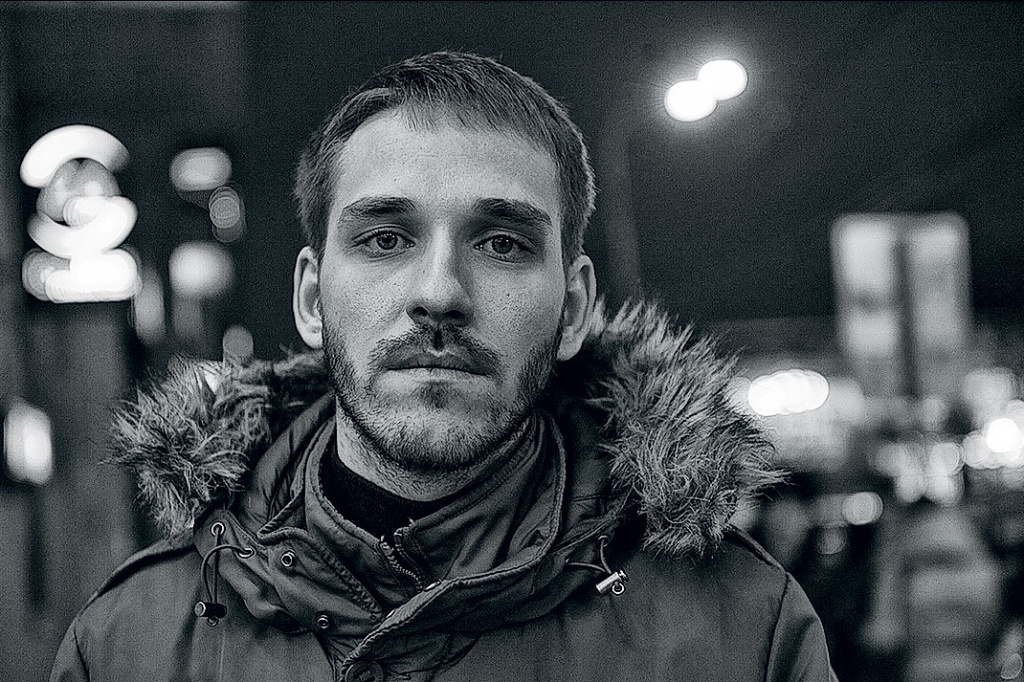
Journalist Sergei Sobolev
“Until January 18, everything suited me in life. I wrote posts on Facebook, several times with my wife went to rallies, sometimes helped orphanages - this, perhaps, was limited to my civil activity. I used to see this transition at the station only from the window of the car when I stood on the crossing in the traffic jam. I did not even know that several dozen people die here every year ... "
30-year-old journalist of Kommersant-FM, Sergei Sobolev, tall and thin, charming fair-haired man in a black turtleneck, still wears a wedding ring on a ring finger. On that ill -fated day, on January 18, at the transition of the platform, Saltykovskaya in the Balashikha near Moscow, the wife of Sobolev, shot down the satellite high -speed train to death. A month later, on February 12, Sergey published an appeal on his Facebook page: “I accuse JSC Russian Railways and the Balashikha administration of the death of my wife and dozens of other people. <...> In the near future, relevant court claims will be prepared. In addition, I and those people who divided my tragedy begin a public campaign. Its ultimate goal is to oblige Russian Railways to fulfill its obligations to build safe passenger facilities. ”
Almost 6 thousand people shared the post, a whole information wave rose - during the first three days after the publication of Sergei, the filming groups of 12 television channels were visited. And the authorities reacted. The acting The Governor of the Moscow Region Andrei Vorobyov left for Balashikha, visited the place of the tragedy and ordered to build a safe transition at the Saltykovskaya station. True, this will be done only by 2015, as part of the regional program for the construction of bridges and tunnels. Sobolev does not intend to wait - along with lawyers, he is preparing a claim for Russian Railways.
"
We are standing with Vorobyov in the "drive", and in a meter in front of our nose, a "satellite" flashes at a great speed. "Horror! It shouldn't be! " — - Vorobyov exclaims
" Business on death
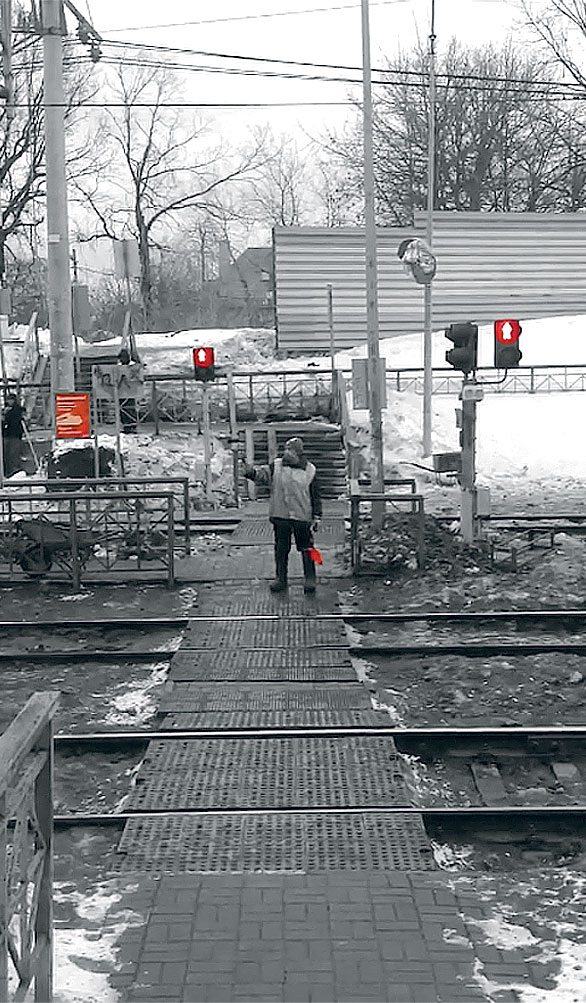 |
| The transition of the Saltykovskaya platform, where the train shot down his wife Sobolev |
The high -speed "satellite" shot down Elena Sobolev at 9.22. Sergey was reported to Sergey about the death of his wife. It took him a little more than an hour to get to the place of the tragedy. All this time, the body lay at the railway crossing. Arriving police officers did not even bother to cover the corpse. “The wife never found his leg. The operatives refused to look for, because there were everywhere there were snowdrifts to the waist, ”recalls Sobolev. The same operatives first asked if he had 2.5 thousand rubles with him - they themselves called the employees of the funeral bureau, and it was for such a price that they were ready to take away the body. One of the police officers even offered Sobolev money on debt.
Later, Sergei found out: the funeral services of the Barus funeral services in Balashikha, which entered into an agreement with the city administration, actually monopolizing the “death market” on the railway. If someone perishes on the tracks in the vicinity of Balashikha, the Barus brigade necessarily leaves the body of the deceased, demanding 2.5 thousand for his services. In order to receive a death certificate in the ritual bureau, you need to give another 4.5 thousand, although according to the law such certificates should be issued for free. “You make a death certificate,” Sergey grins and shows with his hands: such a small certificate. “You go to the registry office with her and receive a death certificate, stem, then - in the Obrid for compensation of 15 thousand rubles.” He did not fight the police and the funeral bureau - he paid everything, if only the body’s body was finally taken away.
The reaction of power
Sobolev did not immediately decide to publish an appeal to the local administration and Russian Railways. The first option was written by himself “on emotions”, then he thought and showed the friends who edited the text. A few days after the publication, when the hype in the press began, Sergey called from the apparatus of the acting The Governor of the Moscow Region Andrei Vorobyov said that they were preparing a “exit to the object”. The head of Russian Railways Vladimir Yakunin also responded: on February 19, in his blog in a living magazine, he expressed his condolences, but added that Sobolev’s wife died due to neglect of the rules of stay on the railway. Yakunin cited the statistics of deaths: “In 2012, in case of accidents, 2498 people died in the traffic area.” And he noticed that most of them are victims of their own frivolity. “The journalist himself confirmed that his wife crossed the transition in the hood and headphones. In our acts of a detailed investigation of the incident, it was described that light and sound signals at the transition worked, the “satellite” went with a set speed, with a searchlight turned on, the driver saw the girl in 750 meters, applied emergency braking, gave sound and light signaling signals, but she did not react to them, ”the press service head told the New Times Moscow Railway Vladimir Myagkov. He specified that this year there were two deaths at the transition, and in the past there were four, but not “dozens”, as Sobolev wrote.
Andrei Vorobyov arrived at the place of the tragedy on February 21. Locals showed him: the railway shares the Saltykovsky district of Balashikha in half. On the one hand - a school and a children's sanatorium, on the other - mail, clinic and administration. In the morning and evening hours of peak of the train, they go with an interval of 6-8 minutes. Red light and sound warning signal turn on 7 minutes before the train appear, so a warning signal does not fall silent during the peak hour. Wait for the train to pass, people should in the "drive" - this is the name of the site at the passage of 4 by 8 meters. The Russian Railways argue that such a transition design complies with all the rules. “The train is visible from the funded platform on distant approaches - 800 meters before it approaches the transition,” explains Vladimir soft, “then he (the train) disappears for a while: he goes into the bend that we have to walk around the city land during the construction of the ways, and again becomes visible 300-400 meters before the crossing. This is enough for a safe transition of ways. ”
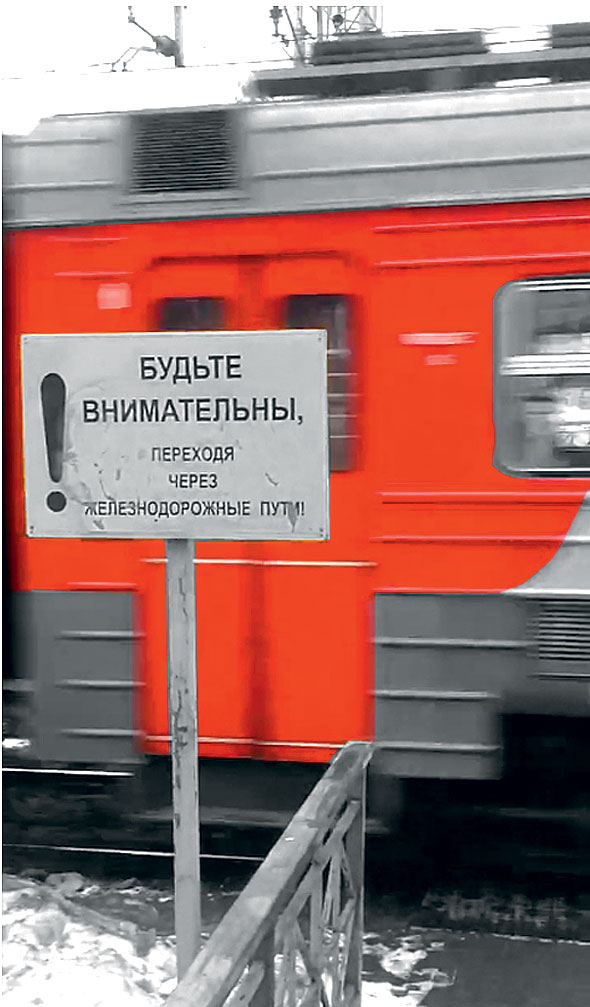 |
| At an hour of the peak of the train on the Saltykovskaya platform, they go with an interval of 6-8 minutes |
Due to the fact that on Saltykovskaya-three ways and alarm stands on each, there really is a sound overlage, when they call at the same time at several crossings, explains soft. “But we cannot reduce the signal time - this is spelled out by the rules.”
According to Sergey Sobolev, having arrived in Balashikha, acting The governor was personally convinced that the transition is dangerous. “We are standing with Vorobyov in the“ Drummer, ”says Sergey,“ and a “satellite” rushes in a meter in front of our nose at great speed. "Horror! It shouldn't be! " - Vorobyov exclaims and asks the representatives of the Russian Railways standing here, how much a safe transition will cost. Someone from the crowd shouts to him: 100 million. " After that, Vorobyov ordered to dismiss the chief architect Balashikha and provide him with temporary arrangement of a safe transition within ten days - so far they will build a full -fledged new transition. “Where 100 million came from, I still did not understand, experts evaluated the construction of 30,” says Sobolev.
Snow
Now on the platform of Saltykovskaya there are active construction work. “After the governor’s visit to Balashikhu, the Moscow Railway (IMF), on its own initiative, took additional security measures,” says Vladimir Times, Vladimir Myagkov. “We dismantled one march of the platform to increase visibility from the transition, put a metal mirror - people, going down from the platform, will now be able to see its opposite side, and the transition itself will be a serpentine shape so that the pedestrians are not perpendicular on the way, but first went towards the train and could see that it is going.” It was also decided, according to the official, to transfer traffic lights away - “their testimony will now be more visual” - and limit the speed of train along the third (high -speed) track from 100 to 60 km.
However, Sobolev is not satisfied with temporary measures: he intends to achieve from the Russian Railways fulfilling obligations to build a safe transition in full. “Our law firm is connected to work. 6-7 people will deal with business. Now we are studying all the circumstances of the tragedy and in the near future we will offer our program to defend interests - and this can be not only claims, ”said the lawyer Sobolev Marat Davletbaev.
The journalist himself, together with friends, has already created the “I am against Russian Railways” community on the Facebook, collects data on accidents at crossings on the Internet, and studies state -owned tenders. The group plans to create a charity fund that will achieve the construction of safe transitions. About 30 people with reports about accidents have already turned to Sobolev through the social network - some of these people are ready to file a collective lawsuit to Russian Railways. The journalist claims that he will not demand compensation for moral damage in the lawsuit: “I do not want to take money from those who killed my wife. I have a specific goal - to achieve the construction of a civilized transition. I feel guilty of my wife’s death and I want to do anything for her. When this bridge is built, I will be happy. ”
Photos: Ksenia Zhikharev, from Facebook Sergey Soboleva