
Translated material
Fluid reality
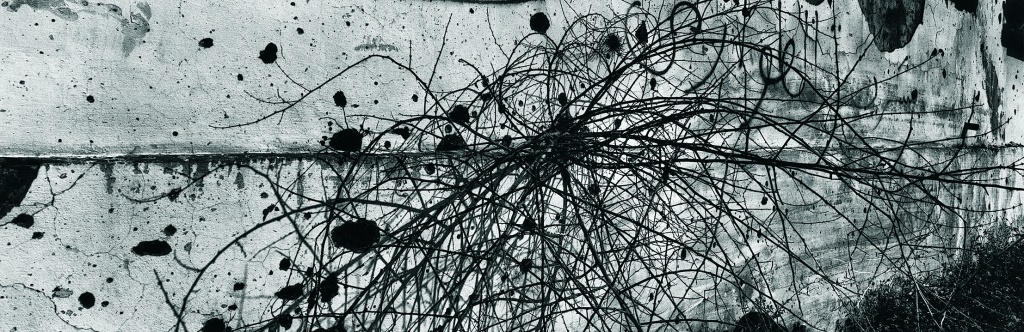
"
From the spirit of "simplicity" there are textbooks of literature and stories in which everything is divided into correct and dubious
" The island of simplicity
Against this background of growing complexity, Russia looks like an amazing island of “simplicity”. Once the French historian Alain Bezanson struck me with the assertion that Russian culture and society of the 19th century is much easier than European: the artistic environment is a few, newspapers, magazines, theaters, publishers and universities are not enough, and political parties and civilian associations are not much less formed and actively, etc. This unpleasant diagnosis of Bezanson, alas, is also applied to today's Russia. This contrast is obvious when you read analytical reviews. Against the backdrop of the complexity and multi -factority of world processes, the simplicity of Russian reviews is striking, where everything eventually comes down to one - oil prices, which globally depends mainly on the production of shale gas and oil. In addition to the oil conjuncture, analytical reviews include the same mention of the “unfavorable investment climate” and “outflow of capital”. And that's all. Revenues occur either from hydrocarbons or from the cut of the budget, but the budget itself arises from the same hydrocarbons. In politics, it’s still easier. Political forecasts often come down to the fact that, “as you know, one person decides everything with us”, and these decisions are unpredictable.
Exactly the same can be attributed to other spheres of life. The society is divided into its own and strangers without intermediate categories, or Russians and migrants, state employees and others - also without nuances. There are practically no schools and currents in painting and literature. It is impossible to think about various directions in philosophy. But simplicity is not an ontological property of Russian society. In the 1920s, in Russia, despite a one-party, there were many political groups, even inside the unified Bolshevik party. In art, literature, cinema there were many groups with their own programs and aesthetics. In the 1930s, this diversity was finally destroyed, everything was forcibly simplified, and this dead simplicity became the norm, which the authorities vigilantly observe. The authorities always and everywhere dream of simplification, strive to prevent the difficulties with which they associate a threat to themselves. Simplification seems to be a way to increase management efficiency. Indeed, as a result of violent simplification, controllability can grow, but only for a short moment. I believe that the collapse of the USSR was a direct consequence of the Stalinist simplification of society. It was in the 1930s that the mechanism of gradual destruction of the country was created. The then simplified social models arose gradually less and less corresponded to complicated reality. At some point, the reality and the control system were so diverged with each other that the management mechanism stopped managing and simply collapsed.
Life as a scheme
From the very beginning, Putin believed that simplification of political and economic structures is a way to increase their effectiveness. His notorious vertical, state industry and stripping the political space are signs of such an approach. And, as usual, a simplified model works for a short time, and then begins to lose touch with reality and move society to the crisis. Today's reaction of the authorities to a crisis is a doomed attempt to a new round of widespread simplification. A Cossack with Nagayka and Pop with Kadil become his symbol. From the spirit of "simplicity" unified textbooks of literature and stories arise, in which everything is divided into the correct, approved and dubious, condemned. Even sexual life should be reduced to simple norms that are hysterically planted by a Duma, who wants to totally regulate people's behavior and make any spontaneous manifestation of life extremely difficult - not only political, all in general - for example, volunteering. Life is everywhere in an inadequate scheme for her. This is exactly what the Investigative Committee is now engaged in the spontaneous behavior of people as a result of a planned conspiracy.
"
Where the self -regulation of complexity is destroyed, chaos, entropy and death reign
» From scheme to chaos
But it is impossible to curb the spontaneous processes, to simplify them to an elementary order, especially since there is no impenetrable membranes between Russia and the world, no matter how someone would like it. The complexity penetrates into Russia, despite the efforts to prevent this. What is the role of simplifiers in this process? I think they are not able to stop the complications of society, but they can effectively transform the complexity into chaos than they, in my opinion, are now engaged in intensively. I would even say that this is their main and frightening role. Complex and chaos should be distinguished. Complexity often seems to entropy, but it is not such, it, as scientists say, is metastable and ready for unexpected crystallization of new relationships and structures. The complexity produces new. Entropy is stable, since it is incapable of producing new ones, and is capable of only to destroy ties and the increase in chaos. Where the simplifiers are looking for an elementary order, they block the possibilities for the complex self -regulation and enhance chaos. The great zeal of power impose primitive “manual” control, the faster they destroy their own system. This is clearly visible today on the example of the Duma, terrorizing society and at the same time self -procurement. Unfortunately, this suicidal simplification is at risk of society as a whole. The social structure, which has even relative complexity, cannot be forcibly turned into unicellular and not collapsed. Where self -regulation of complexity is destroyed, chaos, entropy and death are reigned. It is important to prevent the structures of power, decaying, pull the whole society, as happened at the time of the death of the USSR.
Photo: Josef Koudelka/Magnum Photos/Grinberg Agency