
Translated material
Architecture in the light
A person will see the sky through the glass with a dusty raid
And an unnecessary house opposite the dark quiet and huge.
P. Mamonov
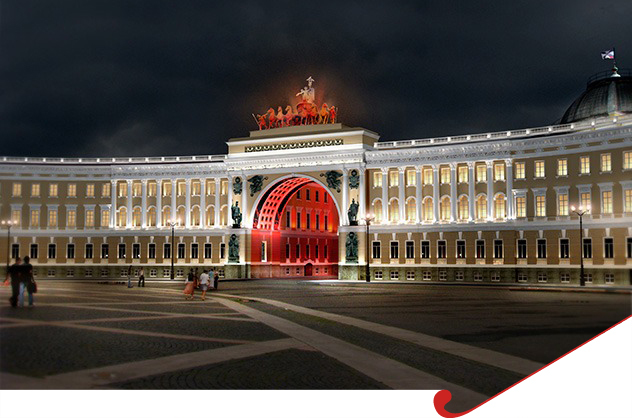
The other day, my friend sent a link to the competitive projects of lighting the building of the main headquarters in St. Petersburg : we sometimes discuss the problems of modern taste with him. But suddenly I realized that I don’t understand why the buildings are lit at night, in which categories to evaluate this lighting and how to talk about it.
When asked why the buildings should be lit at night, I can find the answer only in the old joke: “Because we have the opportunity!” Meanwhile, how the houses are lit, refers us to the very basics of architecture. The buildings are in a change in natural light, thanks to which we can see them: the architecture of the city is most visual and in this form is most conscious. Over time, the artificial one joined the natural light when the city streets began to be lit, although, of course, for practical reasons. As an aesthetic tool, the light was always present in solemn and festive illuminations. Electricity gradually changed the state of things, brightly illuminating the street first, and then the buildings on them. With the advent of the new economy, more and more buildings began to be lit, spotlights acquired color, and the lamps migrated to the facades. Night lighting has become an almost mandatory part of new projects, and the illumination of historical buildings is perceived as a granted. Artificial light illuminated the architecture so quickly and everywhere that no one managed to comprehend this phenomenon, which meanwhile extremely greatly changed the city of the world. But the meaning of this lighting continues to slip away. A natural answer - tourist attractiveness - can serve to a certain extent justification for illuminating historical monuments (which did not know the nightlight), but other houses are highlighted almost without analysis, destroying the hierarchy of cultural value, more precisely, creating new ones associated only with the power of current, intertwined with heterogeneous ambitions.
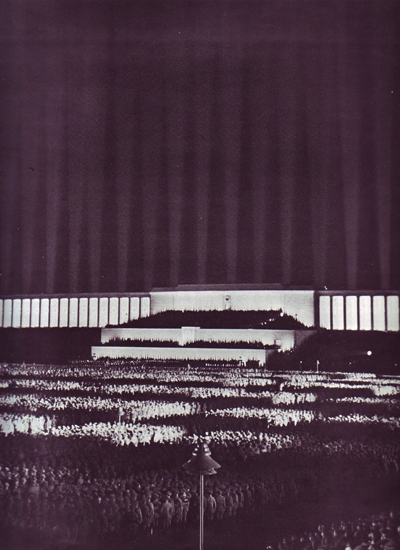 Albert Speer. Lighting the main rostrum of the congress field in Nuremberg, 1936
The building in the bright light of the sun, on a dull autumn day, appears in various guises before us at dusk or at night. When the light burns in the windows, it looks completely different than when all the windows are dark. When the lanterns glow on the street, it changes again, divided in half: into the illuminated base and the dark mass of the upper floors. And if we are talking about a small mansion, then in the light of lanterns it turns out to be in the usual daytime appearance. It is possible to consider these phenomena natural in the sense that the light that does not belong to the building, outside of it, is indifferent to it, and is the light that the building should be subject to. In this case, the light composed on purpose for the building is unnatural. But here we are trapped: if the lighting of the building is composed with it, then this light is part of its architectural plan, and the only reproach that can be turned to such light - why the building needs a different, unnatural light? Just to attract attention to him? Or is this light designed to create a dramatic effect comparable to daylight effects? Then this reproach becomes a single series with all other issues related to the expressiveness or decorativeness of the architectural form in the broad sense of the word, the discussion of which is the theme of a separate long conversation. The light composed for the building, which belongs to an era that did not know electric light, is undeniably unnatural: the architecture of the building does not obviously imply. However, the category of “naturalness” introduced here does not clarify the matter at all, even though it allows you to at least somehow systematize the lighting of buildings. It is not even clear whether such naturalness is an indisputable good or it is good only in the eyes of a conservative.
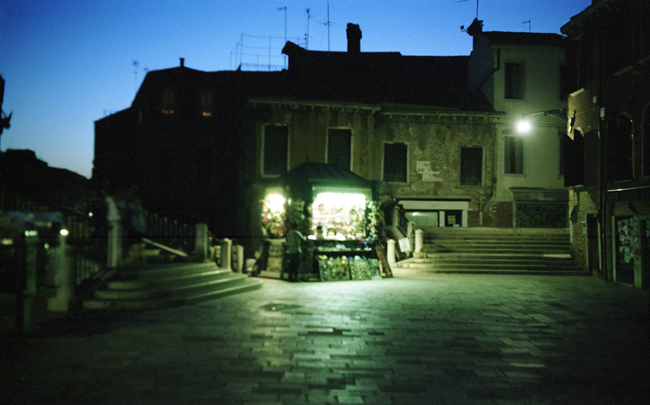 Venice, Square San Pantalon, 2012
The backlight itself asks new questions. For example: in what relationship is the art of lighting buildings with the art of architecture when they are not part of a single plan? The continuous lighting of the last century in its technicalism left this problem aside, performing a completely official role. But as soon as the light begins to crush, grab individual elements, change color, the light composition involuntarily becomes independent, even if it is assumed that it only “emphasizes” the features of the construction. Such emphasis inevitably changes the image of the building. The situation is even more complicated when the lighting does not aim to strengthen the image of the building, but enters with it the game or changes it completely. Does loss happen here? Is there an increase in quality? To what extent the work created by light is self -sufficient? In the case of the main headquarters, for example, we are talking about a recognized masterpiece of Karl Rossi. What happens to its artistic value when another, even the most benevolent, artistic plan is applied to it?
In what relationship is the art of covering buildings with the art of architecture when they are not part of a single plan?
Another problem, oddly enough, creates the barrier and temporality of this New World. It is as if they remove any responsibility from the authors of the light solution: the building remains intact, lamps can be removed in a few days or sharply change the image by controlling light, often even this change is a condition of the project. At the same time, the installation of backlight is a very expensive event, and it is obvious that it is calculated, if not for decades, then for a fairly long period. And the temporary becomes quite constant. And if the festive illumination, no matter how bizarre it is, serves precisely due to its short-term designation of a certain event, then constant illumination is a paradoxical constantly and temporary phenomenon, which as a result is outside the field of artistic understanding-after all, this is the only way, not for long.
From this, there is an optional backlight from an artistic point of view. It does not have the determination of one-time projects inherent in vicractinee and even more so architectural actions as the packaging of the Reichstag Christ and Jean-Claude. But there is no lightness and relaxed indifference to the effects of the weather, season and change of day and night.
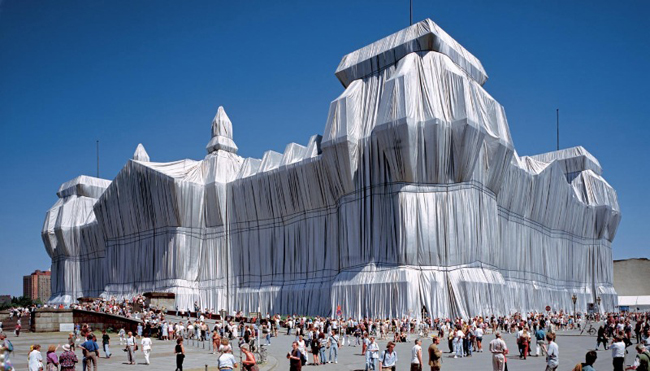 Christ and Jean-Claude. Packed Reichstag, 1995
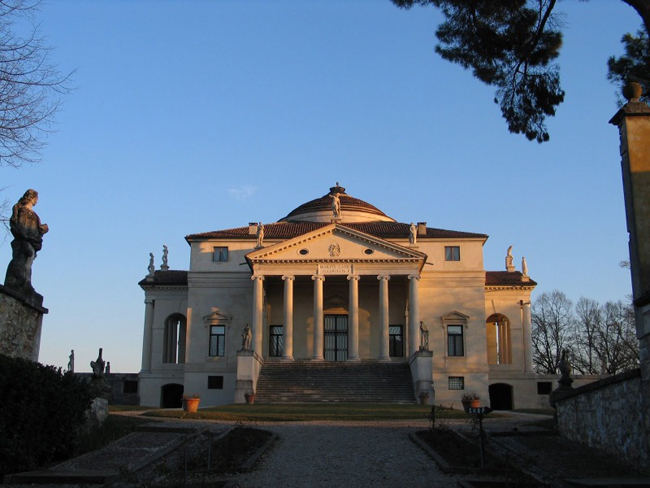
The competitive projects that I spoke about at the beginning only exacerbated these thoughts. The ethereal lightness inherent in all of them, optionality, artistic helplessness give out the unresolved all of the above problems. Nevertheless, the backlight unexpectedly helps to pay attention to the essence and meaning of how we see the buildings. Any building is a change in the change every minute, which we, as a rule, do not pay attention to. More precisely, the light that falls on the building at the present instant often causes delight, but the variability of buildings in a natural light eludes awareness. This property of buildings is almost never taken into account, being a given of our world, but it also gives many of them an inexpressible charm. Artificial light is motionless or mechanically changes according to its program. Apparently, it is precisely the foresight and assignment of the deliberate diversity of architectural lighting that tells him that heavy dullness, from which I cannot get rid of attempts to explain its properties to myself. Designed to revive the house hidden in the darkness, it will die them like a photograph, grabbing their one-sided condition. Mobile artificial light is intended for the same instant look: its speed should have time to catch our attention at the moment when we see the building - and this is the twitching movement of the puppet. A smooth change in brightness, the gradual movement of the shadows, the randomness of the game of light is not amenable to simulation and are unsuitable for instant recognition. The random beauty of the building in a natural light is good like a miracle confirming our stay in the world and our ability to experience. The lighting of the facade calculated by someone- Nature Morte , occupying the place of reality.
 Andrea Palladio. Villa Rotonda at sunset