
Translated material
Caution: Children!
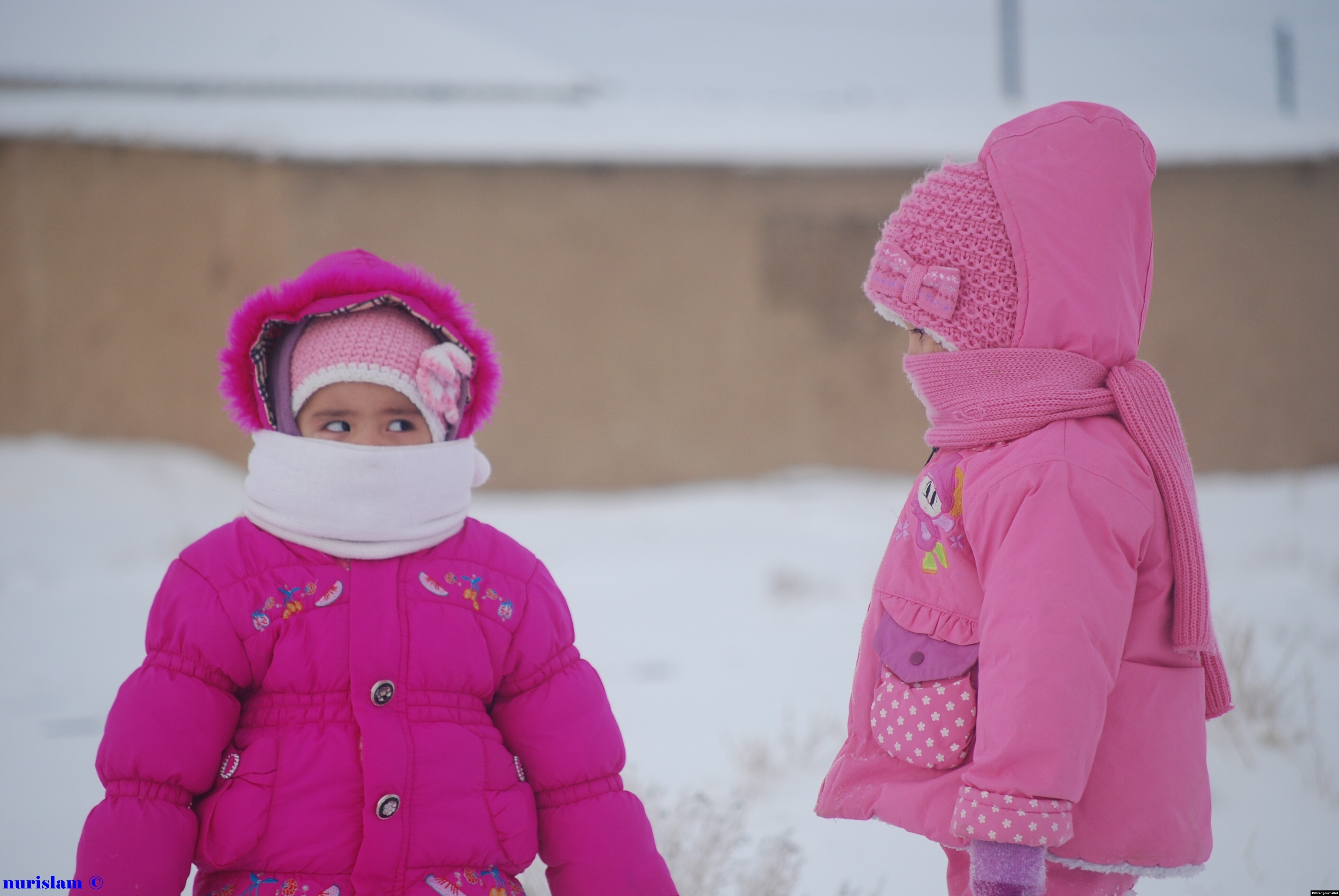
Alexander Genis: In recent months, after the adoption by the Duma, it is soft to say, the dubious law on adoption, the children have been at the center of the international scandal, but this, alas, is by no means the only problem related to the provisions of the minors. The microphone has Vladimir Abarinov
Vladimir Abarinov: In our time, globalization of the disputes of former spouses due to custody of children have become an acute international problem. In the Soviet Union, this issue did not stand at all: by decree of the Supreme Soviet of the USSR of February 15, 1947, Soviet citizens were forbidden to marry foreigners, and the law had retroactive force - already prisoners were subject to divorce.
Six months after the death of Stalin, Nikita Khrushchev canceled the decree. From now on, marriages with foreigners were not officially forbidden, but all sorts of obstacles were repaired to conclude them. A novel with a foreigner was considered an immoral act.
In the years of Brezhnev’s stagnation, the procedure was greatly facilitated. Then the first litigation arose because of the children. Neither Soviet justice nor Soviet diplomacy had the slightest experience in solving such disputes. The Soviet government intervened only in “politically important” cases, and the dispute due to the child turned into another propaganda campaign.
The most famous case of this kind is the case of the 12-year-old Walter Polovcam, which arose in July 1980. Together with his parents, sister Natalia is 17 years old and the younger brother of the age of 6, Walter emigrated to the United States from Ukraine. Soon, Walter's parents, disappointed with America, decided to return. But Walter and Natalia did not agree with this decision - they refused to go back and found a shelter in their cousin's house.
Since Natalia was already 16 years old, she had the right to decide her fate herself. With minor Walter, the situation was more complicated. According to Polovchaks, the teenager was taken from the house of Kuzina to the police station, but before transferring the boy to his father, the police chief decided to call the US State Department. From there they replied that parents should not give Walter - this issue will be resolved by the court. The court decided that the Walter should be provided with a temporary asylum in the United States until he reaches his age, and then he would make an independent decision. The Roagan administration supported the court order. Today Valter is already 45 years old. He became the father of two children and took his elderly parents from Ukraine.
In the West, where international marriage is in the order of things, such disputes have long become a legal routine. Each of the former spouses wants to create the best to the child - in his understanding - conditions and is afraid to lose access to him; This fear is aggravated by the presence of a state border. Such disputes are often carried out in the "gray zone" of international law.
Other parents, desperate to achieve the return of the child in a legal way, go to the abduction. In this case, there is a Hague convention on civil law aspects of international abduction of children, opened for signing on October 25, 1980. Currently, its participants are 89 countries, including Russia. But the Convention is often powerless. There are hundreds of such cases in the United States. Hillary Clinton, when he was by the US Secretary of State, established this department of the child’s affairs department, which is engaged in resolving cases of international abduction. Says the head of the department of the Ambassador Cheryl Benton.
Cheryl Benton: the purpose of the Convention is to create a legal procedure for countries with different legal systems to answer the main question: which country is a familiar place of residence for the child. In fact, this is the only issue that we need to solve. When the child is kidnapped from the United States, say, to France, the French court must establish whether this child lived in America. If so, the child needs to be returned to the United States for further trials. The Hague Convention has a permanent bureau to the Hague, with whom we are closely cooperating, trying to achieve the execution of the Convention.
Vladimir Abarinov: But what if the country in which the child is abducted is not a member of the Convention?
Cheryl Benton: Then the situation is much more complicated. We have no agreement that we could indicate to such a country and achieve its execution. There are special mechanisms for such cases, and yet it is much more difficult. Unfortunately, we cannot take part in such disputes as lawyers, we have no right to represent the interests of Americans in the courts of a foreign country. We can only provide parents with a list of lawyers. It is much easier if the country is a participant in the Hague Convention.
Vladimir Abarinov: In order to begin the procedure for returning, the abducted child must still be found. In this American authorities, the National Center for the search for missing and exploited children helps. Says the President of the Center Ernie Allen.
Ernie Allen: We are a non -governmental organization. But we are in a unique position. We cooperate with the Ministry of Justice and the US State Department. We are authorized by Congress to be a national center of information about missing children. Millions of Americans are known from our announcements about missing children on packages of milk. We work with law enforcement agencies of the United States and the whole world. Our task is to help families and return the children home.
Vladimir Abarinov: According to the latest report, the United States is currently arguing on the return of 1144 children. The largest number falls on Mexico, Canada and Great Britain - all these countries signed and ratified the Hague Convention. They should not sign India.
The problem of international abduction of children was devoted to hearings in the Committee of the Lower Chamber of Congress on International Affairs. The chairmen of the congressman Christopher Smith outlined the situation with bright colors.
Christopher Smith: The abduction of a child abroad deprives him of his house and breaks his life. The child is in a foreign country, he is separated from one of the parents who loves him and to communicate with whom the child has the right. His childhood is distorted, he is abandoned, sometimes he is hidden, because the parent who abducted him avoids meeting with the law or seeks to get a legal cover of his immoral actions. The stolen children often lose touch with their mom or their dad, which make up half of his identity and his culture. They are at risk of emotional and psychological problems, can feel anxiety, suffer from nightmares, sharp mood swings, sleep disorder, demonstrate aggressive behavior, nourish feelings of resentment, guilt and fear. Growing up, they may encounter difficulties in determining their identity, in personal relationships and relationships with their own children.
Vladimir Abarinov: One of the witnesses at the hearing was Joshua Izdard, who talked about how the Russian wife separated him from her daughter and took her to Perm.
Joshua Izdard: I was in Rome when Tatyana Ivleva, my partner for 10 years, the love of my life and my wife for five years, my daughter’s mother called me and informed me that she and my little blue -eyed angel are in Russia and will never return that I would never see my daughter again. This news struck me so much that I almost fell without feelings in the middle of the street. I wrote to my daughter the first of many letters, returning home, that is, even more retreating from her in the west direction, in Chicago. My heart seemed to me the only thread connecting me with my daughter, and this thread was torn when the distance between us increased. I opened the door of our Chicago apartment overlooking Lake Michigan. The feeling of devastation gripped me when the golden rays of sunset penetrated the dead silence of our living room, gently touched my daughter’s favorite toys, lying where she left them after the game. I did not hear a joyful scream: “Hurray, daddy returned!” I was met by silence, deafening silence.
Vladimir Abarinov: The ex -wife of Joshua Izzarda Tatyana tells a completely different story, but the court to understand these contradictions.
The Russian State Duma ratified the Hague Convention in May 2011. On October 1 of the same year, the relevant federal law entered into force. However, Russia continues to violate it. As Cheryl Benton already said, the Convention establishes the civil procedure for the quick return of the abducted child. The court of the country where the child is taken out should not consider the issue of guardianship. He should only establish which country is a familiar place of residence for the child. After that, the child should be returned to the country of his usual place of residence within six weeks, and the further dispute dispute is transferred to the courts of this country. However, for some reason, Russian courts do not consider themselves obliged to fulfill the conditions of the Convention.
A characteristic case is the case of Marianne Grin. She emigrated to the United States in childhood, had dual citizenship. Together with the American husband, Marianne lived in Italy for 12 years. Three of its four children were born there. Three years ago, the marriage broke up. The Italian court has appointed father to the only guardian of the children. But Marianna Grin took the children to Russia. In December last year, her 10-year-old daughter Sarah solemnly, in front of the television cameras, burned her American passport near the building of the US Consulate General in St. Petersburg. And in January of this year, the St. Petersburg court refused to issue a decision on the return of children to Italy in accordance with the Hague Convention.
An unhealthy passions are pumped around international disputes about children in Russia, and the Russian mothers, led by odious Irina Bergset, has already appeared. Another quote from the testimony of Joshua Izzard.
Joshua Izzard: Pay attention, Mr. Chairman: They never talked about the well -being of my daughter - only that Russia confronts America and that my daughter became a paw of a pawing in a political game.
Vladimir Abarinov: There are no ideal solutions in such disputes. It is unlikely that it is worth complicating them with political accusations - the child will definitely not be a better child.