
Translated material
Sobbet so to sleep
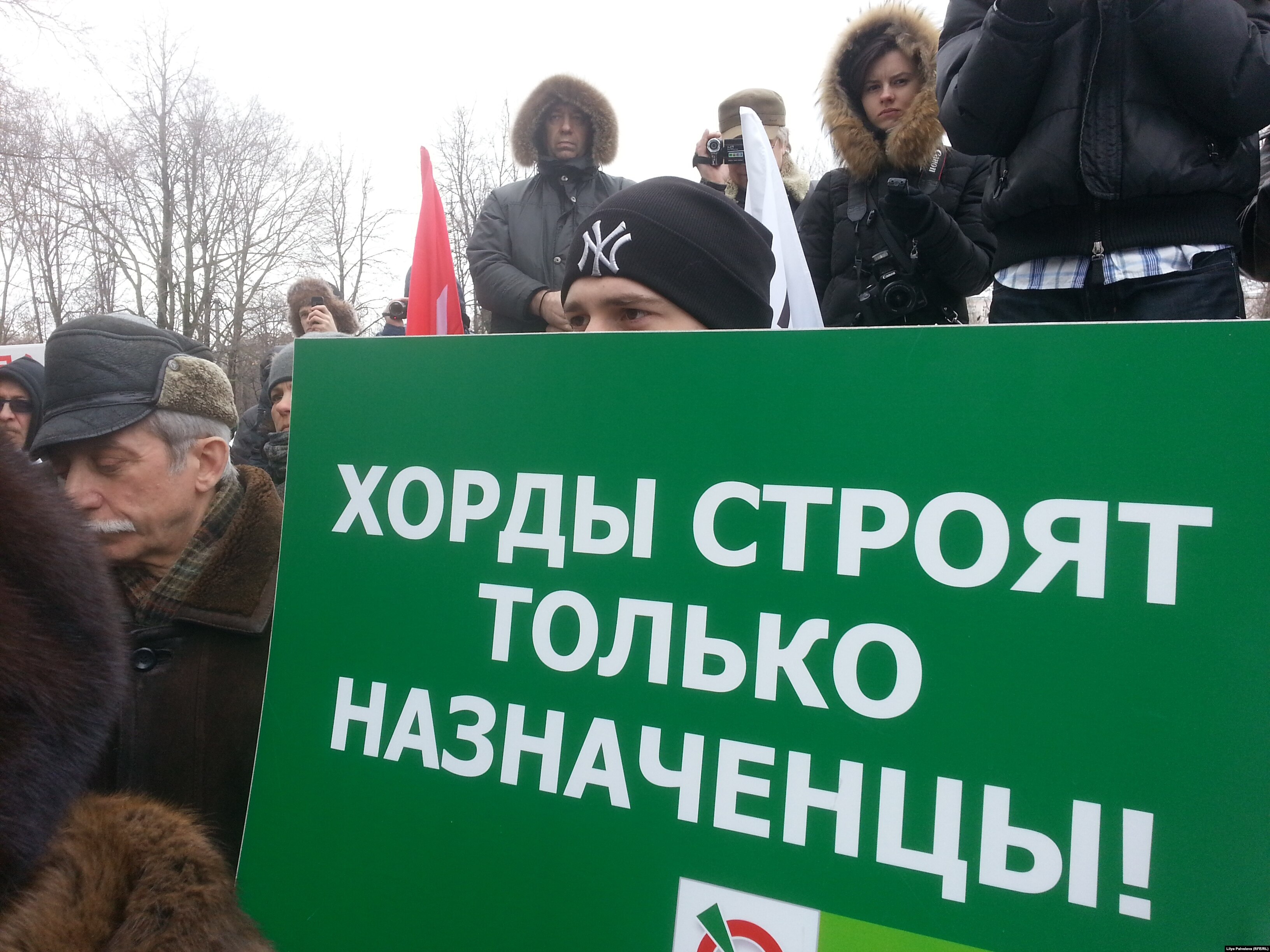
The other day in Moscow, on the Folk militia Street, lawns with trees and part of the road were fenced with fences. Preparations began for the construction of the so-called Northwest Chord. The movement has already become difficult, the cars no longer went, but crawled, but this is only the beginning of the tests for local residents. In the near future - noise and burning from heavy equipment. In the end - an irrevocable deterioration in the quality of life. Green spaces will be cut down, up to 10 lanes, the high -speed line will move to the windows of the houses.
Is it too surprised that the indignant residents of several old inhabited areas of the North-West gathered for a rally, where the mayor of Moscow went the most unflattering words. Two home -made posters were especially remembered: “We want to breathe, and not sniff” and “Enough to make Moscow.”
So the acquaintance with the new verb for me took place - to make up. From the context, it is clear that the word has a negative coloring, but with meaning not everything is so simple. We look at the blogs - they most fully reflect the real life of oral speech, with all its fleeting changes. Apparently, the word came up with someone in 2011, and so far people who use a new verb give different interpretations-the meaning has not yet settled.
To make up is to imitate violent activity, and philosophy, and destroy the city, and generally bring the life of the townsfolk to all kinds of dysfunction. But whatever it is about, everywhere, with a through motive - an indication of thieves. Here is an example. A rally of the inhabitants of the hostel of the Moscow Silk Plant. It is heard from the rostrum: "Stop coming to Moscow, protect housing from crooks!"
This is not to say that the word has already become widespread, but it has all the signs of survivability. So, in one post, a person describes how long he tried to find the surroundings of Red Square a place where one could have lunch inexpensively. The efforts were unsuccessful, and the author gives his text the ironic title "Sobbil, Sobyan and I will come in to!" Here the verb is used in the past, present and future of time, it is modified according to the rules of the Russian literary language. Moreover, he already has derivatives. There was such a replica - "what are you doing with the coobility?" In another text, criticizing the migration policy in the country, another blogger gives the following assessment: "Against the backdrop of such a dirty tricks, even Sobyaninism fades!"
The new word has already crossed the Moscow borders and began to be applied to other people. A resident of Tula is outraged, as he writes, by "populist movements with the removal of trams" and characterizes the actions of a local official: "He began to sleep like that, only the chips fly." Moreover, even when this word sounds in Moscow, more often they also mean not only the mayor (sometimes not him at all), but the whole team of city managers. "You, ma'am in this murderer will not be able to live, curse the day when the area began to make up!" - It is not difficult to guess that both the investor and the authorities of the district are also ranked here.
In principle, in the use of the name of their own as a producing basis for the formation of new words there is nothing new. The names of public people, most often public figures, have repeatedly served to expand the language. By the way, not always for a negative assessment. "Young Leninians" or "Stalin" are marked with increased pathos, and the word "Budenovka" is neutral. Perhaps in the initial period it had a romantic shade, but over time it began to designate simply a special hat.
Nevertheless, in the Russian language, such words often serve for a critical statement and they are clearly satirical. Andropovka was not the official name of vodka. There was no such inscription on the label, but the people only called the national drink by the decision of Yuri Andropov. The contemptuous "cerens" denoted impaired money.
Further - the list does not need the comments. Khrushchoba, Luzhkovsky style, Stalin Empire, Biron, Pugachevschina, Dostoevschina and Makhnovshchina.
All these are nouns and adjectives. For some reason, verbs from their own names are much less common. Modern life to "conjure" adds only to "put" and "Putting". As for earlier periods, in the specialized literature it was found to "chopped" - in the meaning of "leach".