
Translated material
Non-level of modern media-SCI-Fi carriers, low-fi content

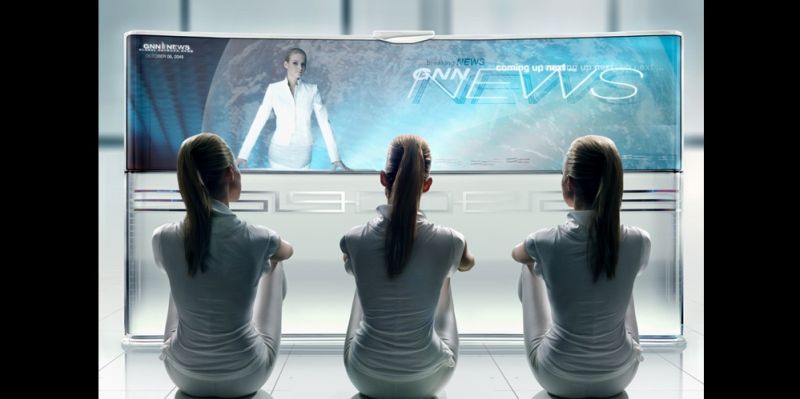
In science fiction, since the middle of the 20th century, the “traditional media” buried all in a skip, holograms, instant individualized messages, even artificial intelligence, built into the network and seeking, how to submit to the owner the most loser information. And even if the authors could not completely come off their ideas, say, about TV and imagine today's Internet in all its frightening all -armed - but in the world of future paper, ink and other material carriers it does not smell.
Meanwhile, in our 2013, we would rather disappoint science fiction writers: there are still newspapers, thick magazines and even television, which may not afford to broadcast on the Internet. And the reason is one, and these are our brains.
Well, what else to say if 53% of the "dear Russians" do not believe that the World Wide Web will be able to replace the modern media? The resume of the survey of the analytical center of Yuri Levada from the nearby 2006, among other things, is the following: "34% are worried that the World Wide Web will still replace newspapers, radio and TV." They-those who nevertheless understand the inevitability of changes-are worried that this will happen.
The question "replace or not replace" is no longer worth it: the only question is how to make money effectively on this without losing the quality of the content and while remaining modern media. "A pleasant feeling of paper in hands"? Have mercy, this is an expensive resource. "The charm of the printed word"? Perhaps the books will last the longest: after all, they are extremely pleasant to flip out, unlike crystalline cold readers and worried "iPads". But the aesthetics sooner or later inferior to massive technologies and finds new small joys in unusual conditions.
But the inevitability is perceived by hostile: “The Internet threatens traditional media” - the Canadian “The Globe and Mail” in 2004 anxiously broadcast to us. "Two -thirds of the Internet users from countries with highly developed economies sent and received digital materials; in developing countries, about half of the Internet users participated in the exchange of images," and what scares so much? That's right: the media are afraid that the exchange of information will occur without their participation! The dismissal of employees, the fall of circulations and ratings is all the money.
In the lasting loss of the world of "traditional media" in recent years, the natural mechanism of protection has included: you need to fight for copyright, keep the defense of bloggers, exposing them with profiles (and nevertheless refer to them if necessary), and this reactionary noise. But they are trying to earn more and more media in the new conditions, and they almost succeed. Initially, a failed paid subscription to the New York Times in 2011, in two years, turned into tolerable profits for many other newspapers: people gradually get used to that good content costs money. So not everything is so scary?
But in the end, all these are carriers, and most importantly-the content. The guy who decided to open his own television channel through Justin.tv, and a journalist who scouring on the network in search of rumors and facts for rewriting and reposting,, in essence, is similar to one thing: they are not up to the quality of the manufactured product. And here youthful fear falls out of the stream of information exchange forces the burned professionals to make unusual nonsense.
A disappointing analysis of the modern North American media first recently published Pew Research Center: you see, in the very advanced media country of the world, journalists cease to be journalists and simply turn into parasitic information transmitters between New Smakers and the audience: “The number of analytical materials decreases and the number of messages that directly broadcast the positions that broadcast the positions of the positions that directly translate the positions politicians and businessmen ”(translation of the Ukrainian source - approx. Auth.). From this conclusion: "The media industry is not prepared sufficiently and does not have the necessary number of personnel to produce exposure materials and carefully check the information received."
Could they afford such a media carelessness in the "traditional era"? Yes, but they would quickly lose popularity. Surviving quality today, the same media also lose popularity and are still surprised why Mitta Romny signed on Twitter more people than the report on his speech, in which the same theses spoke.
In order for the media to become truly new, in no case can they chase the Internet in an attempt to wedge into the natural transmission of information. A journalist is not a transmitter, but a neural network capable of evaluating, while the editors are a complex brain that is obliged to engage in analytical creativity and the products of this creativity, if possible, make a new information occasion.
After 30-40 years, you will not look for a newspaper on the shelves of the newspaper, to yearn for the feeling of paper at the fingertips and the smell of fresh paint in the nostrils. You will be a living media brain, a super -journalist who can absorb carefully selected information in two touches of the screen and on its basis to independently produce a new one, which, in turn, share with the network. And the stronger this collective mind will be, the less space in it will remain for distortion, overpoint and “combination” and the more the intelligence of mankind independent of the political and economic situation will achieve.
Perhaps everything will be different and we will melt in information wars-but fantasy already knows too much anti-utopias.
