
Translated material
"Where will we get the rats?"
In Russia, mass prosecutorial inspections of non -profit organizations continue.
Who, whom, how to check and what it will lead to - the New Times sorted out
Until this spring, the leg of prosecutors never stepped into Russian representative offices of foreign NPOs.
“A woman came to us from the prosecutor's office. He says that I was flooded with these matters, I no longer understand where what organization and what should be checked there. I ask: where did the instruction come from? - From the regional prosecutor's office. “But you know where it really is?” “Well, yes, of course, we know: Putin said that it is necessary to check - that’s the command to check.” Sergey Andreev, the head of the Open Altai Barnaul Altai Barnaul Altai Barnaul Foundation, is talking calmly and everyday. And it breaks up only once: “Well, okay, we are engaged in educational activities, this can still be somehow tied to politics. But after all, they come to those who help patients with cerebral palsy! ” When asked whether he agrees to include his fund in the register of “foreign agents”, if this is required from it according to the results of the audit, he firmly replies: “I will not be included in the register, because I am not a foreign agent.”
Who is checked
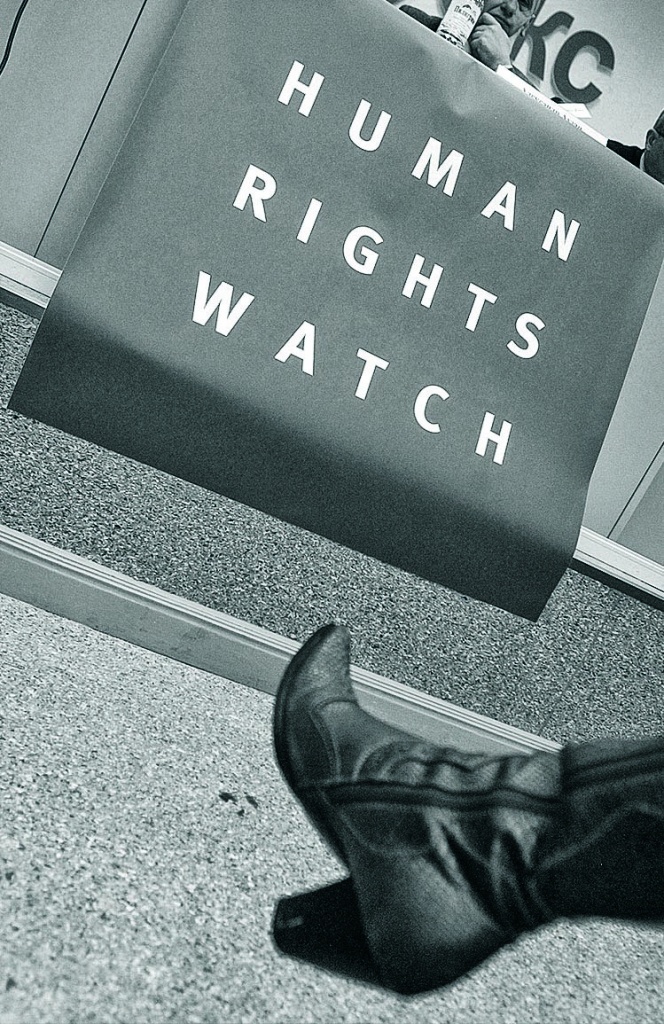
As of the evening of March 29, according to the Agora human rights association, the audits were already in 100 NPOs in 25 regions of Russia. The list of "stripping" amazes with a variegation. Of course, the majority of Russia in it, but there are large foreign and international organizations: the Adenauer and Ebert (Germany) funds, the Fransez Alliance (France), the Russian representative offices of Amnesty International and Human Rights Watch, which have not yet been checked.
The same variety from the point of view of the relationship of those verified to the existing government. On the one hand, among them there are many those whom the Kremlin almost openly accuses of “anti -state activity” - human rights activists, election observers, soldiers' mothers, wrestlers with corruption and police arbitrariness. On the other hand, they are welt and seemingly completely harmless to the regime of social activists: Rostov Baptists and Novocherkassk Catholics, Krasnodar Tajiks and Volgograd Jews, Bashkir wrestlers with AIDS and Sakhalin Cossacks. Not to mention the Saratov Union of Birds of Russia and the Novosibirsk Branch of the Voluntary Fire Society.
However, as the head of the Agora, Pavel Chikov, is sure, the main goal is not Baptists or Cossacks. “First of all, the prosecutor’s office is interested in organizations engaged in the formation of public opinion, primarily human rights and environmental,” he says. “As well as those who receive foreign financing.”
As for ornithologists and firefighters, the chairman of the Board of the International Society “Memorial” Arsenia Roginsky has his own version: “In Russia, you will never know what is being done by stupidity, and what is purposefully for eye evidence. Or, for example, on the initiative of some local prosecutor who may have claims to any organization of gardeners, and at the same time he is subject to this audit. ”
"
The Prosecutor General decided to curry up to the president, who said that the legislation on foreign agents should be executed
" As explained
The same strange “pluralism” is observed with the official explanations of the causes of the test campaign. After some thought, the Ministry of Justice said that it is carried out “to identify organizations that fall under the concept of“ foreign agents ”. The Prosecutor General’s Office of her representative Marina Gridneva announced: “The NPO is also subject to the implementation of the NPO requirements of the legislation on counteracting extremist activities and countering the legalization of income received by criminal means.” And even remembered some “organizations of ultra-nationalist and radical religious orientation”, which supposedly continue to act after the ban under other names.
However, in the official papers that prosecutors present to social activists during inspections, nor about the ultra -rationalists say nothing. Most often, there is a standard neutral formulation: the verification is carried out "on the implementation of the current legislation by public, religious associations and other non -profit organizations."
| * The New Times No. 10 dated March 25, 2013 |
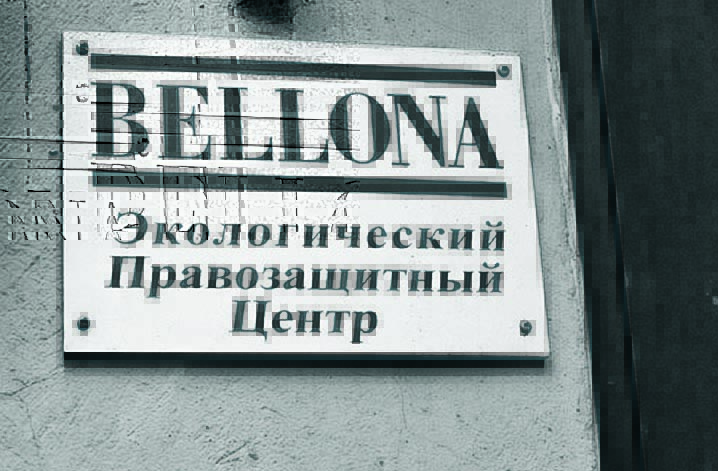
At the same time, in St. Petersburg, as already reported by The New Times*, prosecutors acted on behalf of a certain “mobile group”, authorized to find out how NGOs are fulfilled by the legislation on counteracting extremism and whether there are “unregistered and religious radical and radical associations” among them. Such a document was received, for example, at the Bellona environmental human rights center, the St. Petersburg Memorial and the Organization of Soldiers' Mothers of St. Petersburg. The struggle against extremism (but already without “mobile groups”) explained the audit in the Trans -Baikal Human Rights Center (Chita), the Open Altai Barnaul Foundation and the Southern Regional Resource Center (Jurs, Krasnodar).
In the Kuban, they came up with their unique formulation. In a number of local NPOs, the inspections were officially called “the examination of the premises in order to find objects and documents that can be used to document illegal activities related to the procedure for allocating and using cash on subsidies (grants) of the administration of the Krasnodar Territory, spent to support socially useful programs of NPOs”. Well, in some places, the inspectors, apparently, decided not to suffer and did not present any documents at all: it was in Novocherkassk (the Union of “Don Women”) and Krasnodar (the regional organization of the Tajik culture “Mehri Somonien”).
However, human rights activists are sure: the true meaning of the checks is in no way connected with their formal justification. “Just the Prosecutor General decided to get to the president after the FSB college, at which Putin said that the legislation on foreign agents should be executed,” explains Pavel Chikov.
How to check
In the form of verification, they also differ slightly.
In Moscow and St. Petersburg, the inspectors almost always come themselves, present a list of the required documents and themselves take away the received. True, once this scheme failed: the head of the “For Human Rights” movement Lev Ponomarev categorically refused to give the requested, referring to the fact that he had already transferred all these documents to the Ministry of Justice during the planned audit, and the prosecutor's office has the right only if information about a specific violation of the law. “Thus, the audit is illegal,” Ponomarev told the auditors in the presence of journalists. “It sees elements of a creeping coup d'etat: the Prosecutor General, designed to stand guard of the law, violates the law in a rude way.”
In front of the television cameras, the inspectors did not scandal and humbly retired, but the next day the prosecutor's office drew up a protocol on an administrative violation for the human rights activist under the article “Failure to fulfill the legal requirements of the prosecutor”. Now Ponomarev faces a fine of 2 to 3 thousand rubles, and he, apparently, will have to pay three times - as the head of the “For Human Rights” movement and his two subsidiaries.
In the regions, prosecutors, it seems, try not to strain and send letters to the social activists with a proposal to collect everything they need and bring to the prosecutor's office. According to this scheme, for example, the Agora and its partner organizations in Tataria and Chuvashia were checked. Although without linings it was not there either. Say, the head of the Agora, Chikov also demanded that the prosecutor's office provide facts of violation of the law by its organization, and in their absence agreed to "speak only in the courtroom." And the head of the Chuvash human rights organization “Shield and Sword” (the very one who voluntarily asked for the “Ino Agents” register and received a refusal from the Ministry of Justice) wrote a long letter to the prosecutors, in which he reminded that their requirements are contrary to the Law “On the Prosecutor's Office”, but also to the instructions of the Prosecutor General itself of August 8, 2011.
There are differences between the center and the province and the composition of the inspectors. In Moscow and St. Petersburg, as a rule, they “think for three”: one representative of the prosecutor’s office, the Ministry of Justice and the Tax Inspectorate come to social activists (sometimes grabbing the NTV film crew). In the regions, the composition of the auditors is much more diverse. So, a fireman came to the Krasnodar URC, along with the traditional “troika”. In the Novocherkassk Union of Women - representatives of Rospotrebnadzor and OBEP. And in the Committee “Civil Assistance”, engaged in the problems of migration, the FMS officer said, who, as the head of the organization Svetlana Gannushkin says, said from the threshold: “Now I will check the documents for all non -Russian ones.” And even found Afghan, Arab and Ukrainian. True, their documents, to his disappointment, were in order.
“In general, the idea was like this: we smile politely, politely collect. And they (the audited) will understand everything, - comments on the behavior of prosecutors Arseniy Roginsky. “And the element of intimidation is the fact of the verification itself-firstly, sudden, and secondly, complex, and thirdly, for some reason carried out for some reason.”
| | | --- | |  | Petersburg ecologists were checked for extremism, and found evasion of the fight against non -existent rats
What are looking for
The basic set of the required documents is the same everywhere and practically coincides with the fact that social activists are handing over to the Ministry of Justice during planned inspections: all documents regarding the activities of NPOs for 2010-2012, information about the founders and sources of financing (with the mandatory indication of the “state affiliation” of sponsors). The fact that most of this information is in the public domain or at the disposal of other state bodies, prosecutors, of course, does not care.
Sometimes, however, this list expands significantly. For example, in a number of regional NPOs (in particular, in the Trans -Baikal human rights center), prosecutors requested a “brief analysis of public activity for the specified period” and a report on participation in political activities. And in some places, under the pretext of checking the licenses for software, computers were even seized-moreover, the auditors dared to resort not only to Rostov or Novorossiysk, but also in the St. Petersburg office of the Fund named after Conrad Adenauer, completely paralyzing his work (though two days later, computers were returned to the Germans).
Finally, with special attention, the inspectors reacted to the Samara branch of the Voice association, which engaged in observations in the elections (which, by the way, the Ministry of Justice also checked only a month ago). According to the head of the department Lyudmila Kuzmina, thirty observers sent the agendas for interrogation in order to find out whether they paid the tax from the fees paid for work in the elections (1.2 thousand rubles each). And in the “votes” of the “votes”, the questionnaires were invited to name all the people who work in other departments of the association with addresses and phones, as well as answer the question of whether the “votes” “attempts to assign the functions of legally elected state authorities, state institutions and self -government bodies, interference in their activities are seen.”
Some demands of public activists, to put it mildly, were surprised. For example, the auditors decided to get acquainted with publishing products, from the director of the representative office of Amnesty International, Sergey Nikitin demanded a copy of the passport, in one of the Rostov NKOs they asked for fluorographic pictures of employees (and for the perplexed question “why?” You calmly work: “Well, you work with people”), and in the same Novocherkassk wanted to inspect the books in the room.
It is not surprising that violations based on such inspections are also found very peculiar. For example, “Don women”, according to their leader Valentina Cherevatenko, was guilty of “something like an overdue time of fire safety briefing”. And the St. Petersburg "Bellone" was strictly indicated that she did not carry out deratization in the office. "Given the fact that we are not the first floor where we will take rats?" - The Executive Director of the Center Nikolai Rybakov is perplexed on Twitter.
"
*The element of intimidation is the fact of the verification itself-sudden, complex and for some reason carried out for some reason the prosecutor's office*
" Why are they looking for
“It seems that the task of checks is to find at least some violations from NGOs: an expired fire extinguisher, a business trip report, filed in the wrong folder,” emphasizes the Presidential Council under their appeal to the prosecutor General Yuri Chaika.
However, in relation to the most hated organizations for the authorities, such as the same “vote”, this will probably not be limited to this. “The prosecutor’s office now analyzes the activities of non -governmental organizations throughout the country,” explains Pavel Chikov. - After that, prosecutors will explain to the Ministry of Justice which of the NGOs are engaged in politics. That's how, I think, by the fall, we will see a completely listed list of foreign agents. ” Since many will not wish to voluntarily sign up in spies, then everything will be “according to the law”: fines, suspension of activity, closing NPOs and a prison for management.
Such a sad result of the current checks is logical in its own way. “I think our authority does not organically understand and, I am afraid, is not able to understand what kind of beast this is non -governmental organizations,” says Arseny Roginsky. - We are with them (power) of different types: if we are cats, then they are dogs, or vice versa. And we speak in different languages, and we have different incentives, they do not understand a lot of us. And on top, paranoia is still imposed, associated with orange revolutions and our past protest winter. ”
The authorities, Roginsky believes, exaggerate the role in these events of public organizations - "there was the role of each person separately." But “with each individually” it is impossible to get scores. It is much easier - immediately with everyone.
Photos: Photoxpress