
Translated material
Lee RURK: Prophet Boredom
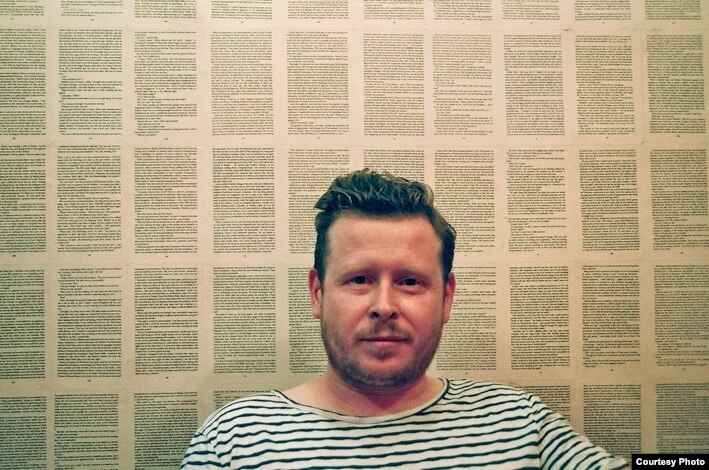
The new book of the poems of Rurk is called Varroa Destructor. In the annotation, it is described as follows: “Each of the poems is occupied by the space between poetry and prose - and, especially, between poetry and“ poetic ”. Sorting out different events, observations and thoughts, these deliberately“ rebuilt ”poems repeat the signals of a daily, dull decline. Detailing the little things of the routine working day - especially modern, office, Varroaa Destructor makes a focus on the difficulties that are difficult to unnoticed, which are difficult to unnoticed, and reveals to us the culmination of events that could form the actual content of our daily life. ”
As usual for poetic annotations, it is written somewhat pretentious and confused, but another thing is important for us-the topic of boredom is present, and Lee RURK is still a prophet.
Everything that seems to us unchanged in human nature has actually its beginning - and, accordingly, its end. Tynyanov once said that the fear of death in Russia was invented by Turgenev and Tolstoy, Rurk today considers the boredom the generation of an industrial society. In a long -standing interview 3: am he says: “For the most part, this is a new phenomenon - he is about 200 years old. Boredom is inseparable from modernity. It is a modern thing. It should be associated with technology, with the fact that the technology overtakes us, and then waits for us to use it. This is the obvious reason that boredom is more and more overwhelmed with ... boredom opens up a monstrous void, which we are so so. Now, when God is dead, everything that has been left for us. Such is the destructive nature of boredom: it demonstrates us our final, limited, aimless lives - and that we are not able to cope with them. " If you leave aside trampled by everyone who is not lazy (who is not bored?), The site called "God died!", Then Rourke reason very accurately. Only I would not focus on the same technology. The point is that the growth of the quality of life of the relatively small part of the population of the globe overtakes - in the minds of representatives of this small part - the idea of how to dispose of their own lives. A Western person achieves decent work, buys a car, a house, fills it with all kinds of devices and gadgets, including children, instituted on the principle of “everything like people” (that is, as the representatives of their social group); And then he stupidly eats on a fashionable sofa in the living room and ... so what? There is no need for illusions: people, for the most part, are not as stupid as they seem; It is difficult to find a person who would sincerely rejoice at the immense size of the television screen or the opportunity to read the following pop culture news, fried on the Thai beach. Sculsing leading boredom - this is what you feel, looking at all these bourgeois tricks, the purpose of which (except, of course, the ontological task of lure money from a simpleton) - fill the void, fill it with a pile of colorful things. Pascal believed that all the good, invented by humanity - literature, music, philosophy, there is only a way to distract a person from the horror of death. The era that followed his death reduced "literature, music, philosophy" to the level of cheerful toys of forty -year -old children, and the "fear of death" reduced to longing for a completely worthless life. That's to distract from this longing, and we need our toys.
It would seem that the situation is hopeless, at least no one has yet come up with any effective way to escape from boredom. However, Lee RURK gives his own advice: he calls not to fight boredom, but to welcome her: "I will rather take boredom completely than to try to fill my life with various things in order to push her to the sidelines." Correctly said. I recognize you, boredom, I accept and welcome the ringing of the shield.
This courageous position gives us the opportunity to finally rethink our attitude to boredom. First of all, it is worth paying attention to how social is our idea of it. According to him, only wealthy people are bored, who "have nothing to do"; Others allegedly follow the vigorous saying "We have no time to get bored!" Nothing more idiotic is simply impossible to imagine. Boredom is not at all the destiny; It is enough to recall hundreds of millions of people engaged in monstrously monotonous work, both physical and the so -called "mental": workers from conveyors, office workers, peasants. What could be more boring than this hard labor, and indeed, what could be more boring than forced labor, that is, one that they indulge in order to survive. Labor - a curse, punishment for original sin, do not forget about it. However, no less boring and unemployed. They are not busy with anything (except, of course, there was a simple household), but it wasn’t there: the evil habit of working took the ability to enjoy the divine nothing. Eternal anxiety, tension, where to find work: this is no less hell than the Aquariums Open Space, in which office plankton lives. Boredom is given to a Western person at birth; Dying, he inherits it by the next generation. It is impossible to avoid boredom; If so, let's love her. The Prophet whether Rurk writes in his novel:
“It is generally accepted that boredom is when there is nothing to do. This approach has always surprised me. In my opinion, there is just some kind of activity. As I have already said, boredom carries me away, forces me to react. Boredom is usually considered a lack of personality, but this is completely unfair. About people who are boring, they think that they cannot communicate with those who surround them, or with the whole society. People who are boring, and even more than their boredom, are much more accurate to perceive both themselves and those who are not bored, just drowning in excessive activities: in fashion, style of life, television, alcohol, drugs, technologies and other things, in everything that we usually do to pass the time, that these people are as boring. They are busy.
This excerpt from the "Canal" was transferred by Anna Aslannyan two and a half years ago for the program of Dmitry Volchek "on top of the barriers." She talked with Lee Rourke about his novel; Boredom, of course, has become one of the main topics.
Anna Aslannyan: Your characters are not the first example of bored heroes in literature; However, the difference between the traditional attitude to boredom and what you offer is noticeable. Sometimes it seems as if the heroes urge the reader to join them, to indulge in boredom from the heart, without denying themselves anything.
Lee RURK: Yes, but at the same time they also embody some symptoms in themselves. I wanted it to be from the text directly, without abyss. At the same time, I wanted it to be clear: they are victims of some influence. In fact, they are victims of their own limb, limitation, meaninglessness. Something happened to each of them, and as a result they were in this position-when they had nothing left, only a gaping emptiness. Their behavior is a reaction to it. The emptiness, as it seems to me, is connected with boredom. Boredom reveals before us the way to this emptiness, to gaping holes, from which we are trying to get out, we try to avoid them in every way - because they are afraid of us. That is why we are not able to cope with boredom. I often had to write about it. I really think that our desire to avoid boredom, getting rid of it is a source of frustration, tension - and this, in turn, invariably leads to violence. Of course, the picture is not black and white here; Nevertheless, it really seems to me that in all of us there is something that resists the void that I am talking about. We cannot accept nothing to the surrounding us as it is.
The same happens with my heroes; Both of them are victims of this phenomenon. He is trying to accept this condition, not to resist boredom. She has long been following this path in attempts to cope with her frustration and as a result she comes to violence. My plan was to reduce these two people: the one who is trying to surrender to the whole boredom, and the one who lives, obeying the impulses, bored. I am interested in the interaction between these heroes. Of course, he will fail - he is not able to completely surrender to boredom.
Anna Aslannyan: However, he is trying and in the end understands that he reached his limit - he was bored with boredom. Apparently, this is the purpose of the book: to build boredom into a certain absolute and see what will come of it.
Lee RURK: Here I would mention three things, three observations that, in a sense, moved me to thoughts. One of them belongs to Bertrand Russell - he said that if people stopped resisting boredom, there would be less violence in the world. Then I recall the statement of Ballard that the world is bored by its nature: the future has already come, it is happening right now and it is boring. The world has to become more and more boring, which means that it will have more and more violence. He, of course, said this in his own literary context. But his words seem quite reasonable to me. Finally, Heidegger in his “basic concepts of metaphysics” and later, in one of the lectures, speaks of boredom as an important phenomenon. According to him, I am a little simplifying, but in general the meaning is this: the highest stage of boredom is a state when a person was bored with boredom itself. I repeat, this is a simplified option-it sounds somewhat in a tinee-governing; But his main thought is like this. If you lose everything, absolutely everything, then only two paths remain. The first is to rebuild everything again, putting some heroic efforts, as is customary with Heidegger. This is not particularly interested in. Or you can continue to move in the same direction - and in the end it will certainly get bored. This approach seems much more interesting to me. Heroic Heidegger does not occupy me. After all, whatever you say, tragedies are taking place in this world with many people, and therefore heroically singing nothing, emptiness, meaninglessness is not good. Many will tell you: sorry, but this happened to me, in my life - and she is not meaningless. Thus, I am more occupied by that continuous, repeated cycle of boredom. Heidegger probably would call it amazing moods, but I don’t think so - they are closer to me in spirit.
So what to do with boredom? I do not give recipes, but - partly after whether the rourder is - I can (in private) offer the following. Not all of humanity, of course. Only to those who can be called "readers", to those whose world is more in the book than beyond. So: you should avoid things that are designed to help us avoid boredom; In other words, do not be afraid of her, you need to tame boredom, privatize. Most classical literary works are boring: the Pristov epic, "War and Peace", "Song of Roland", "Notes at the head of the head." From this they do not become less beautiful. The wisdom of the modern reader should consist of suspicion of any deliberately boring books, but the degree of trust in intentionally boring should not have a limit. Read slowly, read thick boring books - and you will strangle boredom in your arms.
You can completely listen to the interview with Lee Rourke here .