
Translated material
Feast of disobedience
A year ago, independent candidate Yevgeny Urlashov, a former member of United Russia, became the mayor of Yaroslavl, defeating the election of a candidate from United Russia. Today he states that the "EP" must generally eliminate in the territory of the Yaroslavl region. "
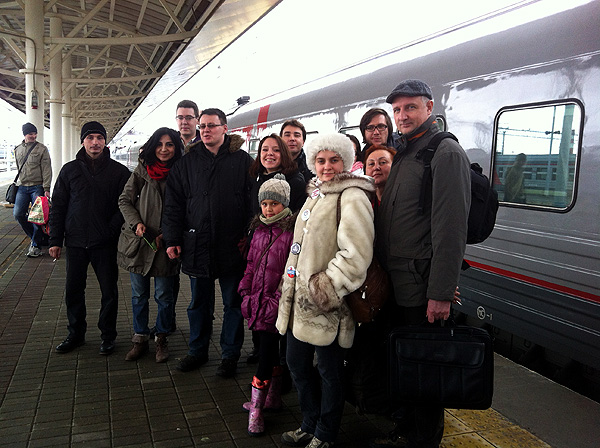
Similar statements were already sounded in Yaroslavl, but this was intended for guests from Moscow: observers from the capital came to the city for a year to celebrate the year of the Yaroslavl landing, the first departure event of voluntary observers to control the election.
Urlashov, perhaps, would have won this: his rating was much higher than his opponent’s rating, and the Yaroslavl region was never included in the “special electoral culture” zone (as political scientist Oreshkin calls the regions with the unusually high percentage of the party in the election). But history does not know the subjunctive mood: Urlashov’s victory happened in the elections under the mass control of visiting observers, he himself said that he came to power in many ways "thanks to their (observers) help."
Maria Aismont
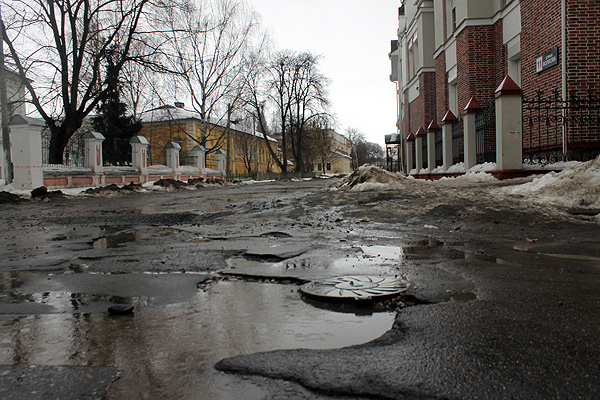
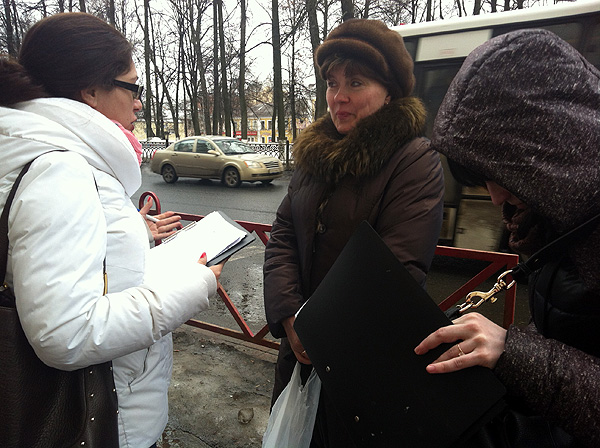
Moscow participants in last year's landing celebrated the year of their "Yaroslavl landing" by the inspection of city roads and collecting orders of citizens to transfer them to the mayor.
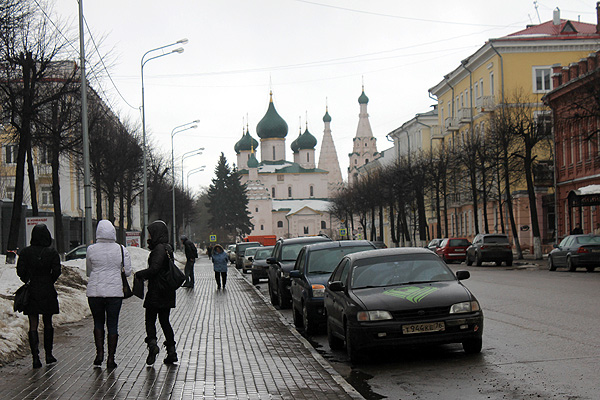
Roads, they saw Muscovites, are still very bad:
Maria Aismont
But the inhabitants, which surprised the visitors, for the most part, the mayor still support and are ready to forgive him for pits, uncleaned sidewalks and his long travel trips (for example, in Costa Rica): the mayor is young, active, tries. If the elections are tomorrow, most of the respondents said, we will vote again for it.
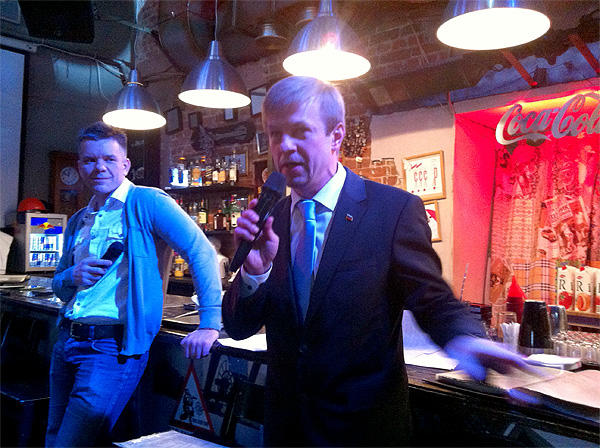
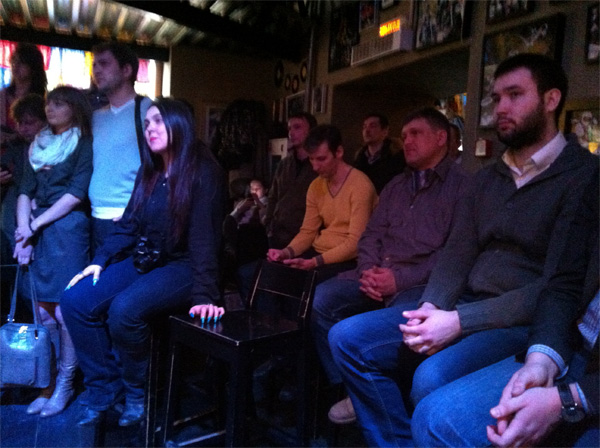
In the evening, Yevgeny Urlashov met with Moscow observers and city activists and told for almost two hours how he was going to deal with low -quality road builders and his opponents from United Russia, to ennoble the city parks and fill the city budget, leased rent from those who had not paid before.
"The roads seem to be made. You can see that they may be good, but I will not accept them. I won’t pay a penny. Mr. Pogosyan may get 120 million rubles, but I warned: I have the task of turning the situation within a year."
“I congratulate everyone on the fact that we can touch the mayor,” said one of those present and touched the mayor.
In Yaroslavl, you can not only come to the club in the evening and touch the mayor. You can ask for any month on the street on the street-and no one will hold you back. You can declare any rally - and it will be agreed. Soon a DDT concert will be held in the city, which, obviously, no one will cancel, and Shevchuk will let the audience tell the audience everything he wants.
Urlashova can hardly be considered an opposition to the Kremlin. Scolding the last words "United Russia", for example, he speaks more cautiously about the All -Russian Popular Front (ONF), directly related to Putin, and refrains from criticism of the highest Russian leaders. But the mayor’s conflict with the City Duma (where the majority of the “EP”) and the regional authorities obviously benefited the Yaroslavl for the benefit.
“Political science greatly reduces corruption,” one of the Yaroslavl people present at the meeting explained to me. “And his (Urlashov) children are drugged, and they are drooping“ United Russia ”. The agenda has changed. The relationship with the people appeared.”
“The city hall officials have become more accessible to the press,” says the journalist Denis. “As a journalist, I can say that our Yaroslavl media are divided into Urlashov and government, who work against Urlashov. Censorship, apparently, is strong there and there.” But the townspeople, having read both the press, can make a rather complete picture of what is happening in the city.
In the evening, at dinner at the cafe, Moscow observers and their Yaroslavl colleagues raised toasts for the "new format of relations with the authorities", said that the Yaroslavl experience was still unique, and remembered how it all began.
Maria Aismont
And it began like this: in Moscow, the head of the department of import and logistics of the jewelry company Olga Feigin was an observer in the presidential election on March 4 and was very upset by their result. "There was a desire to remove a white ribbon because I was disappointed. After March 4, we realized that overthrowing power is not so far about us. But we can try to change something for the better at the regional and municipal level. We may well look for what elections there are."
At this time, in Yaroslavl, Elena Lesiashvili discovered Facebook. Introduced the name of her city into the search engine and discovered the event "Control over the mayor’s elections in Yaroslavl." “I thought, here are idiots!” She recalls. “And then I wrote:“ I am from Yaroslavl. How can I help? "
Urlashov promised in a year “about the same dates” to meet again and tell what he achieved. He also called on observers to come to the autumn elections to the Legislative Assembly of the region: the elected deputies will have to decide who will choose the governor in the region: they or the people.
It is difficult to talk about what the Yaroslavl experiment will lead to and how the rule of Urlashov will end. While one thing is obvious: many problems remained, but the Apocalypse did not happen, and there was more freedom, openness of power and discussions in society.
.jpg)
Maria Aismont
Maria Aismont
Maria Aismont
Maria Aismont
Maria Aismont