
Translated material
Dissident cinema
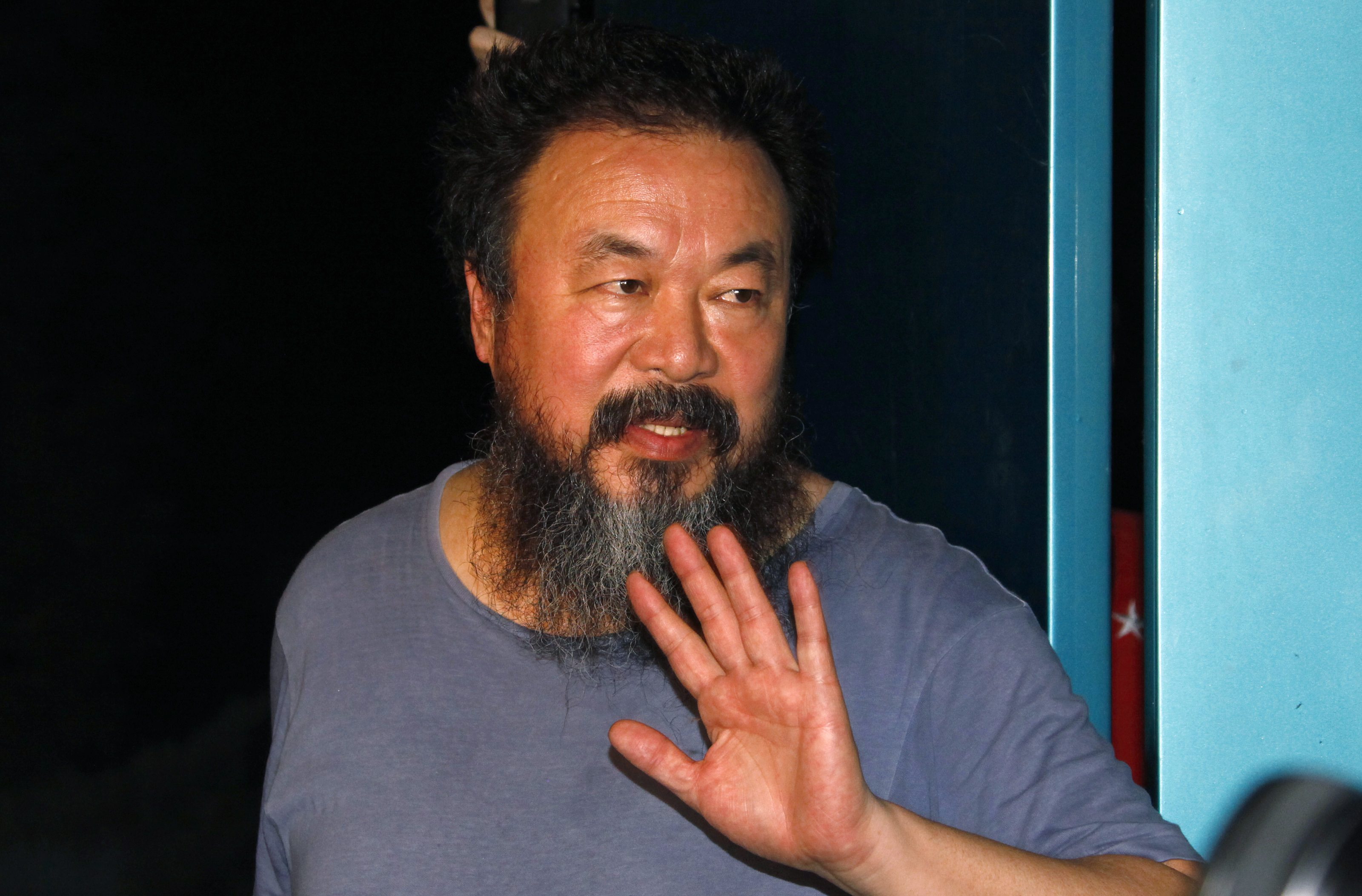
Alexander Genis: In recent years, the world has entered a new cycle of socio-political upheavals, an example of which is the Arab Spring and the protest movement in Russia. Naturally, cinema, in any case, documentary, could not help but respond to these hot events. Today, the host of our heading “Films”, the director-documentary Andrei Zagdansky, we discuss two paintings that can be conditionally attributed to “dissident cinema”. I beg you, Andrey!
Andrei Zagdansky: A documentary about Ai Weivee , the most famous Chinese artist to date, was made by the young American documentary Alison Kleiman and the picture brought the author a great international success. Alison not only creates a portrait of the artist, in her picture we see a portrait of an artist - a political activist who uses not only his artistic tools, but also modern media media in order to defend ordinary Chinese rights daily. If you like, after watching the film, I learned about modern China no less than I found out about the artist Iwawei. In his status, I was very reminded by Andrei Sakharov: international glory forces the authorities to reckon with the dissenting - he cannot be thrown into prison, but you can send Gorky to a closed city or arrest and then charged with tax failure, which is happening in the picture with Ai Wevei. At the same time, Ai Weiwei does not require a change in the regime, he just achieves publicity, publicity. The very publicity with which our restructuring began at one time and which, as many believe, has finished the Soviet Union. In 2008, Ai Weiwei built the very famous bird's nest stadium, which became the symbol of the Olympic Games in Beijing. And in the same year, in May, a terrible earthquake occurred in the province of Sichuan. Among the dead are thousands of children who were during the earthquake at school. According to official figures, 19 thousand children died, and in total, according to official figures, 90 thousand people died. As I understand it, in China, these numbers cause serious doubts. The children died because the schools were terribly built, what Ai Weiwei calls “Tofu structures”. The earthquake and the number of victims should not overshadow the Olympic Games. Sounds very well familiar. One of the projects of Ai Weiwei is the exact registration of the names of all dead children. This is the only way to find out the exact figure. And so the volunteers who work with the artist call thousands of people with one only request: to pronounce and write down the name of one of the dead children and send a sound file. Of these thousands of votes, a chain of names forms. If I'm not mistaken, Ai Weiwei volunteers added 7 thousand children's names to the official list of the dead.
It worked hard on me. In Israel, in the Museum of Yad Vashem there is a pavilion of children, where in many languages in different voices they read the names of children and their age when they died in a disaster. After 2-3 minutes, I want to yell with horror. In the same way on September 11, on the place where the twins stood, they read the names of all the dead. The chain of names acts emotionally, the figure of 3 thousand people is just statistics. This is a fundamental concept of respect for individual life - it is necessary to remember not at all, but you need to remember a person, this particular person. The Chinese authorities make the exact opposite, they would like to erase these names, to deprive people of the name after death. This is another crime.
Alexander Genis: And especially for the Chinese consciousness, where the cult of ancestors, the cult of the dead has always been the main one. The Chinese kuli, which built railways, raised money all their lives so that their corpse was sent to China and buried so that it would be part of the family, therefore this is a particularly vile crime of totalitarian authorities.
Andrei Zagdansky: And the same method of recognition Ai Wevei uses in his art, in his installations. In Germany, an exhibition of his works opens. The huge facade of the building, where the exhibition will be held, is laid out by school satchels, such as schoolchildren wear in China. With exactly the same satchels, these children left the house on the day when an earthquake occurred. These satchels are multi -colored, and one phrase from Chinese hieroglyphs is laid out of them. We are talking about one of the girls who died in an earthquake - "she was a happy seven -year -old girl." The phrase said by relatives of one of the dead schoolgirls. We can relate to conceptual art in different ways, we have repeatedly talked about this outside this program, but thousands and thousands of satchels act in the same way as hundreds of thousands of shoes in Aushwitz, behind each satchel - the life of a child that Chinese authorities loses their lives after death so that another figure does not overshadow statistics.
Alexander Genis: So you said that you can relate differently to conceptual art. Usually we treat him poorly, in any case, because, in my opinion, conceptual art, if it is not funny, like the same Bakhchanyan, then it is boring, but you can not name the art that is worth the blood that has a civil message. And this is precisely what the art of Ai Weiwei brought out of the curatorial discourse into a large social phenomenon. I remember how in the 80s sotsart appeared in New York. And the galleries in Soho, where mosquitoes and melamide and other socialists were exhibited, were very popular. Several years passed and, suddenly, Chinese socialists began to exhibit in the same galleries - the same pioneer ties, the same sickles and hammers. But it was already Chinese sotsart. And now, slowly, the whole thing ended and the conceptualism appeared, which requires some new mission, and Ai Weivei found this mission. It seems to me that this is the main content of the film.
Andrei Zadansky: He has become a different person, this is very important. It seems to me that Ai Weiwei polished himself as a man and as an artist in New York. Please note that the film has a completely wonderful detail. While the events for most Chinese dissidents were the events on Tiananmen Square in 1989, when, according to various estimates, hundreds of Chinese dissidents, students, people who came to a demonstration against the Chinese regime, for Ai Weiwa, was a fundamental, forming event, the scandal of Iran-Contract, which he watched on a television in America. You remember all the main ups and downs. And for Ai Weiwei, this was a fundamental event - the country herself judged itself, there was such publicity, that publicity that, in his understanding, was inconceivable in China.
Alexander Genis: They say that real democracy is not when there is no corruption, real democracy is when they judge for corruption. And Ai Weiwei said that the biggest impression on him was made by the fact that the country is not afraid of itself, not afraid of its people. How correct and good! With this powerful idea, he returned to China.
Andrei Zadansky: In general, Ai Wevei makes a very impressive impression. He has restraint, some emphasized silence, dignity, he does not fuss, in no hurry. There is a wonderful phrase in the film, which I really liked: "There is no more remarkable type of street sport than throw stones in dictators." It does not reach this in the film, although he was imprisoned, he is presented.
Alexander Genis: He sat in prison for 88 days and no one knew about his fate.
Andrei Zagdansky: “New York Times” wrote every day that we know nothing about him, about what is happening to him. Then he appeared at large, gave a subscription about silence, he was not returned to him, he has no money to pay the inconceivable amount of taxes that the Chinese government requires from him. And the most amazing thing is that people began to collect money for him.
Alexander Genis: This is the most touching moment. By definition, he causes hatred, because he is rich, famous, he cannot be touched, and suddenly ordinary people send money. China is a poor country, and the fact that hundreds, thousands of people send their donations so that he will pay the debt to the government, suggests that in China the same people as everywhere, and they are ready to pay for their freedom. And it encourages.
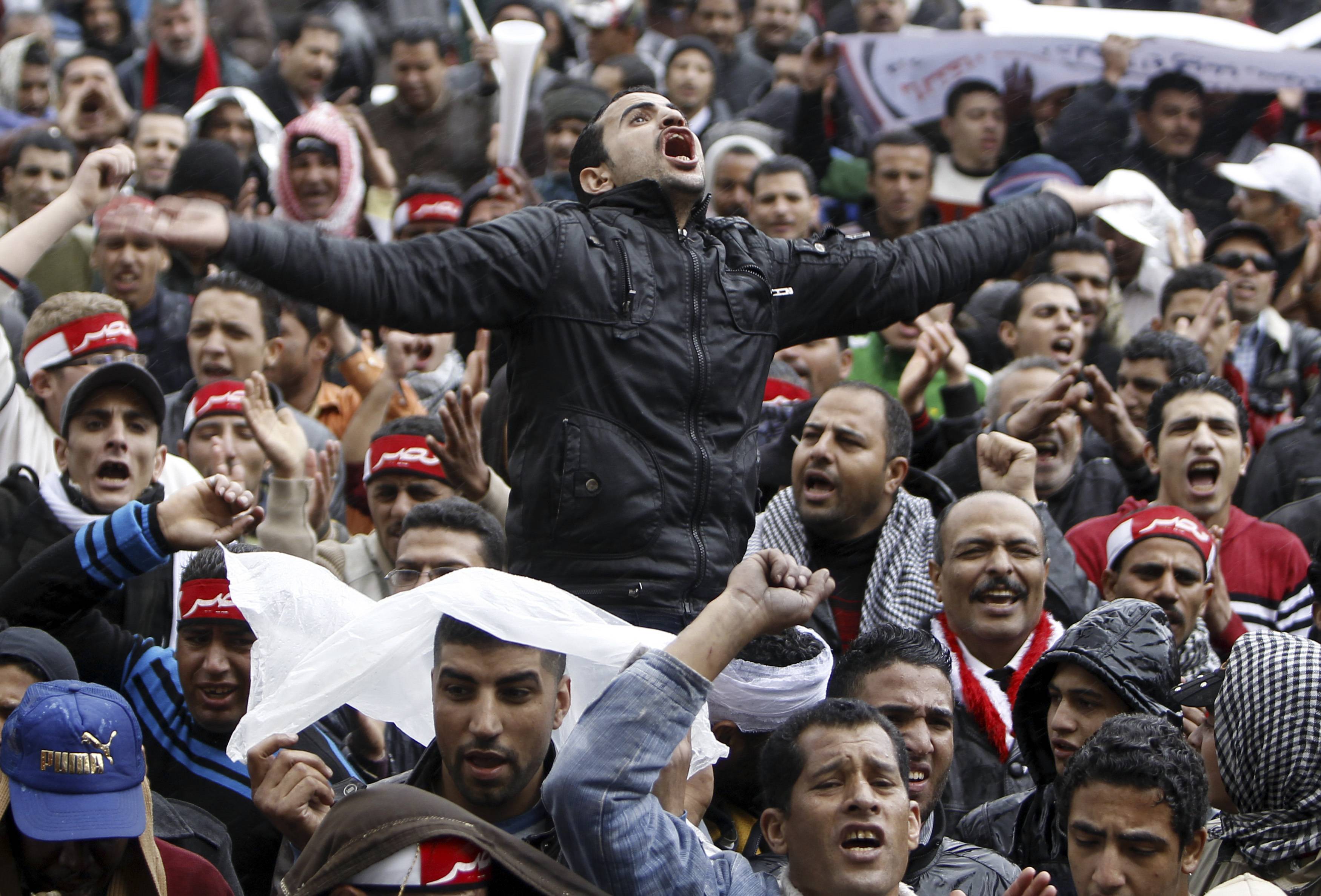
Alexander Genis: Andrei, we talked about Chinese and Egyptian dissidents today, but, of course, this is acute time for the Russian protest movement.
Andrey Zagdansky: Yes, of course. By the way, when I looked with horror at the fights in Tahrir Square, I willy-nilly thought about Kyiv and Moscow, where, as we know, a certain degree of dissatisfaction with the government, to put it mildly. I remembered another picture, a Russian picture, the film “Winter will” is called. This is the film of students of my colleague Marina Razbuzhkina who studies at her higher courses. Several people shot a picture of the protest movement in Moscow, about the internal split inside the protest movement. I liked the picture, but I thought how difficult it is difficult to tell all the nuances if you are not inside this cultural context. We will undoubtedly figure out what is being discussed, but there will probably be certain difficulties for people in New York or Europe. If you do not follow all the details and all the vicissitudes of the protest movement in Russia as a whole, it will be very difficult for you to figure out what is happening, what is the nuances.
Alexander Genis: I must say that this film is not shot for this. The main thing for such films is to find your audience in the country about which they are talking about.
Andrey Zadansky: Absolutely. But my little “but” is as follows: fights and direct clashes make everything instantly understandable at once. When we look at what is happening on Tahrir Square, we understand - we are against Mubarak, we and they. And this is the logic or lack of logic of protest cinema. We would like to see the confrontation as a black and white game, but in reality everything is much more complicated.