
Translated material
Shakespeare, who visited the future
And the second: “In Venice, I saw the Anglo-American film“ Lolita. ”He talks about love between a forty-year-old man and a 12-year-old girl. The picture is empty from beginning to end, while watching it did not feel any feelings, except for the depression and disgust. The cinema of the future should certainly leave the void,” Tarkovsky says in an interview with 1962, published in the newspaper Riga. The most important (not) mention of Nabokov in the Soviet press. Nabokov would probably appreciate. Interestingly, when did Tarkovsky read Lolita in the end?
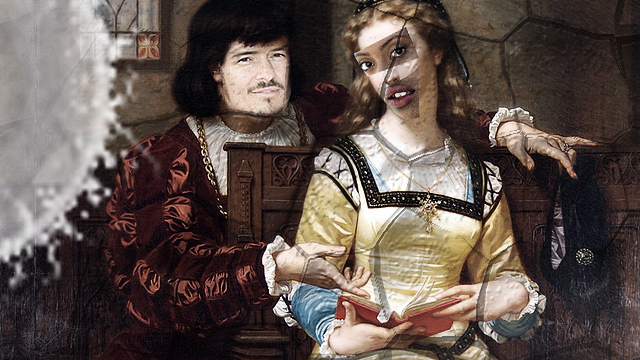
But even more fun is that the next random link led me to the Slate website to the article by Alissa Rosenberg "Romeo and Juliet - a bad play, and David Leva will do nothing about it." David Leva is a British theater director who will bring his production of a Shakespearean play to Broadway in the fall. Romeo will play 36-year-old Orlando Bloom (in Russia it is better known as Logovaz, that is, excuse me, Legolas), and Juliet-26-year-old Kondola Rashad, African American. Alissa Rosenberg has not yet seen the performance, but the director’s thought from the casting is clear in advance: the enmity of Montekka and Capuletti will be explained by racial hostility. However, the scandal here is not that Rosenberg evaluates the production exclusively on the basis of casting. It is amazing that she does not praise her. The replacement of inter -clan marriage with interracial should cause approval in a liberal -thinking American. Because it indicates an understandable (and successfully overcome) problem.
But Alissa Rosenberg with the Shakespearean play has a completely different problem: she does not like her. Firstly, it is annoyed by the age of the heroes. Juliet, she recalls, in the play 13 years. How many years Romeo, Shakespeare does not speak, but judging by the recklessness with which he marries, he also does not have twenty. It is not clear why we should follow the stupidities of two teenagers, but it is even more not clear why two adults should reproduce all these nonsense on the stage. If you read the play, it is boring, then setting it is stupid.
Secondly, the nature of hostility between families is incomprehensible. Since the exact cause of the conflict is not indicated, one of the parties can be made in modern production, for example, a Puerto Rican family, and the other - Polish. Or generally transfer the action to Jerusalem and present conflict as a special case of the Palestinian-Israeli conflict. On the one hand, at least some kind of credibility will appear. But on the other hand, it will also disappear: how to explain the sequence of misunderstandings on which the play rests, in a modern trace of communication means? And in general, Rosenberg asks, why was it so to hurry with marriage?
But even if you come up with an explanation and this impatience, then how to justify suicide? Obviously, this is an extremely children's step: which of us did not imagine our own funerals in childhood, did not savor our parental tears and, in the end, did not dousise with his tears from pity for inconsolable mom and dad? It is always easier to die than living, instructively notes Rosenberg. To live - it means to take responsibility for the consequences of your own actions. Therefore, with all the advance of the idea of interracial marriage between Romeo and Juliet, it would be better if David Leva gave his two actors deeper dramatic roles.
I laughed to tears. And not even because Alissa Rosenberg writes about the first love of the Victorian mother, looking for a decent party for her daughter. And not because the threshold of adulthood in the American understanding has already moved to almost early old age, and the threshold, after which sexual relations seem acceptable, at the same time entered the adolescence. It is much funnier that Alissa Rosenberg does not notice how rhetoric the contrast of youth and old age, naivety and experience, innocence and damage are rhetorical. She does not seem to see that adults behave in a play amazingly childishly, and the children are from scratch to bring the matter to the tragedy. Actually, on the constant flickering of these oppositions, at their transition from children to adults and vice versa, a play is being built. Pretty comic for the tragedy. However, this is the old thesis of Shakespeare's studies: all the tragedies of Shakespeare of the comedy, and all comedies are tragedies. If you believe the memoirs of Stephen Fry, this thesis develops in the examination work every third graduate of Oxbridge.
All these circumstances are indicated by Alisa Rosenberg Noah Berlatsk - in the recall published on The Atlantic . He does not forget the Shakespearean mind, unequivocally packed in the verse. For the English -speaking viewer, this alone is enough to follow the performance with a breath.
But I laughed not. The most comic there is a circumstance by which both author passed. Is it not fine that Shakespeare himself, magically moving to a bright American future, heeded the instructions of Alissa Rosenberg and, according to the results of movements in time, composed much deeper and dramatic roles for interracial acting duets. He wrote his mature play allegedly in 1603. It is called "Othello, the Venetian Moor."