
Translated material
The deputies listened to criticism: the law on the feelings of believers adopted in the first reading will be softened
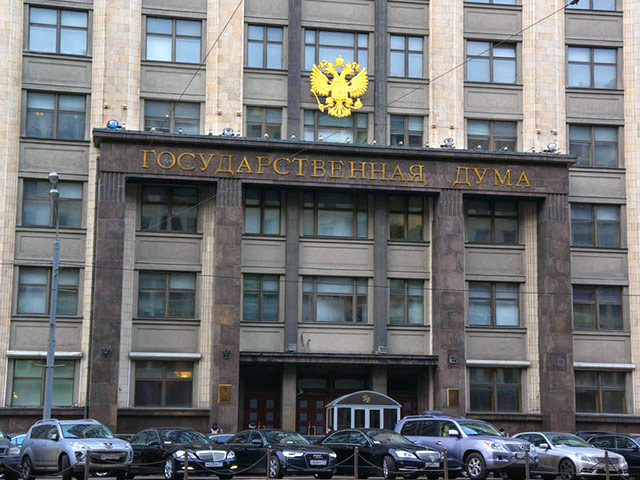
The scandalous law on the protection of the feelings of believers , which was adopted by the deputies of the State Duma in the first reading, will be revised. Numerous criticism of the developed bill played a role - the deputies decided to listen and not introduce a new article into the Criminal Code, according to which for insulting the feelings of believers they could deprive of free for five years. Now there will be no such long time, as well as a new article in the Criminal Code. However, the bill itself has not disappeared: the main measures will fall into Article 148 of the Criminal Code, including imprisonment for up to three years, ITAR-TASS reports.
The head of the relevant committee on public associations and religious organizations, Yaroslav Nilov, a deputy from the LDPR, said that the corresponding amendments were developed for the second reading by representatives of all the factions of the State Duma.
"Understanding and sharing the fears of the critics of the bill, we decided to abandon the introduction of a new article in the Criminal Code," he said. Instead, parliamentarians decided to clarify the provisions of Article 148 of the Criminal Code.
According to Nilov, in the new edition the article will be called "Violation of the right to freedom of conscience and religions" instead of "preventing the exercise of the right to freedom of conscience and religions."
The main provisions are as follows: actions aimed at insulting religious feelings of believers will be punishable by a fine of up to 300 thousand rubles, forced labor up to one year or imprisonment for the same period. And the same actions committed in the places of departure of religious rites and ceremonies will be punished with a fine of up to 500 thousand rubles or correctional work, as well as forced labor for three years. The term of imprisonment will also be three years.
Nilov emphasized that in order to bring to criminal liability it is necessary to simultaneously have the presence in the actions of the defendants "direct intent, publicity of actions, their indecent form and a clear disrespect for society." He also urged not to confuse everyday understanding of insults with legal. "A ranging mobile phone in the temple or a grandmother without a scarf is not an insult to religious feelings in the legal sense," the parliamentarian explained.
Deputies also intend to tighten the sanctions provided for by the Code of Administrative Offenses. The deliberate public desecration of religious or liturgical literature, religious veneration, signs or emblem of worldview symbols and paraphernalia, equal to damage or destruction - a fine of up to 50 thousand rubles or compulsory work for up to 120 hours.
Violation of the legislation on freedom of conscience, freedom of religion and religious associations will entail the imposition of an administrative fine of up to 30 thousand rubles or mandatory work for up to 120 hours.
Compared to the previous version of the bill, this one looks less stringent. Recall that earlier State Duma deputies adopted a law according to which, in the case of public insulting rituals of religious associations, “confessors of religion, which constitute an integral part of the historical heritage of the peoples of Russia”, and public insulting the religious feelings of citizens provided fines of up to 300 thousand rubles, or mandatory work for up to 200 hours, or imprisonment for up to three years.
And the desecration or spoilage and the destruction of objects and objects of religious veneration were generally punishable by a fine of 100 thousand to 500 thousand rubles, or by obligatory work for up to 400 hours, or by deprivation of liberty for up to five years.
It is also not known whether the new law will affect the fate of the infamous Pussy Riot group, whose participants are sentenced to the "two -legged" colony. Their scandalous "punk-graben" in the Cathedral of Christ the Savior and the subsequent process behind him, according to the deputies themselves, served as an impetus for the adoption of the law to protect the feelings of believers.