
Translated material
Welcome, or extraneous entry is prohibited
The head of the Federal Migration Service, Konstantin Romodanovsky, at a meeting with President Vladimir Putin, promised after a year and a half, that is, from January 1, 2015, not to let in Russia CIS citizens under internal passports. The exception will be made for member countries of the Customs Union-that is, for citizens of Belarus and Kazakhstan.
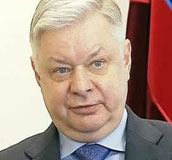 Konstantin Romodanovsky
Today, according to international treaties, citizens of nine states can enter Russia under internal passports: Belarusian, Ukraine, Azerbaijan, Armenia, Abkhazia, South Ossetia, Kazakhstan, Kyrgyzstan and Tajikistan. Of the ten million foreigners located in Russia, citizens of these states are 4.7 million people. If the new rules of entry into the country were already in force today, then only 847.5 thousand people would have entered the internal passport to Russia - that is, less than ten percent of all visitors.
The new rules will also be reflected in the Russians: most likely the countries whose citizens will have changed the procedure for entering Russia will accept mirror norms against Russians. If this really happens, then the young people, as well as the beer of state secrets, are evading in the army, it will be much more difficult to go to rest, for example, to Crimea. The fact is that for men under 27, it is necessary to present a certificate from the military registration and enlistment office under the age of 27, and the FSB closely monitors the bearers of state secrets and even takes a receipt that they do not have the right to travel abroad for a certain time without much approval.
 Dmitry Rogozin
It may seem that tightening the rules of entry into Russia for citizens of Ukraine, Transcaucasia and the republics of Central Asia is the first step towards the introduction of a visa barrier, which various nationalists are so eager to see. In this vein, it is not surprising that the most senior Russian nationalist Dmitry Rogozin a few days before the meeting of Vladimir Putin with Konstantin Romodanovsky said that it was necessary to oblige CIS citizens to show their passport at the entrance to Russia as soon as possible.
However, if at least a little to understand the migration policy of Russia, it turns out that no visa barrier is prepared, and changes in border control are made only in order to better control the flow of migrants.
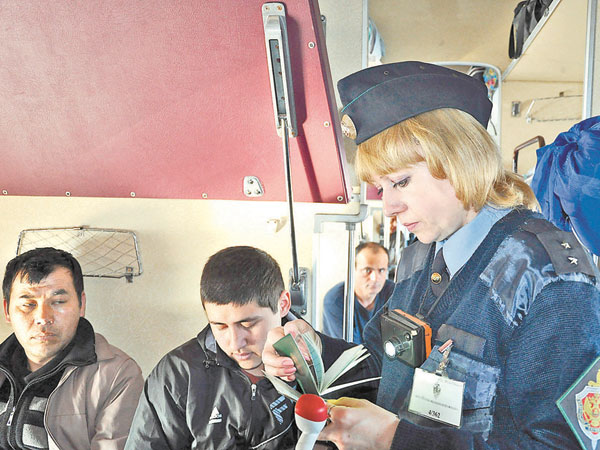
Today in Russia, thanks to the preferential regime of visiting its territory by citizens of the CIS countries, one of the most accurate statistics on migration in the world is observed. The labor migrant from Central Asia, sitting on the train of Dushanbe - Moscow, perfectly understands that in Russia he can become a target for police, bandits, nationalists, and anyone, so he tries, if possible, to observe the law. Nobody crosses the border of Russia at night in the field - the vast majority of visitors conscientiously pass border control, allowing the Federal Migration Service to draw up sufficiently detailed statistics on which citizens and in what quantities come to Russia.
At the entrance to Russia, each foreigner fills the migration card . This document has no means of protection - just a piece of paper printed on the printer, where a person enters his name, age, citizenship and purpose of arrival. After filling out, the migration card is torn in half - the honor is immediately given to the border guard, some people carry with him to present at the request of the police and, then, to give the border guard when leaving the country.
The only thing that protects the migration card from a fake is two seals. The seal about the entrance to the country and the seal about temporary registration, which is put on the second half of the card. They, as it is not difficult to guess, is easy to fake, if desired. This, of course, does not spoil the statistics of the FMS, but opens up wide opportunities for various fraud from migrants.
Another thing is a foreign passport. This is a document printed at a printing factory with many degrees of protection, a chip is built into it with information about the owner of the passport, and a relatively relevant photograph is glued. The presence of a passport will not save the visitors from the obligation to fill out the migration card, but will greatly complicate the possibilities for fraud with documents: the seal about the entrance is put in the passport, so it will be immediately visible exactly when the person entered Russia and whether he was permissible for his stay in the country.
If the requirement for the presentation of the passports improves the situation with the control of migration, as it will become easier to catch foreigners that have been aligned in Russia, then the introduction of visas, on the contrary, will put out the entire migration policy of the drainage.
The migration of people took place throughout human history. If it weren’t for migration, possibly several tribes of anthropoid monkeys would still sit on trees in Africa and eat fruits and roots, but did not think about visa policy. Some time ago, Europe “produced” Europe - that is why both America, Australia and Siberia are populated by white people, immigrants from Europe. Now the situation has changed, and migrants are now supplied by countries such as, for example, Tajikistan.
Tajikistan is a poor country in fact without reserves for internal development. People living there, of course, want more and are even ready for the sake of earnings to go for thousands of kilometers. Since almost a century and a half ago the territory of Tajikistan was won by the Russian Empire, and not China or Britain, Tajiks are striving to work in Russia. In Russia, in turn, they are ready to provide work for them, mainly in the field of construction and improvement. If you imagine that tomorrow it will be possible to expel all the Tajiks, Uzbeks, Kyrgyz, Ukrainians and even Belarusians from the country, it turns out that there will simply be no yield. At least for the money that the townspeople are ready to pay. In other words, the disappearance of migrants will result in either mountains of garbage on the streets of Russian cities, or in a noticeable increase in rent.
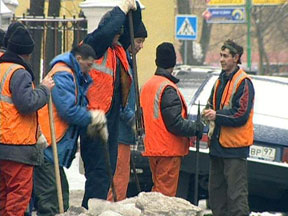 Labor migrants in Moscow
Do not think that migrants work exclusively in the public sector or through corrupt construction companies - that is, they will disappear along with corruption. In many small cities and summer cottages, it is migrants who perform a huge number of works: they are invited to throw snow from the roofs in winter, in the fall - collect leaves and apples, in the summer - cut the lawn, in the spring - tint the house or fence.
Migration, expressed in a mathematical language, is a game with a non -equal sum, that is, both participants win from it - both the visiting and the owner. In Ukraine, for example, there are almost no migrants from Tajikistan, although the visa regime there is set exactly the same as in Russia. This is caused by the fact that the “winnings” there are lower - the migrant is paid less, and for indigenous residents the work of Tajik is only a little cheaper than the services of a compatriot or a more familiar Moldavian.
If the state suddenly decides to close the entrance for citizens of Central Asia, then it is then that troubles will begin.
Firstly, migrants will not become less, since the desire to somehow get money will not go anywhere, and the inhabitants of Russia will still want to drop the snow from the roof. Just migrants will penetrate the country completely illegally. Not a single border between Tajikistan and Russia is protected so well that it is difficult to cross it. The richest state in the world - the United States - built a whole wall on the border with Mexico, but the migrants still manage to overcome it.
Initially, having been in Russia in an illegal position, the migrant will completely stop paying taxes and may stop paying attention to the laws. The only thing that can stop him is the force, that is, the Russian cities will have to flood the police.
Secondly, the illegal position of millions of migrants in Russia will be a very nutritious environment for corruption, the lack of which Russians do not suffer from.
Thirdly, Kazakhstan, one of the closest Russian allies, will be very upset when it finds out that its territory will become a bridgehead for the illegal crossing of the Russian border. Today, all migrants either fly to Russia by plane or go by train, leaving no traces in Kazakhstan. Now, several million future illegal immigrants will fall on Astana's head.
Both the Federal Migration Service and the Kremlin, of course, understand all the shortcomings of the introduction of the visa regime with the countries of Central Asia, and at the official level there is not a single official who would express such ideas. It is unlikely that anyone really wants to see millions of illegal migrants, new slaveholders in the country, as well as quarrel with Kazakhstan and lose and so weakening influence in Central Asia. So, from changing the rules for crossing the Russian border for citizens of the CIS, you should not expect what Russian nationalists are so eager for - the introduction of visas with the countries of Central Asia.