
Translated material
One for all
Russian President Vladimir Putin instructed the government to develop a unified concept of a school history course in December 1, 2013, that is, in just seven months. Prime Minister Dmitry Medvedev is appointed responsible for the execution of this order, according to the Kremlin website.
In the order of the head of state, it is not specified who exactly should develop the concept of a course of history and whether the textbook will be created on its basis. The president’s opinion regarding teaching history at school can be obtained from his previous speeches, and the theme of the history textbook worries Vladimir Putin for a very long time.
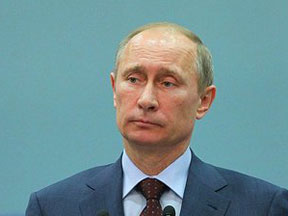 Vladimir Putin
In 2007, talking during a “direct line” with a teacher of history from Yekaterinburg, Vladimir Putin admitted that he loves history very much and recently “could stand on end” from what he read in textbooks, especially in the section on interpretations of the results of World War II. Then the president noted that the situation has changed recently.
More than a year ago, in February 2012, Vladimir Putin criticized the situation with educational literature. He then stated that this was a “very commercialized and poorly regulated field of activity” and again complained that from what was written in some textbooks, in particular, on history, “hair rises on a on end”.
In February 2013, at a meeting of the Council on Interethnic Relations, Putin said that unified history textbooks should be developed for high school. Such textbooks, the president is sure, should be “designed for different ages, but built within the framework of a single concept, within the framework of the logic of continuous Russian history, the relationship of all its stages, respect for all pages of our past.” “It is necessary by specific examples that the fate of Russia was created by the unity of different peoples, traditions and cultures,” Putin said.
The president specifically drew attention to the fact that all school textbooks should be written in a good Russian language and should not contain internal contradictions and allow double interpretations.
Then the president advised to attract not only specialists from the Ministry of Education and the Russian Academy of Sciences to the creation of the all-Russian history textbook, but also representatives of historical and military-historical societies.
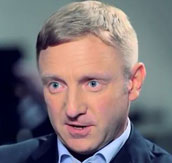 Dmitry Livanov
The president was immediately supported by the Minister of Education Dmitry Livanov. He said that in schools there are dozens of varieties of history textbooks, and all of them passed a double examination of the Russian Academy of Sciences and the Academy of Education. Livanov said that Russia does not need such a huge variety, although the teacher should stay. According to Livanov, a single history textbook should perform three functions: “The training function is to give reliable, scientifically verified knowledge, to equip students with facts about historical events; The developmental function is to teach to think, look for patterns, connections; The educational function is to create a single, historical, cultural, moral luggage for the student, ”he listed. The minister believes that a single textbook can be created in a year.
On March 28, during a speech at the conference of the All -Russian Popular Front, Vladimir Putin again returned to the question of a history textbook. The president said that in Russia there should be a “canonical” textbook of history, but during teaching this subject, the variability of interpretations also needs.
Vladimir Putin said that, as he could, he watched the discussion that unfolded in society. Disputes, the president recalled, go around whether the uniform teaching of history is needed throughout the country according to the same standards, or is it a decision on which textbook to do, it is worth leaving the teacher.
“You know, oddly enough, on this issue I agree with both of them. And these points of view, in my opinion, may well be reconciliated among themselves, ”said Putin. “There must be a canonical version of our history,” the president agreed. “If, indeed, we will study one story in the east, the second, in the European part - the third, this can generally destroy, and will probably destroy the single humanitarian space of our multinational nation,” Putin said. In his opinion, there should be a single canonical approach to the main, fundamental, vital historical eras for the country, which should be reflected in a single textbook.
However, the president is sure, this does not mean that students should not be familiar with different points of view, since this is what will teach children to study and think. “So I don’t see any contradiction here, and there should be a single standard,” Putin concluded.
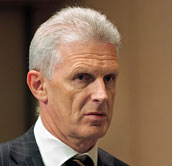 Andrey Fursenko
On the same day, the former Minister of Education in the government of Putin, and now the assistant to the president Andrei Fursenko, performed. He stated that the idea of a really single history textbook cannot be embodied, in practice it is possible to combine the factual base on which textbooks are based. “I would suggest a single history textbook not to understand as one specific book. There are specialized, humanitarian or physical and mathematical schools, ”Fursenko said.
The theme of a single history textbook has long been discussed in Russian society. Supporters of this approach to teaching are sure that it is history that forms the civil spirit of the nation, which means that the methods of its teaching should be under the strict supervision of the state. Russia is a state with a complex history, and if in Dagestan and Chechnya to write in a history textbook that a wonderful Shamil fought for the liberation of mountain peoples from malicious oppressors, and in Tatarstan or Novgorod - that Ivan the Terrible was a dictator and organized illegal mass repressions, after a few generations Russia will cease to be a unified country.
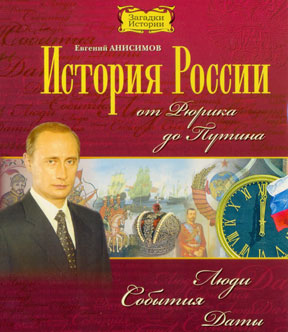 History Textbook E. Anisimova
Opponents of a single history textbook insist that teaching (in particular) is largely a creative profession and is worth the teacher to leave the right to choose how to teach this subject. In the example, many democratic and federal countries are set, where there is no single history textbook.
For example, in Germany, school and university education are maintaining land, not the central government. The federal instance is a constant conference of ministers of culture and education. This conference in 1972 adopted the "principles of approval of school textbooks." Firstly, textbooks should not contradict the federal constitution or other laws, and secondly, they must comply with curricula and recommendations.
In neighboring France, things are still “worse”. The government there formulates only the national program, and its interpretation is the personal file of the author of the textbook, there is no state licensing of textbooks in France. So each school chooses for itself those textbooks that correspond to its own program.
The Russian state, not surprisingly, has followed the path of unification. The president’s order cannot be ignored, so there is no doubt that by the end of 2013, the Russians will see a single concept of teaching to schoolchildren of the history of their country. But around the appearance of a single history textbook, it seems that there will be many more copies.