
Translated material
In the case of the death of Litvinenko, data on the involvement of the Russian authorities are classified
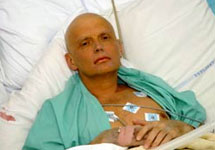
Coroner Sir Robert Owen, conducting an inquiry in the murder case of Alexander Litvinenko, partially satisfied the petition of the Great Britain Government to classify materials in the case. According to the Russian BBC Russian service, the OEN classified all the materials indicating the involvement of the Russian authorities in the murder, as well as materials on the question of whether the British intelligence services could prevent it.
Earlier, with a request not to disseminate the secret documents related to the Litvinenko case, the Minister of Foreign Affairs of Great Britain William Heig turned to the corner. He took advantage of his right to demand from the British courts the non -disclosure of information capable of damaging national security.
The coroner court cannot consider secret evidence or hold closed meetings. Owen's decision means that the issue of the role of the Russian authorities in the Litvinenko case cannot be considered in court. At the same time, as noted by the representative of the Litvinenko Foundation Alexander Goldfarb, materials regarding the involvement of Andrei Lugovoi and Dmitry Kovtun to murder are still subject to announcement in court.
The widow of the murdered Marina Litvinenko stated that the decision of the Owen "will evade liability to those who gave the order to kill a British citizen on London's streets, and will give the Government of the Russian Federation to hide behind the veil of the secrecy, which was created by William Heig with the support of Prime Minister David Cameron."
“This is a sad day for Marina, a tragedy for British justice, which has so far enjoyed respect, and a blow to all those in the world who is trying to expose the crimes of a group of organized criminals acting in the Kremlin,” the statement of lawyers Marina Litvinenko said. “Today's decision gives them a signal that they can continue to commit crimes, including murders, around the world.”
Marina Litvinenko asks the coroner within a week to consider the possibility of translating the inquiry from the Inkvest format to the Public Investigation format. This format allows for meetings in closed mode. Such a decision can be made by the Minister of Justice on the representation of the coroner.
Alexander Litvinenko, who left for the UK in 2000 and received a British passport in October 2006, died on November 23, 2006 in the hospital of the University College of London. After his death, the specialists of the British Health Protection Agency said that they discovered a significant amount of Radioactive element of the Polonium-210 in Litvinenko.
In October 2011, the Corror Court of the London district of St. Pancraz resumed an inquiry on the fact of the death of Litvinenko. Earlier, the Royal Prosecutorial Service of Great Britain said that he had enough evidence to charge the murder of Litvinenko to the former officer of the Russian special services, and by that time the State Duma deputy from the LDPR faction Andrei Lugovoi.
For several years, Russia refuses to extradite a meadow at the request of the British court. In March of this year, Lugovoi himself refused to participate in the London investigation, saying that he would not be able to achieve justice in the UK.