
Translated material
Particularly dangerous free people
As investigator Albert Strimin met with Leningrad philosophers and what came of it
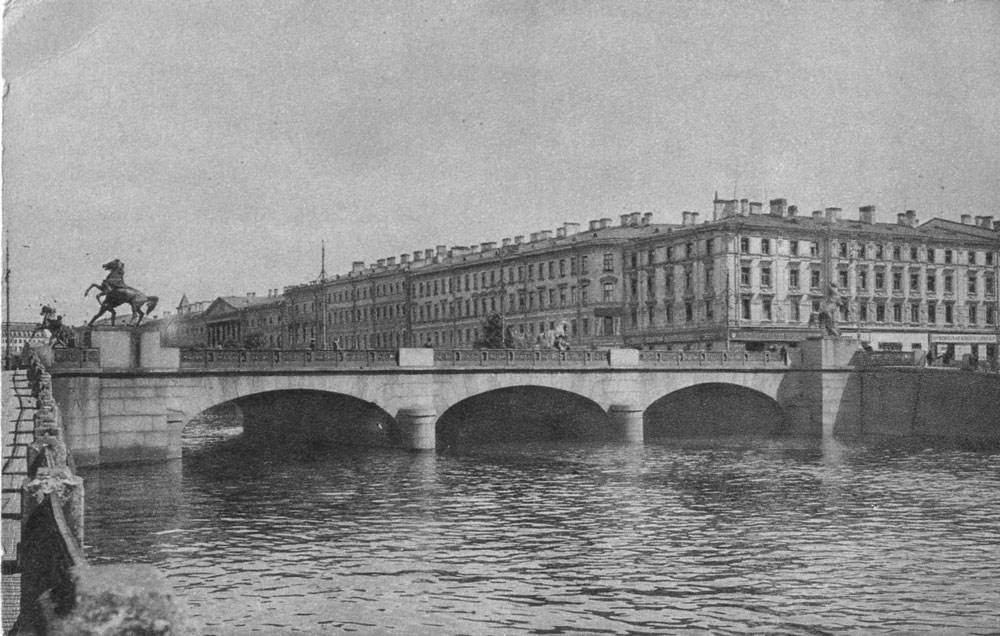
Leningrad of the 1920s. On the postage postcard
The senior authorized by the OGPU Albert Robertovich Strimin changed the register on a departmental typewriter and shot in capital letters: “All of the listed persons united by common hatred for Soviet power for a number of years were participants in a counter -revolutionary organization.”
Difficult work was coming to an end. Now you can go to the most interesting - a list of several dozen surnames and distribution "to everyone according to abilities." Let's go: the first six people “enclose in a concentration camp for a period of ten (10) years”, the next 24 - “to a concentration camp for a period of five years”, the next 14 - “subject to expulsion in remote areas of the USSR ...”
These are the last pages of the “indictment in the investigation of No. 108”, compiled in 1929 in Leningrad.
The loud “Sunday case”, or “The case of A.A. Meyer ”-the defeat of the Leningrad religious and philosophical circles of the 1920s-today it is well known, at least those who, like President Putin, are interested in the history of philosophy or, like Premier of Medvedev-the history of repression.
| *"The case of A.A. Meyer ". Publication, preparation of text, introductory note and notes of Irina Flig and Alexander Daniel // Star. 2006. No. 11, p. 157–207. |
The “indictment”, signed by investigator Stromin, seven years ago published in the journal “Banner” with a wonderful preface by Irina Fliga and Alexander Daniel*, is one of the main sources for studying these circles related to the names of Mikhail Bakhtin, Dmitry Likhachev, Nikolai Antsiferov and other major representatives of the domestic intelligentsia. In the late 1920s, their persecutors determined as follows: “Intelligent people are involved in the circles,” Stromine drummed on their typewriter, “religious, acutely feeling the oppression of the modern system, which forbade freedom of speech and meetings, eager to speak out in the circle of loved ones.”
Several pages of the “indictment” are evidence of the formation of political repression in the USSR. And this is a pre -spoke of the system - how the totalitarian power acts, meeting with an independent thought.
People who are on the list of investigator Strimin, “acutely feeling the oppression of the modern system”, are those whom they did not manage to shoot in dungeons in 1917-1921, those who did not leave for Constantinople or Berlin are people who gathered in the apartments of firmly Leningrad. If you follow the text of the “indictment”, almost everyone had a higher education, almost everyone retained “their idealistic worldview”, but were deprived of “opportunities to continue their scientific work in the university”. They readily talked about their circles to friends in order to attract new participants, but the meetings tried to hold secretly: "Gathers are diverge by single, so as not to arouse the suspicions of the janitor." How do they relate to the new government? In different ways, but in general, according to Strimin, members of the circles "the victory of the Bolsheviks was seen as a temporary usurpation of power of an irresponsible bunch of armed people." Who did they consider themselves? “Sunday” - the unification of free people ” - was recorded in the charter of one of the circles.
So what were these “free people” who gathered “on their apartments” who on Thursdays, some on Sundays, why did they receive years and decades of camps?
They talked. We read reports on religious topics. They argued about culture and philosophy. They talked about current events. “They began to regularly gather to jointly discuss political events from the desire to find the right attitude to the revolution, and then to the subsequent events: civil war, hunger, anti -religious propaganda.” They printed the texts of reports on cars and distributed among friends, created a cash cash desk - for mutual assistance and for buying books; They gathered students-"they want to tear out young people from the harmful influence of new schools," they "organize meetings of intelligent people so as not to violate old traditions."
"
What made the meaning of those mugs erased into the dust - the preservation of moral values - translated into the language of a wild builder was a murderous seducte
"
The fact that for Alexander Meyer, Ivan Grevs, Maria Yudina, Nikolai Alexandrov and a dozen other future participants in the “Sunday of Sunday” was a vital necessity - preserving culture and spiritual thought, in the eyes of the Soviet government was no less dangerous than the Kronstadt rebellion or Tagantsevsky conspiracy. Those who had not yet been in the mass graves or were not sitting in the editorial offices of emigrant newspapers for several days a week gathered secretly from the wipers and spoke with young people to preserve the culture and give the students another - free - a look at the things surrounding the world. And this was for the investigator Strumin and his customers with a counter -revolution and anti -Soviet.
Home evenings in the eyes of the authorities became a branched system of secret societies, reports turned into political manifestos, a story about the circle of their friends - recruiting, correspondence with emigrating friends - receiving encryptions from enemies, communicating with students - preparing military brigades ... What made up the meaning of those defeated the dust of cultural ties, preservation, preservation, preservation. Moral values - translated into the language of a wild builder, was a murderous political sedition. And of course, the Soviet government was right - the moral confrontation is fraught with the main danger to such regimes.
Probably, there should be some parallel with today. But for indirect heirs and successors of the circles of the 1920s-the widest spectrum of humanitarian or scientific and technical associations, from figures of the NPOs destroyed to employees of abbreviated institutions and libraries, such parallels of excess and vulgar.
And for the destroyers of intellectual and moral centers, it is enough to know that one of their predecessors, the investigator of the OGPU Albert Robertovich Strimin, a member of the Cleaning Commission of the Academy of Sciences of the USSR in Leningrad, who had been the head of the Saratov Directorate of the NKVD, was executed in 1938.
Whether he felt at the time of the arrest of the “oppression of the modern system” remains unknown.
Photo: from LJ Yuzer Babs71