
Translated material
Putin: There will be no economic amnesty
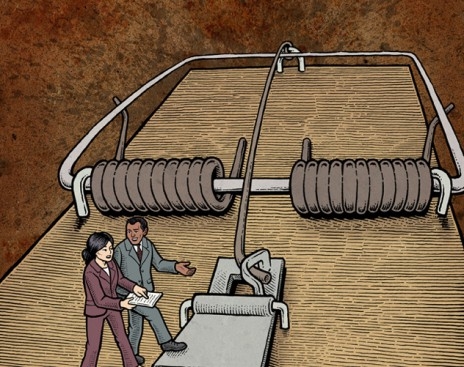
Today, at a meeting with businessmen in Voronezh, President Putin criticized the project of an amnesty on economic crimes, which was prepared by the Boris Titov Commissioner for the Rights of Entrepreneurs. The project is “too raw”, and Putin will not support it. The president said that the project needs detailed development with the involvement of experts. He fears that, according to the document proposed by Titov, not entrepreneurs, but pure criminals can be released: counterfeiters, financial pyramid builders, recidivisial scammers, and people who were convicted of exporting materials that can be used in the production of weapons. “We need to make a balanced decision,” Putin told the representative of the Commissioner for Business Rights Andrei Nazarov.
Putin also said: “There are other categories of citizens who are formally convicted of economic crimes, but the degree of their public danger goes far beyond the essence of the problem that you are talking about.” In fact, the president spoke of the presence of a political opposition in the country in prison under economic articles. Freudian slip. You can't understand otherwise.
Representatives of the business environment have already made responses to the decision that the amnesty is still postponed. Boris Titov himself told the Prime agency that in the near future he and his colleagues will finalize the project. They will reduce the number of articles themselves, under which an amnesty is planned. Maybe the amnesty will be adopted in September. The Vice President of the RSPP Igor Jurgens agrees with Titov and says that in the current project there are “loopholes” and flaws, but in the conditions of an economic decline, such an amnesty is needed both by business and power. Sergei Aleksashenko from the Higher School of Economics has a different opinion. He believes that Putin simply does not want to let go of "economic", and that’s all.
Rumors of a possible amnesty began to once again be executed in early May. At the moment, about a quarter of a million people have been convicted of economic crimes, 13 thousand of them are behind bars. Under the amnesty, as Titov said, about 110 thousand people, convicted by 53 corpus delicti. However, in the Duma, on which the adoption of the amnesty depends, they did not agree with this figure, calling the number ten times less.
If Titov’s amnesty would be accepted, Mikhail Khodorkovsky and Platon Lebedev could have been taken under it. And also in the future - Alexei Navalny, who is currently being judged in Kirov for fraud. Boris Titov began to talk about economic amnesty immediately after his took office last summer. Then Mikhail Khodorkovsky, sitting in the Karelian colony, handed him through the lawyer the materials of the “second case of Yukos” for examination.
Some experts thought that Putin would immediately support Titov's amnesty. And then the Duma will accept her. So on the air of Radio Liberty, the former Minister of Economics Andrei Nechaev spoke in this sense that Putin is lobbying for the idea to calm the business and improve the situation with his own rating. Another expert, human rights activist and journalist Olga Romanova from the Rus Sitting organization was not agreed with him. She considers the project a “Titov pure PR”, and an amnesty is a crazy project in which it stipulates that “we will release this, but these are not.” Romanova says that the authorities will not release the “economic” Navalny, Khodorkovsky and Lebedev for nothing. Therefore, the amnesty should be forgotten in the near future.