
Translated material
Tomsk anomaly
About TV2 and those who are not afraid
In the Siberian University City, an independent television channel was miraculously preserved
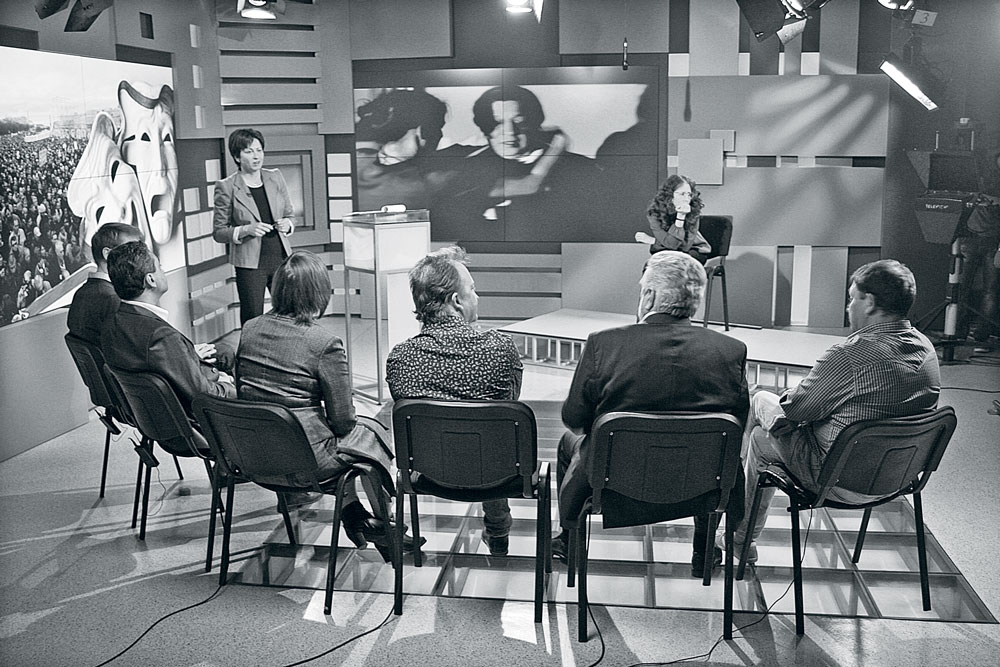
The air of the program "Hour Peak" with Julia Mushchik on TV2
On the day when public television earned in Russia, I returned to Moscow from Tomsk. The first airtime clock of the OTR channel, whose budget for 2013 amounted to one and a half billion rubles, I looked against the background of direct broadcasts on the eve of the Tomsk TV2 - one of the first private television companies in Russia, which has long been earned only. And really engaged in the “regional agenda”, which is loudly announced in the concept of public television.
Who is not scared
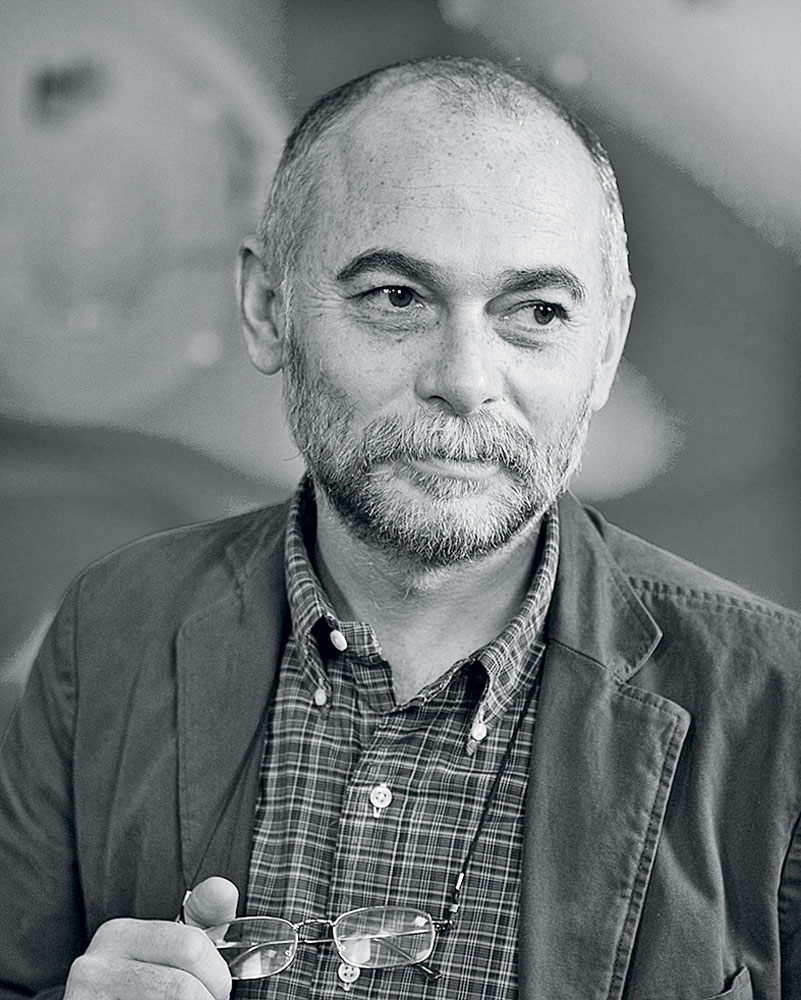 |
| Victor Mushnik, editor -in -chief TV2 |
TV2 and in general the city of Tomsk, specialists in the social sciences call the Tomsk anomaly: it is a city of universities and the city of zones. The most fashionable point is the Loft "workshop No. 10", a club, a restaurant having a common wall with a zone - a correctional colony No. 4 located in the city. Red brick, similar to the architecture of Red October, on the right is a university hostel, on the left - prickly wire. At the highest spire of the city, a huge four letters shone over the eastern oil company headquarters until 2005-Yukos, and at the Tomsk Polytechnic University (it was sponsored by Yukos), all zero, until recently, hung a portrait of Mikhail Khodorkovsky.
TV2 is a local regional private television company that was born in 1991. In 2001, the control package of the television company was acquired by the same Yukos, which was actively engaged in the development of the entire region. After the start of the campaign against Khodorkovsky and Lebedev, the Yukosovsky stake in TV2 miraculously does not become an instrument for capturing a media resource, but returns to the hands of the founders of the television company.
I think TV2 is the only television company in the country that survived after the global redistribution of the media business. How did they succeed? Not just to save the brand, but to remain by yourself, to engage in journalism, to intensively develop direct euphoreal segments and the discussion on the air? How? Mystery! So perhaps?! Probably also a Tomsk anomaly: not scary. Viktor Mushnik, the chief editor of the channel, conducting me past a huge glass cabinet with TV2 awards, told how recently the regiments could not withstand the number of TEFI figurines - and the cabinet collapsed.
I was invited to Tomsk Julia Mushkik, the leading journalist of the television channel for many years. (It was she who gave her the first interview after the landing of Lebedev Khodorkovsky - this video has long become the story and material of documentaries.) Julia wanted to show the documentary film “Citizen Poet” within the framework of her program “PIC Hour”. The run of the year ”and timing this show by the anniversary of the battle on the swamp and inauguration of Vladimir Putin. I must say that TV2 is the first and only television channel in the country that decided to display on his air of this Karina, which we did in 2012 with Andrei Vasiliev, Mikhail Efremov and Dmitry Bykov. To the question of the regional agenda: “Citizen Poet” delivered a political satire across the country at a time when in Moscow - Bolotnaya and Vladimir Putin with Lermontov in Luzhniki.
Julia Muchnik invited to talk on her Saturday after the film two more real carriers of the regional agenda - Lev Shlosberg, deputy of the Pskov Regional Assembly, the one who loudly and publicly called the anti -Sirot law “one of the most shameful in the history of the Russian Federation”, and Valeria Zubov, a deputy of the State Duma from the Krasnoyarsk Territory, one of the three deputies who voted against the same anti -Sirot law, as well as four Tomsk citizens. In general - Pskov, Krasnoyarsk, Moscow and Tomsk, such a company in the studio. This conversation on the air seemed to take place in the late 90s, as if there were no zero, there was no defeat of the media, as if none of them had received an injection of fear, as if another country.
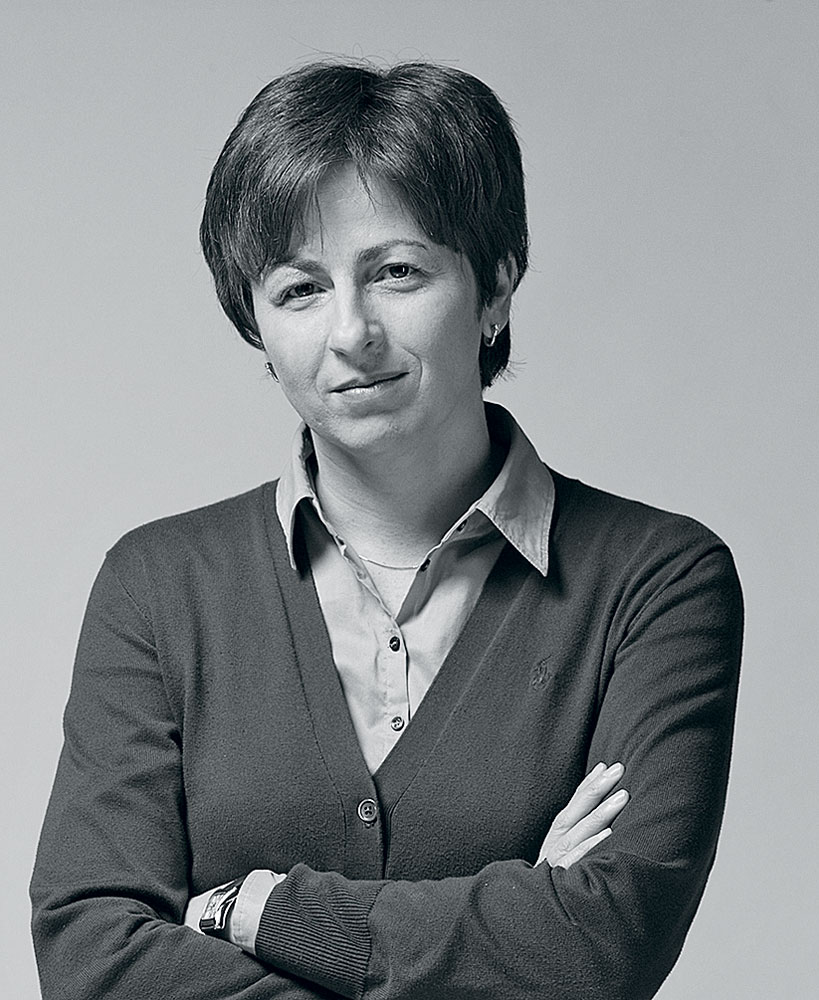 |
| Julia Muchnik, journalist |
Since June 2011, TV2 began to relay on his air the program “Three Dzyadko” of the Rain television channel, but was forced to stop it soon at the request of Roskomnadzor, which considered relay violation of the license. After TV2 won all the courts with Roskomnadzor, the show of the Tystko program resumed. Now the Tomsk citizens are also showing live in their live (18.00) release of the Rain news.
On TV2 daily at least four hours of live broadcasts, three large news releases and every hour after noon - a short, as well as a final weekly program, special election lighting, a charity marathon with a seven -year -old “ordinary miracle” story. On May 9, 2013, the first Immortal Regiment Telemaraton with inclusions from different cities of Russia took place.
And on this emotional background, against the backdrop of Tomsk, the old Russian Siberian city for students and exiles, I watched the first broadcasts of the new public television of Russia. Recently, I often recall the children's interpretation of the plot about Sodom and Gomorrah: the authorities of two cities forbade residents to throw coins to the poor and needing coins and serve bread with water, but in order to somehow traditionally interact with the vagabonds, they came up with an attraction-special fake coins for which it was still impossible to buy anything. Only their poor and threw them. In accordance with the law.
The TV channel "Good"
The general idea of Anatoly Lysenko is to make a television channel on which goodness, eternal values will reign and sink, and in this sense, OTR, perhaps, will be quite “opposition” in relation to the three other nationwide channels. But not in the sense of a request to a wider audience than the voting majority, not in the sense of propaganda and antipandry, but in the sense of intonation coming from the screen, the bucket of dirt will pour into the viewer or will not flood. Such a protest. But can the media make the “good” content about the country in which the fake mights defeat evilly and flourish? This is nostalgia for the innocent time when the trees were large, Vladimir Putin worked at the St. Petersburg City Hall, and Oleg Dobrodeev launched the Vesti program with Svetlana Sorokina. A good channel about the evil merciless time, good content about the victory of the Russian spirit in the Russian outback, where four brutally kill one, because three other nationwide ten years publish audiovisual messages about the features of Russian tolerance. A good (or kind) channel during the time of “lampshades”, raids, accelerations of the Roizmann drugs, sadism in orphanages, authorized by the authorities of the Crusades on dissenting, Crimean tragedies, the massive appearance of political prizes, and, of course, antidetical law. In everything that has been listed fluently here, is there exclusively a Moscow agenda, which is intentionally and publicly abandoning the public television of Russia?
Remember, the father of the “Belgorod Strelka” (again the Nemoskovsky agenda!) Sergei Pomazun said that two days before the massacre, he turned to the police with a complaint against his son, and the senior warrant officer in the department said: “Yes, I have a mental disorder, I will drink tablets - and everything goes away from me.” Nothing goes away from the pills. It’s too late to just be kind.
Photos: provided by TV2