
Translated material
Those who do not have a billion
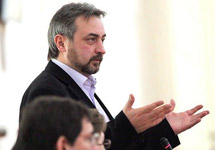
The Ministry of Justice of Russia refused to provide Russian human rights defenders with data on the volume of foreign financing of Russian non -profit organizations. According to the President of the Russian Center for the Development of Democracy and Human Rights, Yuri Jibladze, the official response of the department for a letter signed by dozens of Russian NPO leaders reports that the data on foreign financing of the NGOs were received by the Ministry of Justice of Rosfinmonitoring and they relate to data for official use.
On April 5, in an interview with the German ARD television and radio company, Vladimir Putin said that 654 non-governmental organizations four months after the State Duma adopted the NPO law received 28.3 billion rubles to their accounts, i.e. Almost $ 1 billion. Later, these data were re -voiced by the Prosecutor General. The representative of the department, Marina Gridneva, emphasized: "These numbers are documented."
In their letter to the president, human rights activists wrote: “We also believe that the company has the full right to know which organizations, in what volumes and what they receive support, including from abroad. For these purposes, we, like other non-profit organizations, post annual reports on our activities on the website of the Ministry of Justice, including complete data on funds from these bindings. Anyone can familiarize yourself with data .
But since the numbers sounded in your interview are at least ten times higher than our ideas about the volume of foreign support to Russian NPOs, we ourselves would like to know what kind of organizations that receive such money.
We are aware that you may have other information from some special sources. Given the public interest in this issue, we convincingly ask you to instruct the full lists of the named 654 NPOs with the indication of the amounts received by them over the past four months, and what activities these funds were received. ”
On April 12, the authors of the letter received a response from the department for working with citizens and organizations of the presidential administration. It reported that the appeal was transferred to the Ministry of Justice "in accordance with the competence of resolving the questions posed in it."
"Even if we proceed from the presumption of innocence and assume that these figures are not only taken from the ceiling, but are really obtained from Rosfinmonitoring, probably among the 654 NPOs mentioned by the president in an interview, there are organizations that have nothing to do with civil society and just have a legal form of NPOs. There are many such, for example, successfully receiving funds from abroad. The press was also reported by the units of the United Russia Fund for Financing from Offshore companies abroad is also NPOs, and have the right to receive foreign funding, unlike political parties themselves, however, the president made it clear that he speaks of human rights, anti -corruption organizations and in the same interviews, even before the completion of the inspections and the issuance of inspections court decisions, said that they are all engaged in “domestic political activity,” Jibladze wrote on his blog.
Mass inspections of non-profit organizations for their receipt of funding from abroad have been carried out in Russia since March of this year. On May 14, the Presidential Council for Human Rights announced that numerous violations are allowed from the supervisory authorities during inspections. Human rights activists have established that "checks were carried out without proper legal grounds" and "outside the procedure established by law, the procedure for the implementation of state federal supervision of the activities of NPOs."
As a result of inspections, many Russian human rights organizations received a demand to register as a foreign agent. A number of them, including the Anti-Discrimination Center "Memorial", the Voice and Levada Center association refused to register in this capacity and challenged the decision of the supervisory authorities in court.
On May 17, cultural figures spoke in support of the Russian NGOs. The letter signed by writers Boris Akunin, Sergey Gandlevsky and Lev Rubinstein, musician Boris Grebenshchikov, actresses Leah Akhedzhakova and Vera Vasilieva, journalist Svetlana Sorokina, film director Oleg Dorman, artist Andrei Biljo and many others, it was noted that the current situation around the NPOs is fraught with ritual consequences. The authors of the letter consider the conducted campaign as an attempt to hang a “foreign agent” label on the organization and believe that this is “unfair and dishonest”. The law on "foreign agents" during a visit to Russia on May 22 was convicted by the Secretary General of the Council of Europe, Turbieern Jagund. About his opinion, the protection of human rights, democratic freedoms should not be regarded as political activity. Jagland emphasized that things aroused against NGOs can reach the ECHR.
Based on the results of the polls of the Levada Center conducted in April, 39 percent of the inhabitants of Russia know about the inspections of NGOs. 19 percent of respondents positively evaluate the activities of NPOs, 18 believe that they do more harm than benefits. 41 percent believes that NGOs do not bring harm or benefits or that the benefits brought are balanced by harm. For 44 percent of the country's residents, the source of financing NPO is important, 42 do not attach serious importance to it or are not at all interested in this.
At the same time, 62 percent of respondents believe that Western countries are trying to enhance the influence on domestic Russian policy through the NGO funded or even fight the Russian state. Only 8 percent believe that the goal of the West is to support Russian civil society. 12 percent of the respondents are sure that there are no goals, and Russian NPOs are supported along with others according to standard international programs.
The right to receive funds from abroad to organizations engaged in human rights and criticizing power is refused by 56 percent of the respondents. 20 percent of the opposite opinion. Approximately the same ratio on the application of tough sanctions to NPOs who do not want to register as "foreign agents" - 53 versus 20.