
Translated material
Mosgordum returned the residents of demolished Khrushchevs the opportunity to improve housing conditions when relocating
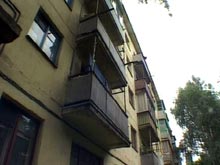
Amendments to the current Moscow legislation, according to which residents of demolished five -story buildings will be able to improve housing conditions during the resettlement, were adopted at a meeting of the Moscow City Duma on Wednesday.
As the head of the Moscow City Duma Commission on state property and land use, Oleg Bocharov, recalled at the meeting, until 2011 in Moscow there was a norm under which the resettled from Khrushchevs improved their living conditions. Later, on the basis of the protest of the prosecutor's office, this norm was canceled , as it gave advantages to the residents of five-story buildings over the rest of the waiting list, that is, during the resettlement, the townspeople still remained in line for improving housing conditions.
"In fact, we restore the previous procedure for providing
housing, ”Bocharov noted.
In addition, according to him, the document is prohibited by resettlement
Residents of communal apartments in demolished five -story buildings in new communal services, Interfax reports.
The deputy emphasized that the opportunity to get apartments of a greater
the squares will not affect those who have deliberately worsened over the past five years
their living conditions.
Last week, when considering this bill at the meeting
The head of the Moscow Department of Housing Policy and Housing Fund of the capital Nikolai Fedoseev said that the document will allow the "immigrants" to improve housing conditions without taking into account the date of staging.
He clarified that when relocated, the living space will not be provided
According to the principle of the unambiguousness of the occupied apartments, and at the rate of 18 square meters. meters
per person.
"This norm of the granted housing for the waiting list has been established
law, ”the head of the department recalled.
Fedoseev said that in Moscow there are 340 five -story buildings,
planned for resettlement and demolition. At the same time, housing conditions will improve
the resettlement of almost 4,000 families of waiting list and another 900 families living in
communal apartments. “In total, this is about 15 thousand people,” Fedoseev said.