
Translated material
Who killed Muhammad?
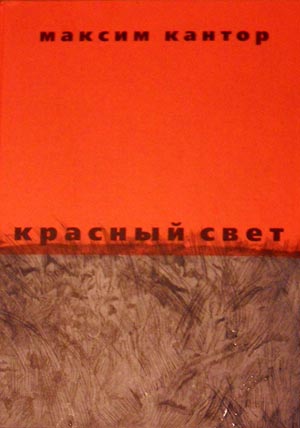
For all reasons, it is too early to discuss the new novel by Maxim Kantor's Red Light, because it is not finished, we are offered only the first part of the upcoming trilogy. But even in this first part there are already 600 pages of a large format: the author is not lazy to write, it is widely scattered. Maxim Kantor appeared in literature and without hesitation saddled the epic genre - extremely demanding of any author, be it even Leo Tolstoy. And if you recall that Kantor had already given out a two -volume to 100 printed sheets called "Drawing Textbook" several years ago, his gravity to epic tasks was found by another convincing confirmation. He is not afraid to write, and the author’s courage is impressive. Kantor seems to have everything that is necessary for the epic: interest in the wide historical, we can say-world-historical-plots, serious knowledge of the culture of the era that he undertook to paint, finally, the ability to lead several parallel plot lines, sometimes directly detective, skillfully crossing them and interwoven. True, this information did not occur in the book under discussion, which reminds of its inappropriation; But in the promised third volume, Cantor will undoubtedly connect the ends meet. But the main thing that helps to talk about this first volume, we can say, requires such a conversation - this is already a very peculiar philosophy of history demonstrated by the author, in which all the plot nodes of the novel are some abstract moments of this philosophy, concrete integrity. Cantor's characters are victims of history: it seems to them that they solve their purely private or even “historical” problems, but in reality it is for them a mole of history. They do not decide anything. History is the main character in the novel of Cantor, it rearranges the wooden figures of the chess party and mercilessly donates or "eats" these figures, which are pawns, that Ferce. “After all, chess pawns, and someone plays us” (Tsvetaeva).
Cantor wants to convince the reader that what is happening in Russia on a new round of its post -Soviet history is decided by the wrong forces that we, contemporaries of this hour, are used to considering determining the most important. The era of globalization has come, the author resembles, and we ourselves remember this, except that, unlike the author, we have not yet lost the consciousness of their at least some kind of autonomy. Nothing like this, this is an illusion, says Cantor,-the pawns move around world financial capital and portfolio funds somewhere, most likely, to Wall Street. That is why Maxim Kantor must first withdraw the accusations, which at his address are expressed by numerous opponents of his novel, who believe that he slanders the current Russian opposition, representing it with the dummy figures of some overseas strategic centers. There really are such lines or threads in the novel, but they lose the pathogenic meaning in the atmosphere of universal alienation of world history, when the main grandmasters do not know what they are doing and where the curve will take them out. It is not necessary to attribute to the cantor of the sin of Leskov, who wrote, wrote a rather decent novel “There is nowhere”, created bright satirical paintings, but suddenly for no reason-only Katkov hesitated-he introduced some malignant priest, managing Russian conspirators. By the way, something like this priest also appears in Kantor-the famous Brzezinsky, whose name the author connects with the Brzezinka concentration camp. Poets, as you know, lead words. The poet is far from speech (the same Tsvetaeva). But this is truly a trifle, Cantor operates with extremely generalized historiosophical categories, which, alas, are not new and generally dubious origin. Word for word, he rewrites the theses of work “Imperialism as the highest stage of capitalism”, not mentioned by Soviet tenth graders, however, neither the false (Lenin), nor the present (Austria-Maxist Hilferding) of its author.
In general, the cantor’s book is not historical, but nadistoric, it is trying to build a metaphysics of history and find in it, in history, a through plot. This plot is a universal war as a thread of European history, and not only the two world of the twentieth century, and not only the thirty-year-old 17th, but at least from Troy. The author leads-mainly with the mouth of a certain metrophorer Hanfstangel, who, in recent times, seems to be a personal secretary of Hitler, but actually the spirit of history. I recall an ancient romance: "Gray shepherd, zeal time." And his beloved woman to call Elena - than not Troy! And one of the chapters of the Red Light is called the list of ships-only instead of the Homeric-Mandelstam triremes, lists of the German, as well as the Soviet generals and numerous chronicle Isanskomand, who destroyed the Jews, are appearing-which suggests that Kantor carefully read Roman Littlel.
So, Europe is a war interspersed with revolutions.
The mutuality of wars and revolutions gives the dynamics of European history. Maxim Kantor, carefully saving the inherited Marxism, of course, for the revolution, and not for the war, but then he decides without it. German fascism does not represent anything specific in this sense, and the author subject it to the war of Gwalphs and Gibbelins. Moreover, the Führer represents the imperial idea, he, so to speak, Gwelph, although outside the papetical ideology, and the conspirators-Generals, who tried to get rid of the Fuhrer in July 1944, of course, Gvelphs, barons that are not following the national monarchy. Stalin, a clear Gwelph, is running around, if he is guided by a supernational ideology, however, in the end, it is perverting it, turning the communist international into a new supernational empire. In Stalin, according to the cantor, if I understood correctly, the International was replaced not by nationalism, but by something big, he created a certain supernoon-a new historical community of Soviet people. And Cantor is seriously convinced of this, taking these ideological phantoms for historical reality.
The most, so to speak, piquant in the historiosophical calculations of Cantor is its complete conviction that Western democracy is nothing more than the theatrical pseudonym of fascism. The stupid Russians, having pecked at democracy, will not build anything but fascism - this is the thesis of the cantor, which, one must think, causes the most indignation among the current Russian liberals. But Kantor should not be caught on trifles, it is not liberals bad, but Europe itself, democracy itself, constantly generating fascism and war. After 1945, democratic countries destroyed no less people than in two world wars, Cantor counts. I was waiting for the well -read author to refer to the source of this paradoxical thought, and did not wait for this first volume. And this is the book of Adorno and Horkheimer "Dialectics of the Enlightenment", the composition of 1944, interpreting the liberal bourgeois democracy as the ancestor of fascism - according to the generic basis of violent activism, "logic of domination", in the terminology of academic authors.
The bourgeoisie for Kantor is a Carthage that should destroy.
Meanwhile, there are no through motives or more than that - a single through motive in history, it is a metaphor, the legacy of the poetizing worldview. You still say about fate and rock, if you go in ancient Greeks. History is freedom, a process unfolded in an unpredictable future. History is not natural, because in it we are dealing with single events, and not with naturally disposed rows. Of course, Marx has not written about this, but it is written about this, say, Rickert, which would not interfere with read, if you take up historical meditation.
Why did the Second World War occur? Because Europe is a wars field? No, but because the presumptuous revengeant Clemanso imposed a nightmare world to the allies (and not only Germany), this largest catastrophic mistake in the history of diplomacy. Even here, in a short length of twenty -five years, there was no iron follow, but only human mistakes and stupidity. Try to get out the pattern of behavior of a fool!
Fools, alas, are free. And this is not only a prediction of a severe fate, but, perhaps, a chance of salvation.
Or completely childish, naive blunder. Cantor is indignant that Nazism is compared with communism in the number of victims, that is, according to the results. It is necessary to judge by intentions, and the intention of communism was the equal rights of the peoples, and not the dominance of the chosen race. As the poet said, you do not know, cry or undress. And what is the point of your good intentions, when in the end - all the same corpses, few of them or many, more with Hitler or Stalin.
Maxim Kantor reminds me of one plot of the 20th century. When Stalin launched Moscow processes, Trotsky, who still lived in Mexico, organized a counter -process, managing to attract prominent figures of the West, for example, the philosopher Dewey. After Dewe, he said about Trotsky: this is a man of a vast mind, but unbearably inspired consciousness.
In no case should you deprive the novel of Cantor of many advantages. Of course, he is a writer, sometimes a stylist (not to mention the great gift of stylization). He knows how to create strong plot situations turned into symbols (for example, front -line looters, unobtrusively, but even more poisonously rising in parallel to the new Russian, "cleansing" national wealth). Sometimes his syllable acquires a truly epic sound (some pages describing the Moscow demonstrations of December 2011). There is no doubt that, bringing together the plot nodes of the planned trilogy, he will find the killer of driver Muhammad.
And it seems to me that this detective story will be much more interesting than the historiosophy of the author.