
Translated material
Great "drain" of Bradley Manning
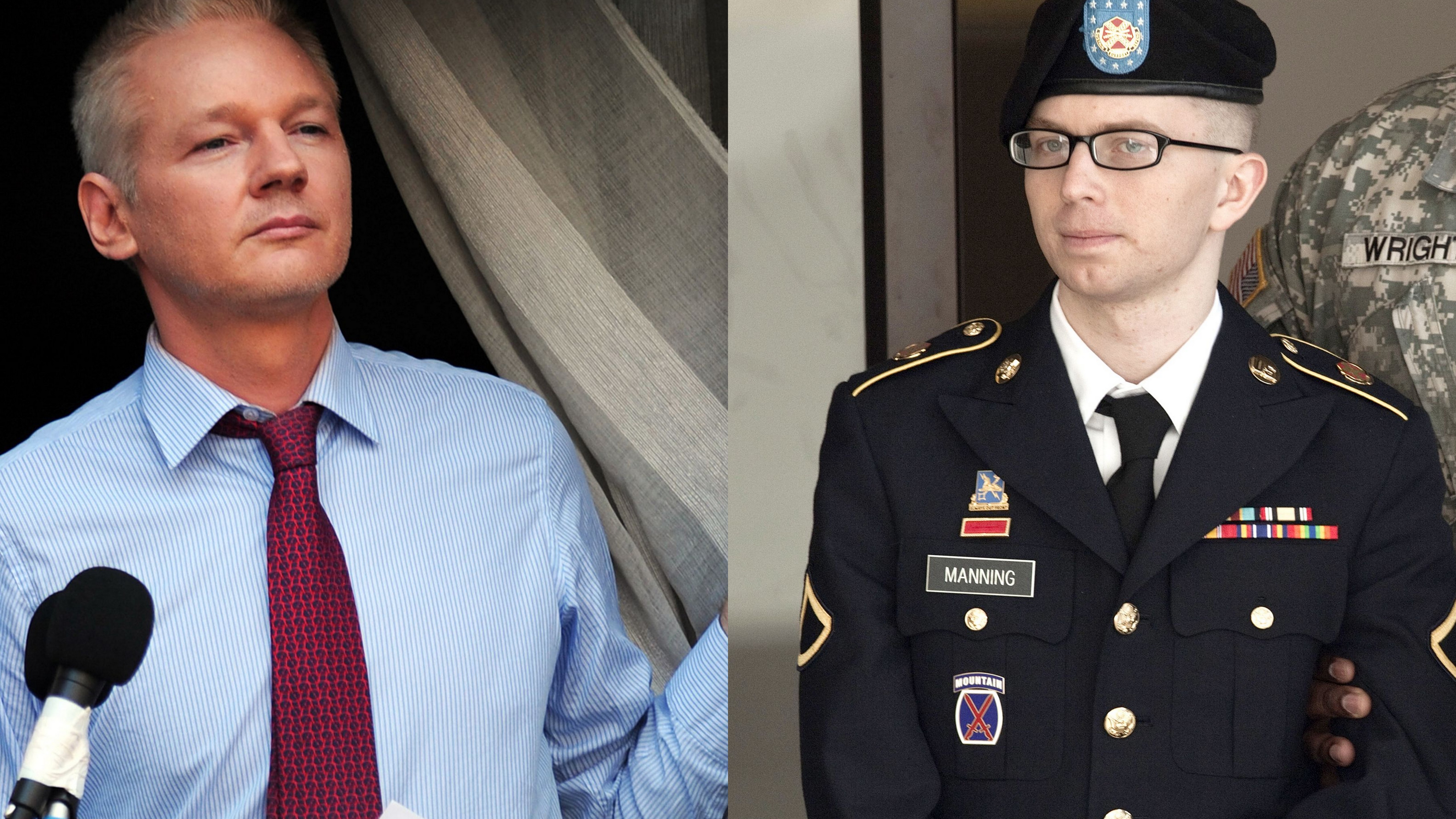
The hearings begin in the case of the American sergeant Bradley Manning, who handed over to the WikiLeaks 700 thousand secret documents
At the beginning of 2010, the Wikileaks website, specializing in the publication of secrets of state and private organizations, received at a time 700 thousand official documents belonging to the Pentagon and the US State Department. America did not know such a massive leakage of closed information. The culprit of the "drain" was quickly detected. It turned out to be younger sergeant Bradley Manning, who served in the intelligence battalion in Iraq. For more than three years, he was in a military prison in anticipation of the court, and part of the time in a strict regime block. The very prolonged preliminary hearings finally ended with the appointment of the trial on June 3.
Bradley Manning, in the hope of a pre -trial deal, found himself guilty of ten points of charge associated with the disclosure of state secrets. The total punishment imposed on this article is twenty years of imprisonment. Nevertheless, the military prosecutor's office accepted the recognition of manning only by one of the elements of the indictment. According to the rest, she will prove that the defendant did not just reveal GOSTaina, but did this maliciously in an effort to damage the interests of the United States and their allies. In other words, that he was an accomplice of the enemies of America. In case of guilt, manning faces a lifelong conclusion without the right to parole. Earlier, the prosecutor's office announced that she would not ask for the defendant death.
In the company around the case of manning, stormy passions boil. Supporters of the accused declare that the documents abandoned on WikiLeaks could not cause real damage to the United States, otherwise the unremarkable junior sergeant would not have free access to them and could not play them from his service computer in mini -disks. According to representatives of the opposite camp, the secrecy vulture that these documents were equipped with was supposed to tell manning that they could be of interest to the enemy. The fact that he vaguely interpreted his military duty does not remove any responsibility from him.
If Manning’s lawyers defended him not in the military tribunal, but, say, before the court of history, how would they build their argument? This is what the professor of law of the state of New York in the Syracuse Tara Gelfman's Syracuse thinks about this:
- At this imaginary court, lawyers would say that their ward was guided in their actions by considerations of the highest public benefit, that he wanted to reveal the abuse, which were cleaned in Iraq by the American military, which they hid from society. That he sought to disrupt the veil with the secret diplomacy of the State Department and the corruption practice of large companies that fulfilled state orders in the country.
- Will this kind of arguments be considered convincing the real court?
- It is very doubtful, since legal proceedings are not based on ideological arguments, but only on the law and on specific facts. In practice, it will be extremely difficult for lawyers to prove that Manning did not assist the enemy and did it absolutely consciously. According to the law, he is guilty of complicity, even if the “merged” information to them did not cause actual damage to America, but could only do this. Moreover, the defendant could not know how this information would be used against the United States; To prove guilt, it is enough to show that he could not help but understand that somehow it could be used to the detriment of the country that he served.
- What then remains in the arsenal of protective equipment?
-Well, firstly, the ideological arguments that were mentioned above: Manning wanted to reveal the eyes to the company to what was happening in Iraq and Afghanistan so that it pressed on the government and force him to retreat from a vicious foreign policy. Secondly, that Manning did not fully realize what he was doing, as he suffered from attacks of anxiety and depression; that, being gay, he was deeply suppressed by the need to hide his sexual orientation from the authorities and from comrades. Recently, it was also evident that he was relentlessly persecuted by thoughts about whether to do an operation to change the floor. In general, that he was not entirely charged. These are all pretty shaky arguments, but I'm afraid there is nothing better for the defense.
But there are plenty of prosecution against the defendant, Tara Gelfman emphasizes:
-In the abundant online correspondence of manning with people from WikiLeaks, as well as with a certain web activist who, as a result, passed it to the authorities, there is no indication that they were moved by high-idel, idealistic motives. On the contrary, he constantly repeats about how bad he is in the army, how he hopes this casting of secret information to shock society and take scores with officials, primarily for some incomprehensible reason, with Hillary Clinton. All this is poorly consistent with the position of protection.
For the human rights and journalistic community in Manning, there are two points that make it highly significant, notes the professor of the University of New York Tara Gelfman:
- First of all, this is the difference between a person who discloses secret information, and a sincere truth -seeker who reveals the crimes of the authorities, and therefore protected by the judicial system. If manning had in mind some specific abuse, he could stop at them and transmit relevant information to authoritative publications whose experts would decide what documents deserve to be promoted by virtue of their public importance and which should not be delayed so as not to give genuine intelligence and thereby not put the life of American agents or their informants. Instead, manning chose to drain indiscriminately, with one chokh, everything that fell into his hands, people who publicly positioned themselves as radical anarchists. None of the statements made by him at preliminary hearings, there is a hint that the Pentagon or the State Department, in his opinion, violated the law, he simply diverged with them in assessing the foreign policy of the administration.
The second sign of the moment is associated with the recently broken scandal around the postcard by the Prosecutor General of Telephone calls and electronic messages of the FOX television channel, which an informed source without any compulsion revealed information about the anti -terrorist measures of the FBI; This correspondent was monitored as an accomplice in a crime, although not held accountable. So, Manning’s lawyers are trying to imagine the case as if their client, in fact, the same journalist. If the tribunal agrees with their argument, then this will be equivalent to the criminalization of all investigative journalism as such.
The other day, a documentary tape about WikiLeaks called We Steal Secrets, "we will steal secrets", dedicated to the beginning of the manning process, was released on the screens.
On June 3, when the trial begins, shares of solidarity with Bradley Manning will be held around the world, the most massive of them is at the location of the military unit Fort Meade in Meriland, where the tribunal will sit.