
Translated material
Repressed museum
How the collection of impressionists was created and how the collection
For a dispute between the Museum of Fine Arts. Pushkin and the Hermitage about the collection of paintings by the impressionists forgot the fate of the new Western art, destroyed under the Soviet regime of the museum. The New Times sorted out this story
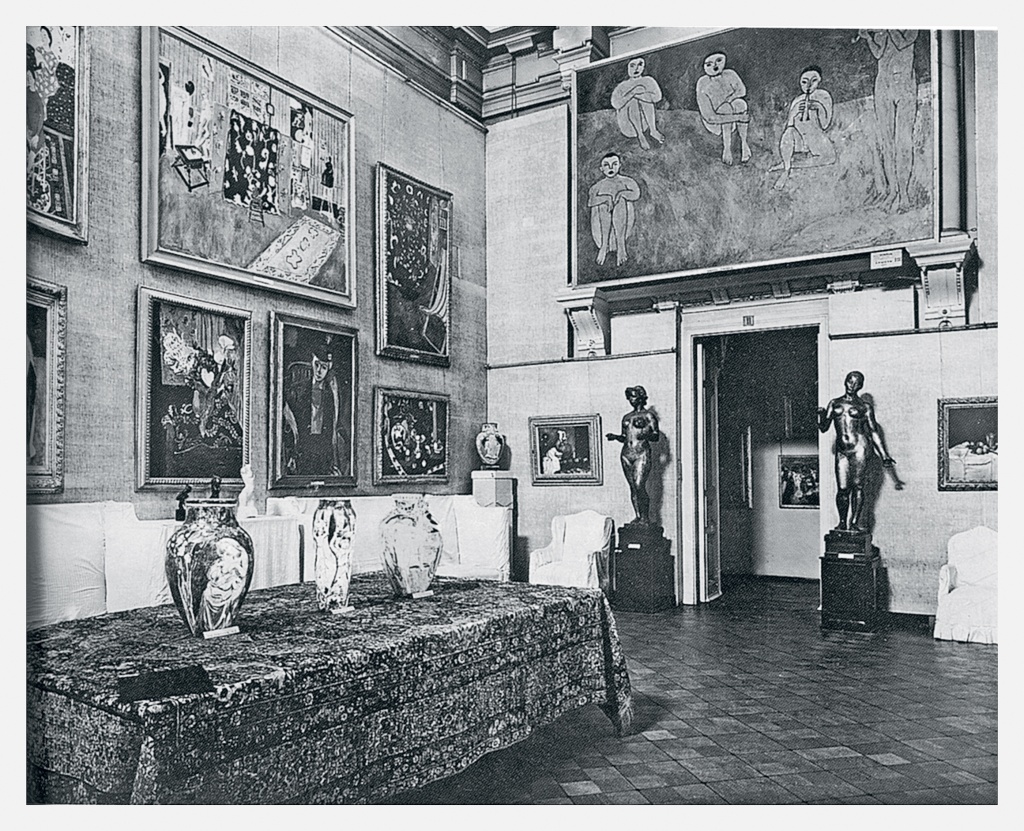
The hall in the Museum of New Western Art. The end of the 1930s. Moscow merchants
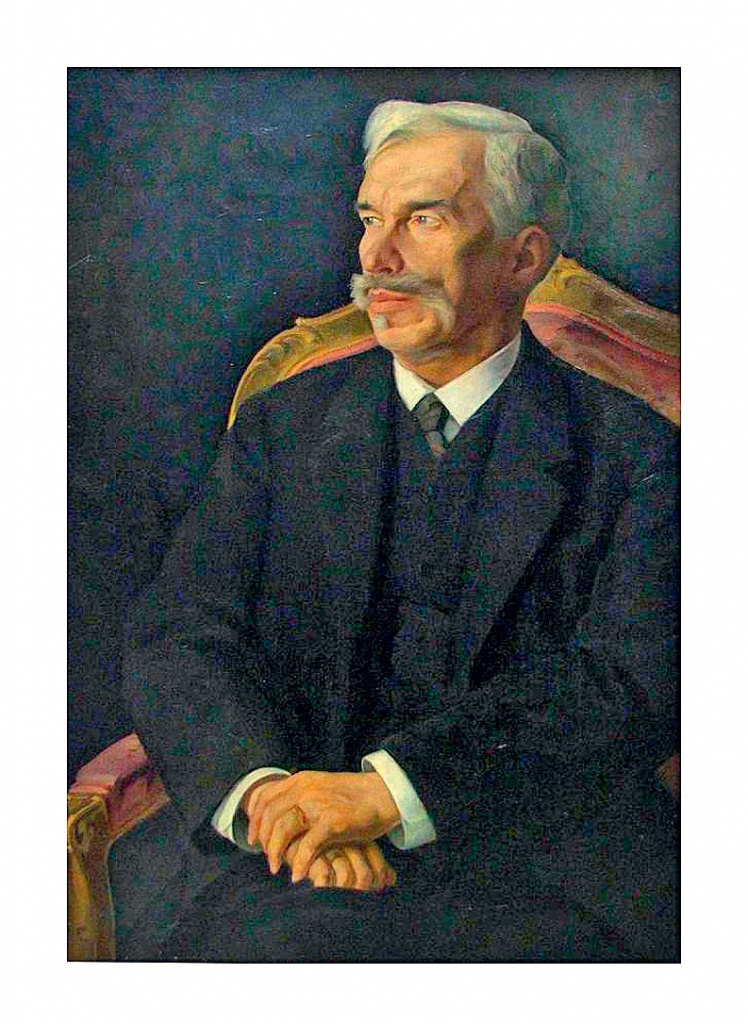
Sergey Schukin. Portrait of the work of Dmitry Melnikov. 1915
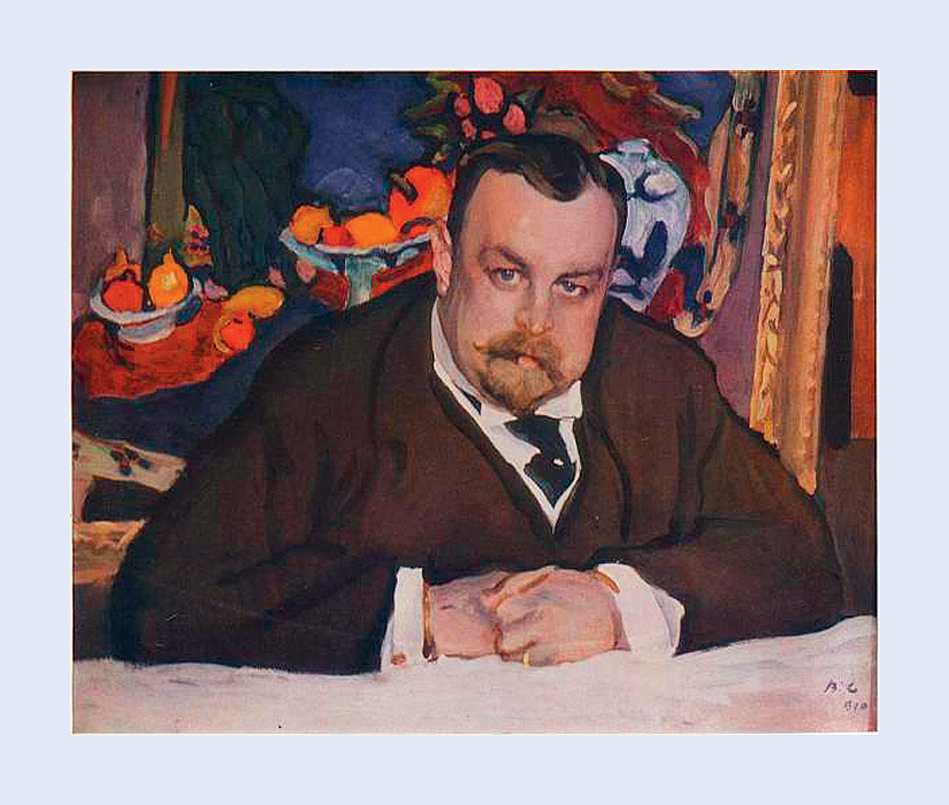
Ivan Morozov. Portrait of Walentin Serov. 1910. This story itself was possible in Moscow. Not in St. Petersburg, where the academic taste reigned and the painters tried to please the imperial house, but in the second capital, the city of trade, merchants, where enlightened immigrants from old merchant families at the end of the 19th century were unexpectedly carried away by gathering. There were many museums they created, and only the Tretyakov Gallery, collected by the owner of the paper factory Pavel Tretyakov, and the theater museum of the merchant Alexei Bakhrushin, remained. But it is one thing to collect Russian painting or objects of history, and it is completely different - “eccentricate”, introducing Moscow at the dawn of the 20th century with the paintings of Picasso, Matisse, Renoir and other Frenchmen. The attitude towards these collections was in the spirit of the statement of the mother of the merchant Arseniy Morozov, who built his famous Mauritan style castle on the Vozdvizhenka: “Previously, I only knew that you were a fool, but now all Moscow knows about it!” To collect these artists, it was necessary to have not only taste and flair, but also possessing certain courage, going against public opinion. In this case, the meetings of Sergey Schukin and Ivan Morozov. Among the Schukins, many were fond of gathering, but Sergei Ivanovich himself seriously engaged in this, only entering the fifth ten, at first he collected ancient weapons and paintings of the Wanderers, then he sold everything and was carried away by the French impressionists. From childhood, he stuttered and had poor health, so he began to raise his body and spirit early - he became a vegetarian, became interested in gymnastics and hardening of the body. Passion for painting required the same courage and determination. Morozov was 17 years younger than Schukin and several times richer: he was engaged in the production and trade of textiles, in his factories worked up to forty thousand workers. But they began to collect paintings almost simultaneously. Schukin was a jail, and Morozov bought it on a grand scale, he was called "Russian, which is not traded." They competed with each other, regularly went to Paris as to work in order to go around the workshops of their beloved artists day after day, gradually carried away by Matisse and Picasso. From their correspondence it is clear how they “put off” the work just written, whose authors were then recognized with great difficulty in France and for which the possibility of existence was associated with the collisions of the “Russian merchants”. It was said that Matisse, when Schukin visited his workshop, not wanting to part with the best things, turned the canvases to the wall and said: “I didn’t succeed, it wasn’t finished ...” To which Schukin answered: “I will take something that did not work out, and that’s what is not finished.” The corpse of beauty as a result in Moscow arose two unique home museums with a revolutionary painting at that time. They were almost nearby: Schukin’s house - on Znamenka, next to the Cathedral of Christ the Savior, and the Morozov mansion is on the Prechistenka (where the Academy of Arts is now located). If Schukin’s house was open to visits and all the advanced youth of those years went there, then Morozov rarely launched himself, he took the collection hard, accurately knowing that he needed, for example, “blue” Cezanne or the landscape of Matisse. Natalya Semenova (Biographer Schukina) writes that he often had to fight himself, knowing in advance that he would be called "crazy." This was noticeable, already when he ordered Matissa for his home the two most famous canvases “Dance” and “Music” (before that, Morozov’s musical living room was designed by Maurice Denis), talking about himself and these paintings - “You cannot leave the battlefield without trying to fight.” Benois called their purchase "feat". The work caused a scandal at the Paris autumn salon, and when receiving the “dance”, Schukin still asked the artist to paint the genitals of the characters depicted on them. In order to continue to cooperate with Matisse, he persuaded him to come to Moscow and in 1911 introduced him to his collection (Benois then called Moscow “the city of Gauguin, Cezanne and Matisse”). Showing the guests the canvas “Dance” placed on the stairs, Schukin, embarrassed, said that it helps him “take off” to the second floor. Repin, who once came to visit him, saw Matisse, grabbed his head and jumped out. He did not come to Schukin anymore. “In Matisse - nothing, exactly nothing but impudence,” Repin was indignant. An even greater difficulty was caused by the Picasso Cubist period Picasso's passion. For a long time and hard he got used to this painting, which, by his own admission, soon literally took possession of him. “When you enter the Picasso Gallery S.I. Schukin covers a sense of terrible horror, ”admitted the philosopher Nikolai Berdyaev, who later wrote an article about Picasso's paintings“ The Corpse of Beauty ”. “We have piled cubes, cones, cylinders in front of us. All this stone production chaos brings Sergei Ivanovich to enthusiastic numbness. He stands, like an enchanted rabbit in front of the boaling ... we listen in bewilderment, not daring to say that “the king is naked”, that all this is either charlatanism, or bankruptcy, deftly covered by theoretical ranting, ”Mikhail Nesterov shared his impressions from Picasso.
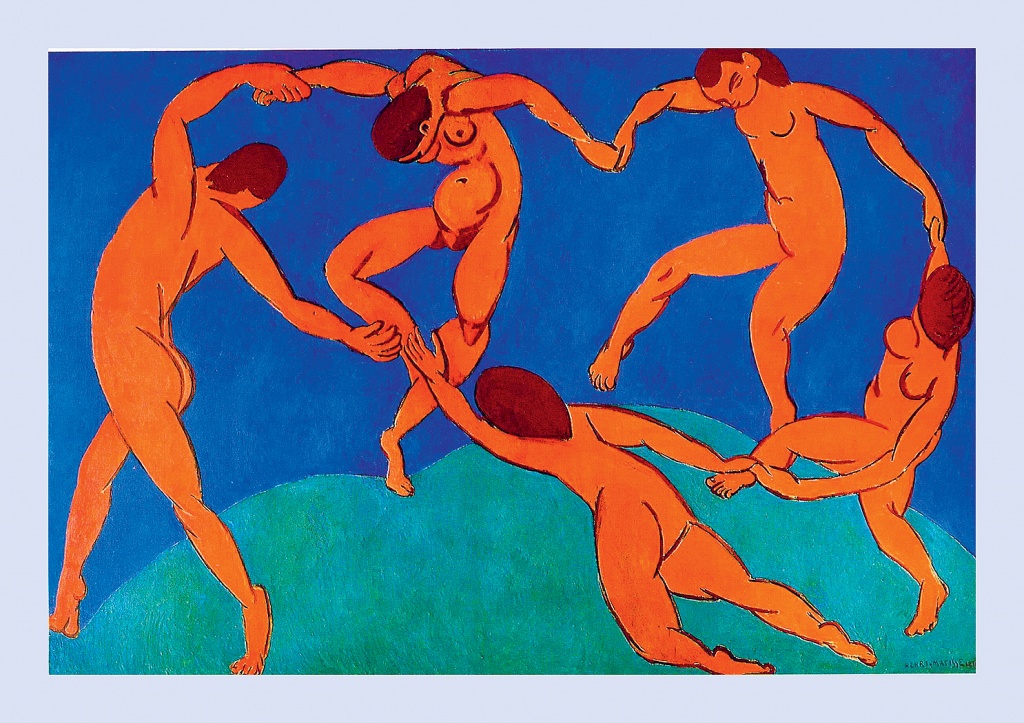
Henri Matisse. “Dance”, 1910 exists in two versions, the first is located in the Museum of Contemporary Art in New York, the second and the most famous-in the Hermitage in St. Petersburg, the birth of the museum after the revolution, both unique collections were under the threat of destruction. In the spring of 1917, Sergei Schukin announced his readiness to provide his world -famous meeting in public ownership. He twice announced his readiness to transfer the meeting to the city, wishing only for him a separate building. Morozov planned to give the collection to Moscow. Knowing this, Alexander Benois wrote back in 1911 that when the meetings of S.I. Schukina and I.A. Morozov will go to Moscow property, society will “acquire the ability to understand modern searches” and “then it will only be able to make a serious assessment of all domestic creativity.” Immediately after the approval of the Bolsheviks in Moscow, Schukin turned to the Museum of Extreme Arts (now Pushkin) to make a collection for storage, and in 1917 this decision was made. But fate ordered differently. In 1918, decrees on the nationalization of both collections were published, and two museums of new Western painting were created on their base (the first - Schukin and the second - Morozovsky). In March 1923, they are organizationally united into the State Museum of New Western Painting-GMNZi (the word "painting" was replaced by the word "art"). Five years later, the collection of Schukin is evicted from his mansion and moved to the Prechistenka, 21, in Morozov’s mansion, thus a painful seal occurs. It was here that the masterpieces of French painting were collected. Almost the same amount of Schukinsky was added to the 250 works from the Morozov collection - 19 of Claude Monet’s paintings turned out, 11 - Renoir, 29 - Gauguen, 26 - Cezanna, 10 - Van Goga, 9 - Degas, 14 - Bonara, 22 - Derena, 53 - Matisse and 54 - Picasso. The impression of the museum was stunning. Among these paintings are such world masterpieces (in addition to the already mentioned work of Matisse) as “Girl on the Ball”, “Portrait of the Poet Sabartes”, “Lovenger of Absent” by Picasso, “Rouen Cathedral in the evening”, “Seagulls. Thames in London. The building near the parliament ”Claude Monet,“ Red Vineyards in Arle ”and“ Night Cafe ”Van Gogh,“ Blue Dancers ”Degas,“ Portrait of the actress of Jeanne Samari ”Renoir,“ The King’s Wife ”field of Gauguin and others.
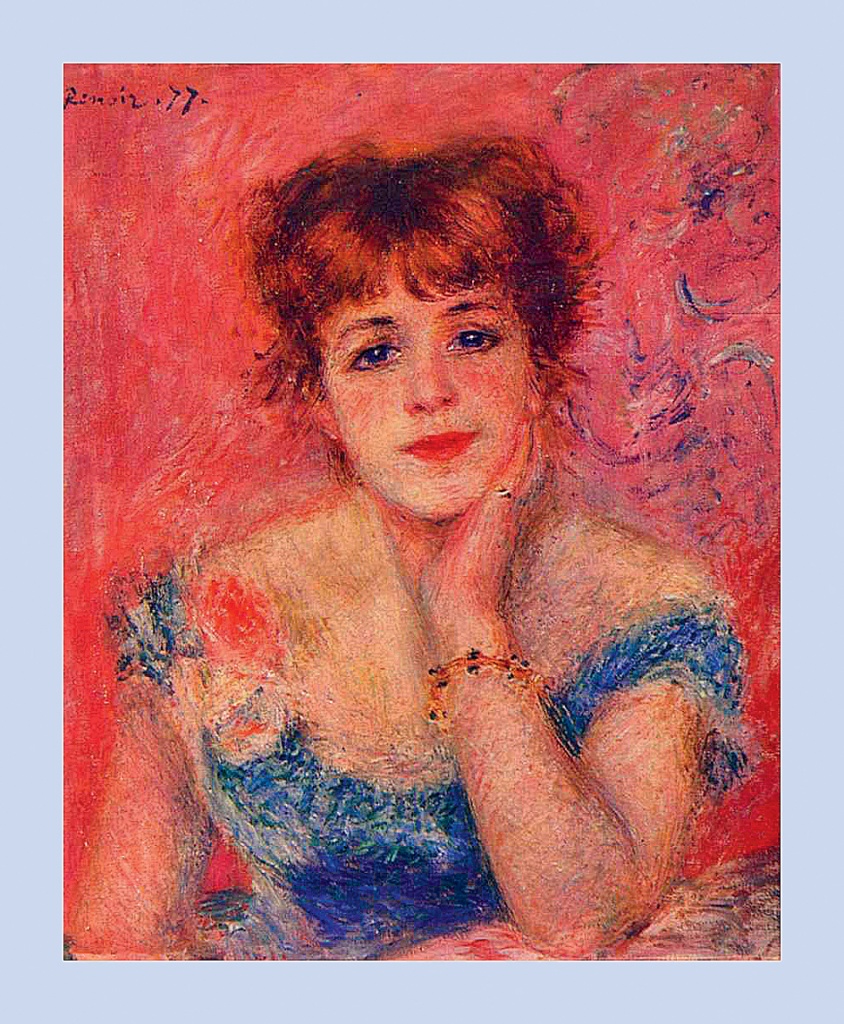
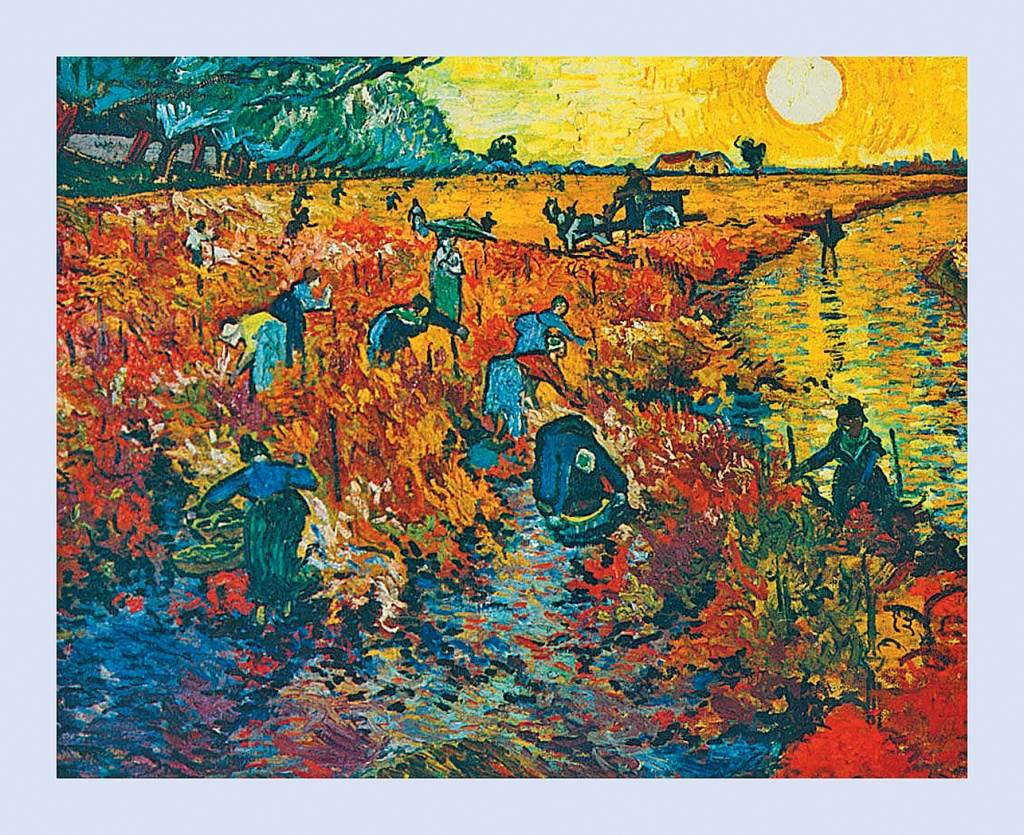
Pierre Auguste Renoir. "Portrait of the actress of Jeanne Samari", 1877, the meeting of the Pushrooms named after Pushkin Vincent Van Gogh. "Red Vineyards in Arle", 1888, a meeting of the Mlime. Pushkin’s death museum emigrated to the West, the owners of the paintings could not live for a long time without their meetings. The memoirists describe that they felt their emptiness and tragic loneliness. Ivan Morozov died in the summer of 1921 during treatment in Karlsbad. He was 50 years old. Schukin died in France in 1936, remaining confident that at least in some form his collection was preserved. In exile, he tried to start gathering again, but it did not work. By that time, attempts have been repeatedly made to close the museum as an ideologically alien to the proletarian state. Andrei Bubnova, who had replaced the Lunacharsky new drug addict and the old party committee, managed to protect GMNsi for a while, he threatened to appeal to party instances if the “encroachments on the minimum quota for the museum network” will not be stopped. But after the war, this became no longer possible. The boxes that returned from evacuation did not even reveal. On March 6, 1948, a resolution of the Council of Ministers of the USSR on the liquidation of the museum was adopted as "a seedling of formalistic views and ... low worship in front of a decadent bourgeois culture." Before this, the museum employees were instructed to “deploy the exposition”, which was visited by the then Clement Voroshilov. With laughs and giggles, he and his retinue looked at Picasso and Matisse. After closing for 15 days, the best paintings were to be transferred to the Pushkin and Hermitage Museum, the rest could even be destroyed, as Nina Viktorovna Yavorskaya, the widow of the first director of GMNZi, recalls. Until the last days, she could not forget the laughter and the meaningful coughing of this “pack” at the sight of Matisse canvases laid out on the floor. As a result, the collection was cut on the living. About two hundred paintings were in the Hermitage, including even those that were not originally transmitted there. At the same time, the Soviet government selected museum works for sale in the West - so, Morozov’s “Madame Cezanne in the greenhouse” of Cezanne and the “Night Cafe” Van Gogh, and with them Renoir and Degas (the first previously belonged to Prince Sergey Shcherbatov, and the second - Mikhail Ryabushinsky) were in a private American collection. Director of the Museum of Fine Arts. Pushkin Irina Antonova, who proposed to restore GMNZi, believes that “we are talking about a moral problem” and historical justice. “I just had no right to be silent,” Antonova explained. - I will leave, and no one will remember this ... This is the Moscow collectors, the Moscow Museum, the destruction of it is a manifestation of a deep disrespect for these two outstanding collectors, the collections of which are fragmented. The return of paintings to Moscow would be the same act as the rehabilitation of people after the Stalinist repressions. ”