
Translated material
Anthem and "Eternal Memory"
Theatrical poster of June
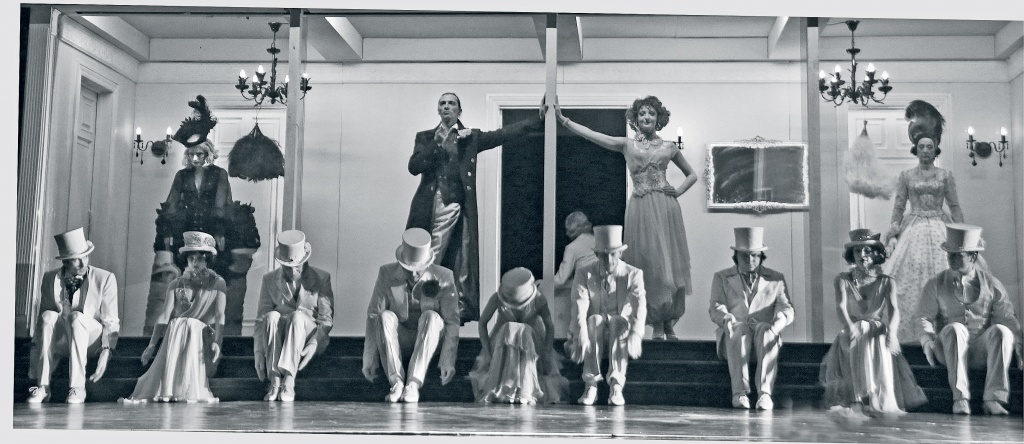
"Lady with Camellias", Theater named after Pushkin: "Nest of debauchery", place of meeting of Margarita Gauthier and Arman Duval
"A lady with camellias." Pushkin Theater, author of Libretto, choreographer and director Sergei Zemlyansky.
One of the main theater events of the season. The performance is staged in the genre of "Dumbale" without the participation of professional dancers - only the actors of the theater troupe, and of various generations. The spectacle does not let the spectacle for a minute due to the inspired acting and amazing in its diversity and fantasy of the choreographic score for a moment.
Sergey Zemlyansky debuted at the Pushkin Theater last season with the plastic drama “Maternal Field” (according to Genghisa Aitmatov) and immediately forced to talk about himself as the discoverer of the genre. Among the glamorous musicals and new -fangled dramatic dramatic dance, Zemlyansky works are distinguished by the originality of the plan and the technical impeccability of the embodiment. It turned out that Russian actors can brilliantly play without words, using the body language and frantic internal energy as an expressive means. The country in which words and speech are devoid of meaning, and society is hearing is only silent, and this is perhaps the last way to reach out to mind and heart. In addition, the authors of the performance are distinguished by a thin intelligent taste and a sense of proportion - no vulgarity and no banalities. The name of the actress should be remembered - this is the new theater star Anastasia Panina.
"Russian beauty." Gogol Center, the author of the literary composition and director Zhenya Berkovich.
A generous gift to the writer Viktor Erofeev. The young director Zhenya Berkovich turned his pornographic perestroika novel into a tragic, almost ancient parable, in which the provincial B ** di Irina Tarakanova proudly carries on her fragile shoulders the whole gloomy severity of the high mission of the victim of the empire. The heroine of the play in a causing red dress lives her short life on the scene covered with dirty Soviet mattresses, among the stench of lust and vice. Her fall, as expected, ends with ascension, and the Soviet anthem, performed by it in the style of the Portuguese caressing FADA, sounds like a “eternal memory” over a torn corpse of a once huge and meaningless country. Another new vivid acting name is Ekaterina Steblina.
“Proach Days” (“Mashenka”) . Vakhtangov Theater, director and author of the literary composition Rodion Ovchinnikov, under the artistic leadership of Rimas Tuminas.
The performance was conceived as the benefit of Vladimir Etosha, who was 90 years old in this May. Etush really plays brilliantly - perhaps the Academician of the Okhems will become one of the best roles of the Patriarch of the Vakhtangov Theater. The performance itself is distinguished by an amazing sense of the ensemble, in which each performer has his own party, his “fifteen minutes of glory”. The play by Afinogenov has not been staged since the 70s of the last century, and its unexpected reincarnation came in handy in time when the atmosphere of stuffiness and anticipation of the upcoming disaster returned to the country. The light start of the performance is a young Mashenka, who will lead the protagonist to high repentance, to gaining the highest meaning, will save him from pride and unaccountable fear, and the laureate of Stalinist awards instead of party reports will quote the gospel. In the role of Mashenka, the debutant of the Vakhtangov scene Daria Ursulyak, the daughter of director Sergei Ursulyak and actress Lika Nifonova.
“Tolstoy is Stolypin. Private correspondence. " Theater.doc, director Vladimir Mirzoev, play by Olga Mikhailova.
About how a provincial lawyer decided to save a young peasant woman accused of a brutal murder from a reservation and execution, and turned to the highest at that time the authorities of the Russian elite-Prime Minister Stolypin and the conscience of the Tolstoy nation. The main action is in the disputes of two historical blocks about democracy and power, about the people and intelligentsia, about the law and impunity, about the moral foundations of the state and its duty to the humiliated and offended, about what the people corrupts more - cruelty or mercy. The outcome of the intellectual duel itself is the people in the person of the peasant Kryukova and determines: an ax and in the eggs. The magnificent Irina Vilkova in the role of the beauty Maria Kryukova, personifying the people and endowed with all its vices - indifference to her own fate, slave submissiveness, animal cruelty and absolute freedom ... from morality.
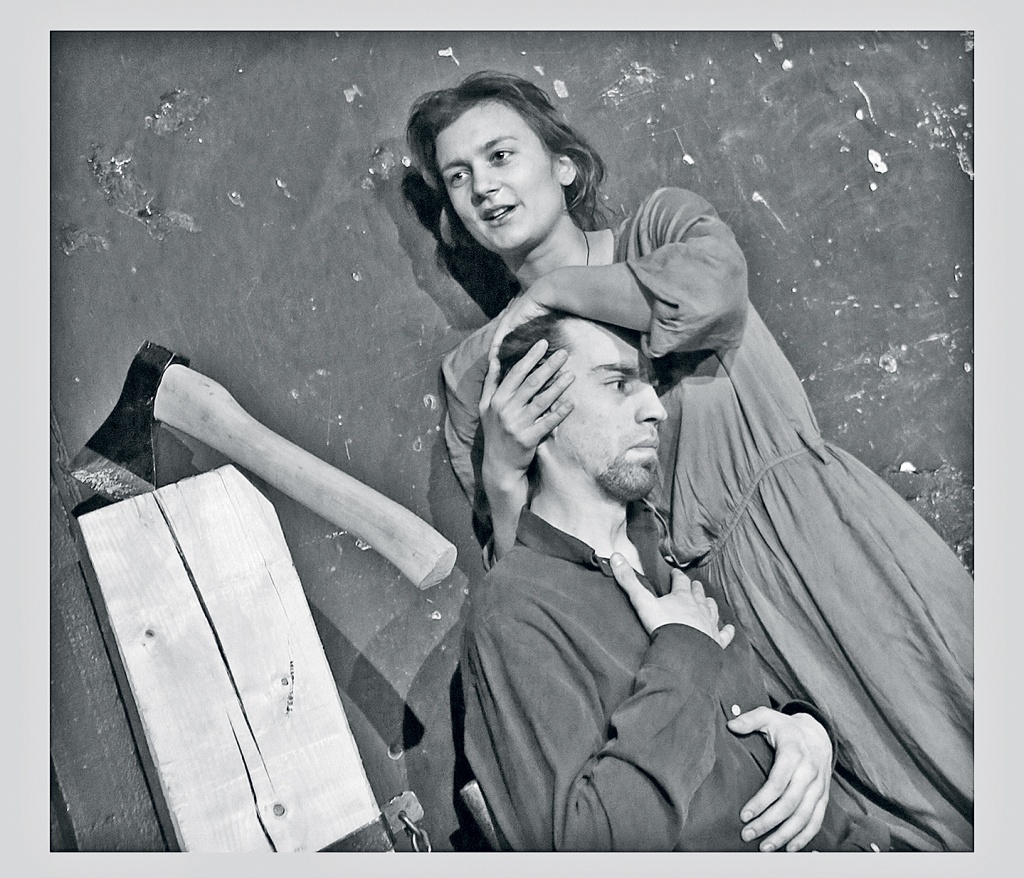
“Tolstoy is Stolypin. Private correspondence. " Theater. doc. Peasant Maria Kryukova (Irina Vilkova) and her lawyer Yanshin (Evgeny Buslavkov)
"Heavenly Wanderers." "Lenkom", the author of stage imagination and director Mark Zakharov.
The unexpected connection of the two seemingly incompatible authors - Aristophanes and Chekhov - gives a strange effect of wild, fantastic absurdity, which reflects the intonations of today's insanity and absolute semantic disorientation of society. This crazy compote of “birds”, “dumps”, “black monk” and “choinist” explodes either melodramatic passions, then with painful thoughts about the nature of creativity and talent, then a mockery of secular emptiness and political cod, then painful search for the highest justice ... in the central role of Dimov, Alexander Baluev, in which The features of the author and director Mark Zakharov are guessed. When you understand this, everything falls into place, and a somewhat nervous disheveled performance gains its inner harmony and pain.
This season, until mid -July, Moscow takes place in Moscow . Chekhov . There is too much ballet and modern dance in the poster of the current festival, but, unfortunately, there is little drama. The main names are the Englishman Matthew Born (“Sleeping Beauty”) and Canadian Robert Lepage (“Card 16 Peaks”). Chekhovfest is interesting primarily by the fact that it offers the audience a completely non -traditional theater, and all unconventional in our patriarchal society causes either irritation or indignation. Grunted from the directorial pleasing, our viewer for the most part prefers to relax and relax in the theater - both the brain and soul. And world theater culture has long accustomed its audience to a slightly different understanding of the goals and objectives of art. The Chekhov festival is trying to change the vector of domestic audience attention with perseverance and enviable courage, to accustom the public to the idea that the theater is a way of comprehending peace, and not to conduct leisure. Someday this task will be successful. But it will be a completely different country.
Photos: Mikhail Gutterman