Date
Author
Соломон Волков; Александр Генис
Source

Preserved copy
Translated material
New York Almanac
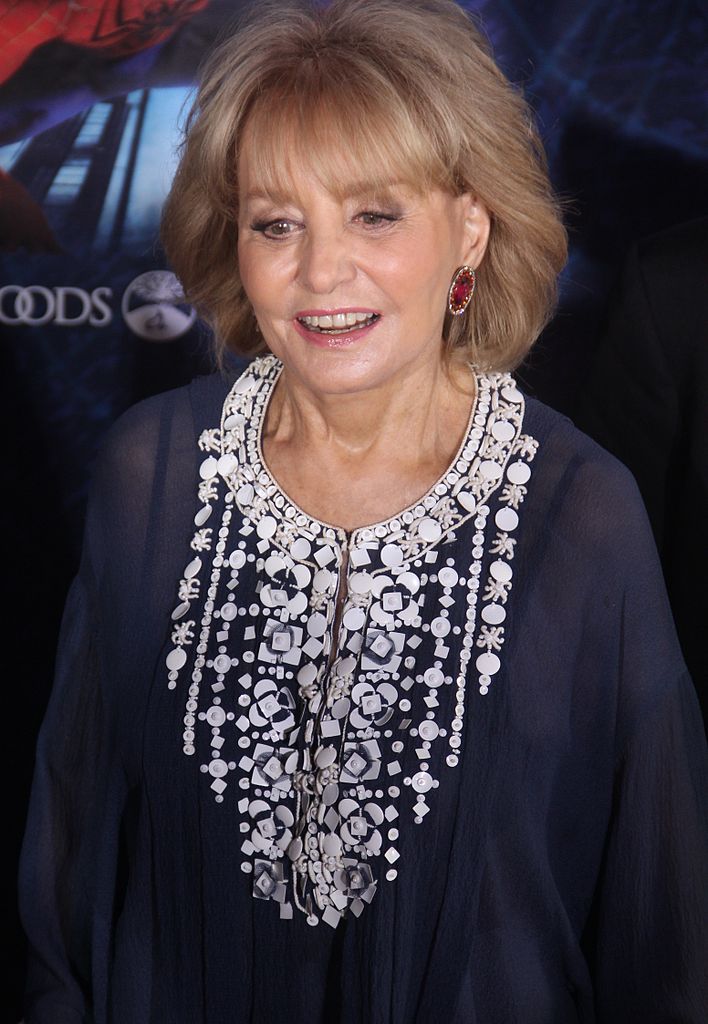
Barbara Walters: Genius Interview
Alexander Genis: Solomon, I propose to start today's release of our “New York Almanac” with news, which was not shocked, but nevertheless upset millions of American viewers.
Solomon Volkov: And me, among these millions.
Alexander Genis: Barbara Walters said that she finally leaves her place at the television screens
Solomon Volkov: I would like her to be forever there.
Alexander Genis: It is interesting that Barbara Walters is almost the last giant of the television industry, and now that the television companies lose the audience and mass art is split into a myriad of units, the TV is becoming less massive, then Barbara Walters is the last of the graves. When March 3, 1999 Barbara Walters interviewed Monica Levinsky, 74 million Americans looked at the screen. And the point is not only that she often and very experimentally interviewed the figures that were in a conflicting position, like Clinton, but it is also important that she had a special way to take an interview. That's what I suggest talking about this.
Solomon Volkov: For me, Barbara Walters from my very first American years served as a model of how to interview a person. And in this sense, she had a decisive influence on me. She showed me that you can and should be talked with a wide variety of figures if they only represent public or news interest.
Alexander Genis: It is curious that she chose not the most important and significant figures, but those who cause strong emotions. She understood that the TV was holding the viewer with an emotional connection. And where there is such an emotional explosion, she exploited it. But it is very difficult to take an interview from an unpleasant person or ask a very unpleasant question.
Solomon Volkov: Here she was a virtuoso.
Alexander Genis: Walters never asked a question directly, she always at first aroused sympathy, no matter who she spoke. And then the knife stuck. Something like this: “I will have to ask, I would not want, but I have to, I have no choice,” and the person was already ready to answer the question simply because he was sorry for the sweet Barbaru Walters. Or she said "But what would you answer for those who criticize you?"
Solomon Volkov: This was her favorite technique, because the most unpleasant question is presented in an extremely careful and decent packaging, and this does not cause an interviewed outbreak of irritation, after which usually the interview actually ends and he is no longer ready to answer, and no one is interested in anyone else - neither the questioner, nor the responsible to the audience.
Alexander Genis: This is a big and sore problem, because for many journalists the search for an evil question is the main thing in his professional life. Especially in Russia, where they often think that Ham questions will cause an interesting reaction. But this does not happen. Once, one interviewer asked Vladimir Sorokin: “Do you always write about the dermis?” He says: "No, I always write about Russian metaphysics." I must say that the conversation was in different planes. And what, in your opinion, did the most interesting figures of Barbara Walters showed on the screen?
Solomon Volkov: I was always interesting to her conversations with odious figures - with Yasir Arafat, with Gaddafi. And she always smiled at them extremely friendly. After all, she invited them, they are her guests. At that moment, when they come to her with a studio, they become her guests. Guests are not rude, by definition, it is impossible. That is, you can, but then you are a bad owner. And I just do not like this in modern Russian television, when the host by all means tries to show that his guest, the man he invited, is extremely unpleasant for him, that he barely takes him or her answers. This is unprofessional. And Walters, always smiling sweetly and peacefully, asked her sacramental question: say such things about you that you would answer this?
Alexander Genis: This is your specialty, your forte - you talked with many great people. What tactics did you use in order for a person to open and tell you in an interview something that he did not say before? After all, I know from my own experience that many ask the same questions and, in general, you already know in advance how to answer them, so all interviews are similar to each other. How to blow up these stamps, what tricks do you use?
Solomon Volkov: I will not name this technique, but the main condition for an extended interview, which is my genre, and the foundations of which I studied, largely, with such masters as Barbara Walters, this is interested in your hero. He should be interesting to you as he is - good, bad, great, not great, positive, negative. If he really interests you as a character, then this feeling of interest will necessarily be transmitted to him and he will be interested to answer.
Alexander Genis: To everything, it is also flattering.
Solomon Volkov: Of course, that’s the point. The necessary element of such an interested conversation is preparation. This is already a professional scourge of many television journalists, they just have no time, they do not give themselves difficult to prepare seriously, and this always leads to failure. A person instantly feels that his interlocutor is not aware of the matter.
Alexander Genis: That's right, I’ve been sitting behind this microphone for 30 years, we have spent a lot of conversations with this studio, but each time I write 10-20 questions in advance. Although I do not have to use them at all, but before me there is always a piece of paper with questions. Interestingly, Barbara Walters never came to her studio without a notebook. Maybe nothing was written there, but the person she asked, saw that she was carefully preparing for this conversation. And when they take an interview from me, they very often ask questions of this kind: “What about actually?” And every time I say: “Before asking, read at least one of my books, the smallest, so that we have something to talk about.” Barbara Walters always had something to talk about.
Solomon Volkov: For the rest of my life, one session that I spent with Joseph Brodsky was a lesson for me. We planned that the conversation would go about Akhmatova, and I thought that he, of course, knows about Akhmatova, I know something that I would prepare there, I will figure out something. He came without prepared questions. Brodsky was in a bad mood, answered my questions monosyllabic, but I did not have any blanks. And all the interview failed. It was such a cruel lesson that I never again sat down anywhere to talk with a person without having a thick pack of questions.
Alexander Genis: Barbara Walters leaves and an era leaves with her. What do you think will replace this huge television interview, which provide for a lot of time of a serious viewer who is ready to sit with a person and listen to him carefully and know what to talk about. This requires preparation from the viewer too. And it is difficult to answer it at the moment. What we see indicates that television is crushed at all the smaller niches.
Solomon Volkov: In my opinion, this is well allows you to find a niche to your taste.
Alexander Genis: And therefore I am convinced that there will always be a niche in which the place will find such conversations that Barbara Walters led all her professional life, so this genre, I am sure, will not die.
(Music)
“Rigoletto” in the casino
Solomon, the season ended in the metro opera. This year the season was special because there were two huge opera anniversary: the 200th anniversary of Wagner and the 200th anniversary of Verdi. And in this regard, I want to ask what kind of production of this year it seems to you the most interesting.
Solomon Volkov: This year, the Wagner’s opera “Nibelung Ring” was also shown to the metro, of course, with this huge multi -ton -ton -toned machine on the stage, which we have repeatedly talked about, on which the singers feel as if they need to jump from the 30th floor down, and Verdi's operas too. And it seems to me, however, if we talk about this as a competition between the two giants, I still won Verdi, because the most sensational production that Rigoletto was most talked about, Verdi’s wonderful opera in an unconventional interpretation. Namely: from the mantui of the 16th century, the action was transferred in the 1960s, to Las Vegas. And when I heard about this for the first time ... I’m not an adversary of modernized opera performances, because, as the director of this production, Michael Meyer correctly noted, when people go to Hamlet to the Drama Theater, they do not expect a person in a hat with a pen and in some old suit. If a person comes out in a jacket in Gamlet or in any other production of Shakespeare, then this is accepted by the audience as something granted. Shakespeare and other classics are subjected to constant reinterpretation, and this, in my opinion, is one of the evidence of their vitality. But the opera is much more conservative - random spectators are not in the opera. In the drama theater, and even more so, on the musical, where there are always a lot of tourists in New York, there is another audience, she agrees to support everything she sees - the money is paid, it should like it.
Alexander Genis: And the exacting audience comes to the opera, who knows well what she wants.
Solomon Volkov: And who also pays a bored money for this, but even then she wants to enjoy, to reach out in full. And the director was just a person whose specialization is the rock musical - Michael Meyer. He was also very worried because completely different rehearsal processes in the musical and in the opera. In the opera, this is all stretched for years, rehearse everything little by little and as it is done in the cinema, that is, the scenes are not rehearsed in the sequence. And on Broadway it is given for the production of 4-6-8 weeks of the maximum, and then all this is already chasing 18 hours a day. Completely different tricks. And the main thing is that vocalists reign in the opera performance - they come mainly to listen to famous singers. And this is personally a big problem for me, because I am convinced that the director is a leading figure in the drama theater, because if you leave the actors to do what they want, they will all pull the blanket over themselves and the play will decay into a chain of monologues. With even greater obviousness, this is manifested in opera performances, because to provide the opera to the singers, no matter what they are, it means to see not the opera, but the bunch of famous Ariy. But the composers - both Wagner and Verdi - did not write hits on the topic "Rigoletto". They wrote the opera Rigoletto, they wrote the opera Parsifal, and so on. The opera must be one. One person is responsible for this. In the Drama Theater - a director, in the opera Theater - a conductor, and the singers must obey him. But for this, the conductor must enjoy authority with them. Unfortunately, this did not happen in the play “Rigoletto”. The production is extremely curious, convincing, the action was transferred to Las Vegas, the hero is not a duke, but a person called Duke. This is very funny. Duke Ellington we remember. This is approximately the figure of Frank Sinatra. We are talking about “Rat Pack”, this is a group of famous pop artists, who at the Las Vegas were mistaken just in the 60s, the main of them was Frank Sinatra. And then Duke is oriented to the image of Frank Sinatra.
Alexander Genis: He was the same master of Las Vegas. This production made a kind of impression on me. It is difficult for me to get used to the fact that people go on stage in jackets, in tuxedos or, very funny, in a rather disgusting red jumper in which Rigoletto walks. And to imagine that in the opera people are dressed in the same way as people on the street are dressed is quite difficult, because this kills the curtain between the opera and life. Opera is a magnifying glass, it is always something exaggerated, but here is something realistic. But I always need to find a concept. When I understand what the director wanted to say, it immediately becomes easier for me when I understand his idea. What is a mantle of the 16th century? This is one of the centers of the Renaissance, this is one of its capitals. And what did the Renaissance believe in, what was his goddess? Fortune, luck. Here Manus and rhymes with a casino, with Las Vegas. We get the same surge in emotions and a storm of feelings that was characteristic of the Renaissance. Verdi’s plot of the opera lives in a natural environment for him, because Mantia was very far from his native edges, and he transferred the action to the place and at a time when God was God, when people could do anything, good and evil, when history reached the peak of creativity and all human activity. It was the most gambling time in our past. As soon as we understand this, the Casino Las Vegas will be a completely natural scene and everything falls into place.
Solomon Volkov: Therefore, no objections, I agree with you. And, as I said, with pleasure I looked at this performance. But my claim to this performance, in general, lies in the fact that almost no one, with a single exception, did not rise from the singers to the real heights that this opera requires. There was no musical concept. And their game was decent, but somewhat rude. But there was an exception. This is Diana Damrau, a wonderful soprano German. At the moment when she appeared, everything came to life.
Alexander Genis: She in a pale blue dress goes on stage, and seems to be innocence itself. It was as if in this brothel, which appears on the stage of Las Vegas, an innocent Margarita from Faust appears.
Solomon Volkov: And note that she is a rather corporate person, but she amazingly conveys this innocence in her voice and nothing more.
Alexander Genis: Soprano of an innocent girl.
Solomon Volkov: When she sings, you believe her absolutely. And this is not the merit of the director or conductor, because the rest of their parties perform rather rudely, as it would be approximately required from them in the Broadway musical. And she has such a finest lace, the finest embroidery. She was extremely touched and delighted, and I want to show how Diana Damrau sings one of the most famous arias from Rigoletto “Caro Nome”, where she talks about her love for Duke.
(Music)
Mirror: Moscow - New York
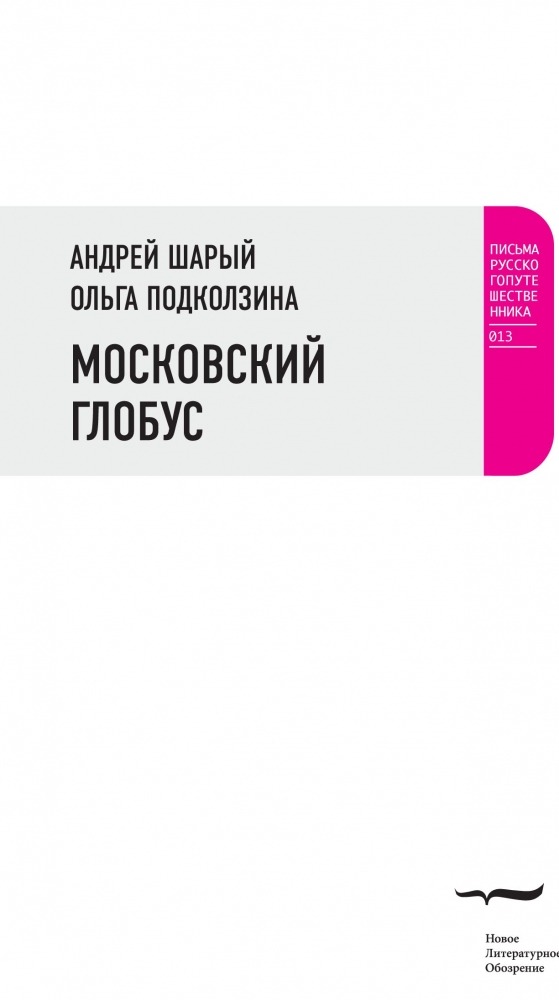
Alexander Genis: Today I propose to talk about the book of our colleague from the Prague editorial office, Andrei Sharogo, who, together with his sister Olga Podolzina, wrote the book “Moscow Globe”. She went out in the series “Letters of a Russian Traveler”.
Solomon Volkov: in the publishing house "UFO"
Alexander Genis: Where I also printed a book in this series. An interesting idea is to collect travel notes of different writers. Yes, and the “letters of the Russian traveler” is a natural name. For the first time, in my opinion, I used it 30 years ago, but Karamzin was earlier, so I cannot claim a copy. The book of Sharogo and Podkolzina was interestingly invented. They wrote a series of essays, I would not even say that the traveling, but rather cultural, which demonstrate the similarity between Moscow and other capitals.
Solomon Volkov: This is a very interesting idea.
Alexander Genis: Moscow-Stambul, Moscow-Prague, Moscow-Parizh, Moscow-Roman, Moscow-Berlin, Moscow-Belgrade, Moscow-Vienne, Moscow-Kiev, Moscow-Budapest. From this we can conclude that Moscow is a European capital. And this trivial thesis is by no means as banal as it seems, because it does not immediately occur to us to compare Moscow with other European capitals. Moscow is a very distinctive city in all respects. For example, I myself never thought so, until several years ago I got to Moscow in the good time of the year - June, in my opinion. It was warm, not hot, but it was as it should. Here, with pleasure, walking along the boulevards, I thought how they resemble Parisian boulevards.
Solomon Volkov: This is just one of the tops and subclar.
Alexander Genis: Yes, when I opened the book, the first thing I rushed to the chapter about Paris, where they talk very detailed and very entertaining about the history of boulevards, both Parisian and Moscow. And we understand what Parisian boulevards were seduced for all cities in Europe, and America, because in New York, say, on the fifth Avenue in the museum mile area, of course, there are Parisian boulevards. It is curious that such books are written on delicious facts. It is necessary to sift a lot of information, dig everything that you can, and find what the reader holds, find those parallels, those interesting highlights, delicious details - the way they write about Istanbul and Moscow.
Solomon Volkov: This is one of the most interesting chapters.
Alexander Genis: The second and third Rome are compared to each other. All this is interesting, but it seems to me that one is not enough in the book and, perhaps, the most important chapter-Moscow-Nemu York.
Solomon Volkov: When I read this extremely attractive book, I immediately thought that I miss the chapter, where the parallel of Moscow -York was drawn, despite the fact that this parallel is obvious.
Alexander Genis: Every time guests from Russia come, they are divided into two categories. One category - Muscovites - they say that “I feel at home”, the other category - Petersburgers - say that “I feel it at home.” And those and others are confident in their rightness. Надо сказать у них есть для этого основания. Москва и Нью-Йорк это очень большие города с огромным метро, что очень важно для москвичей. А Нью-Йорк и Петербург - не так очевидно.
Соломон Волков: Портовые.
Александр Генис: Правильно! Мне это не приходило в голову. Но я хотел сказать, что это НЕстоличные города!
Соломон Волков: Нет огромного бюрократического и административного аппарата. Но я, поскольку через Москву приезжал в Нью-Йорк, но ощущал себя в культурологическом плане петербуржцем. Поэтому для меня более естественной в течение многих лет была параллель именно между Петербургом и Нью-Йорком. Я много общего находил. И в частности тот аспект, о котором вы говорите – претензия на то, чтобы быть культурной столицей, при том, что оба эти города не являются столицей административной. Но теперь я склонен находить, пожалуй, больше параллелей между Москвой и Нью-Йорком. Да, это два огромных метрополиса, это два города со специфической нервной энергией, очень схожей, это два города, в которых культурная жизнь в ее актуальном аспекте бурлит невероятным образом и, конечно же, Москва в данный момент всячески настроена на то, чтобы задавать тон в культурном плане всей России, а для Нью-Йорка это традиционная роль.
Александр Генис: И все же есть различия. Что в Москве - главное? Red Square. И красивее площади я в жизни не видел. Красная площадь - это идеальный образец городской и, даже, имперской площади. Красивее этого ничего нет, хотя площадей в Москве много. и самая большая называется Площадь Хо Ши Мина, хотя, по-моему, это скорее пустырь, который забыли застроить. Ну, может, уже застроили. Но это реплика в сторону. А где в Нью-Йорке аналог Корасной площади? Если площадь это - инструмент державного строительства, где собираются колонны, где проходят парады, то где в Нью-Йорке такая площадь? Ее нет.
Соломон Волков: Рокфеллер Центр.
Александр Генис: Он же маленький, хватет на там каток и рождественскую елку. Какие там могут быть парады? Представьте себе там танки! Но я считаю, в Нью-Йорке вместо главной площади - Централ Парк. И в этом заключается разница между Москвой и Нью-Йорком, потому что там, где в Москве стоит Мавзолей, в Нью-Йорке плавают утки и загорают туристы.
Соломон Волков: Я могу сказать, что я каждый день хожу по нью-йоркской Красной площади. Централ Парк это мое любимое место, которое я навещаю практически каждый вечер.
Александр Генис: Завидую,вВы просто счастливый человек. Я помню, как Вагрич Бахчанян, который тоже жил рядом с Централ Парком, говорил, что у него есть два дворца: один - Летний дворец, Централ Парк, а другой - Зимний дворец, музей Метрополитен. Но я хотел подхватить вашу мысль об энергии. Энергия Нью-Йорка настолько бесспорная, что можно включиться в него, как вилкой - в розетку. Нью-Йорк не может наскучить. Если человеку наскучил Нью-Йорк, пора ему умирать. Но это я так себя чувствую. Много лет назад я показывал Нью-Йорк Андрею Синявскому. Синявский - москвич, который много лет жил в Париже. Гуляем мы с ним по Нью-Йорку, и я, как всегда нахваливая мой любимый город, говорил ему об этой специфическрй энергии. Синявский же ответил: «Вы ничего не понимаете, эта энергия идет против течения, против шерсти. Я все время чувствую себя взбудораженным и беспокойным. В Париже я себя чувствую как в 19 веке, а в Нью-Йорке - как в 21-м». Тогда еще было далеко до 21-го века. Но ясразу понял, что хотел сказать Синявский: в Нью-Йорке будущее начинается раньше, чем где бы то ни было.
(Music)