
Translated material
Belkovsky: Vertical power, security forces, victory over the oligarchs - these are myths
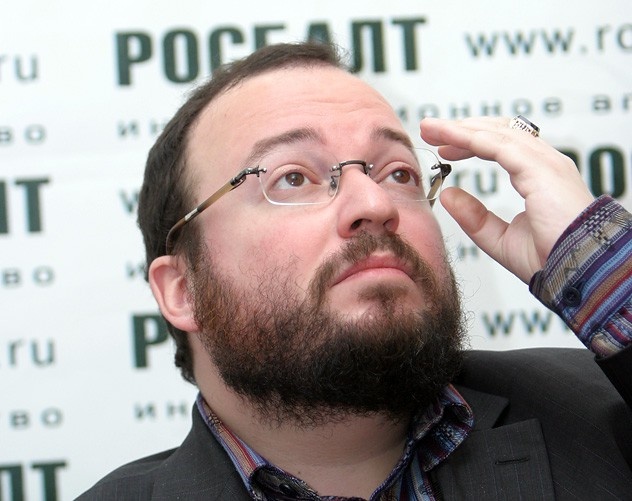
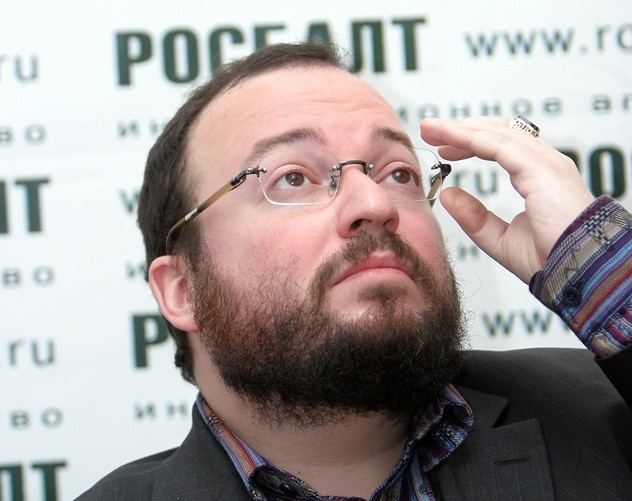
Stanislav Belkovsky. Photo: Pavel Markelov / ITAR-TASS
On June 4, 2013, political scientist Stanislav Belkovsky presented the analytical report “State and oligarchy: 10 years later” as amended by SLON (its text can be read here ). As the name can be judged, this happened 10 years after the publication of the sensational report “The State and the Oligarchy”, which in 2003 was regarded as the harbinger of the follower of the reporting of the Yukos Mikhail Khodorkovsky . In a new report, Belkovsky is trying to debunk a number of myths and stereotypes about Russian politics and economics, as well as the role of Vladimir Putin in history in recent years. Here are some important thoughts of the report. The full version of the report is available here , you can download the report here .
| The political system, which has developed under Boris Yeltsin, attributed the main function to the authorities in the form of moderation of relations between the “real subjects of the oligarchy”. Putin brought the Yeltsin system to the "once specified logical limit." | |
| The struggle of the “security forces” and “liberals” in power is a myth that is in fact a “PR method used in the hardware and information wars”. There are no value differences between these conditional groups. “In the face of all -consuming corruption, they are equal and one. The theory and practice of their being in Putin's Russia is one. ” | |
| The security forces do not represent a single coated group: special services compete with the Ministry of Internal Affairs, and both of these structures are with the military and so on. Thus, it is impossible to talk about Russia as a country of victorious “militocracy” (the term of the sociologist Olga Krystanovskaya). The same can be said about the "grouping" of liberals. | |
| The oligarchy of the 90s did not lose its influence in the 2000s, but, on the contrary, strengthened it, despite the rise of the Putin oligarchs. The Elite Elite of the Yeltsin period (Alisher Usmanov, Roman Abramovich and many others) still dominates in business both in terms of numbers and in the “aggregate resource of political and administrative influence”. | |
| Mikhail Khodorkovsky became a politician only in prison, where he put forward an important idea of "repentance of elites as a guarantee of overcoming a moral crisis in the country." However, his political future after release is extremely doubtful. “Khodorkovsky is not Nelson Mandela, who is ready to sit forever, since he will win him anyway. And not Yulia Tymoshenko, for whom the prison is just unnecessary proof that she is a genius, and all the others are people of a different variety. ” | |
| After the Yukos case, it became clear that in Russia it is not the fact of ownership that is important, but the current informal control over management and financial flows. In addition, it laid the foundation for the split of the elite consensus around Putin of the early 2000s. | |
| The state -owned economy is myth. The state now acts not as an independent subject, but as a tool for servicing private interests (Rosneft - Igor Sechin, VTB - Suleiman Kerimov. In the Putin years, they gained the popularity of the transaction in which the state buys assets beneficial to the buyer, and not the seller (examples: Buying Sibneft from Abramovich, buying a bank. Moscow »VTB). | |
| There is no power vertical. There is a horizontal of power consisting of many small entities of both federal and local levels. “It is enough to control the dialectical triad” the head of the Department of the Ministry of Internal Affairs - the prosecutor - the chairman of the court "in a certain territory in order to become an oligarch." At the same time, the position of the oligarch does not guarantee untouchability and can be lost during the war with other oligarchs. "The clots of the authorities are in the Brownian movement of the permanent struggle." At the same time, "key conflicts will always occur due to big money." | |
| Previously, corruption - both in the private sector and the state - was the “motor” of the development of the economy, as it forced to allocate funds for certain projects with interest to steal part of their budget. However, now the corruption tax has become exorbitantly high, so it has become a brake of the economy: any project can be implemented only by “radically” by overestimating the estimate or reducing the quality. | |
| Putin will never carry out reforms. “The dominant idea of his reign is to“ not spray ”, to make Russia with him in a certain set of formal indicators / signs looks no worse than before <...> he will never exchange the old for a new one, if the old still works, even with interruptions - like an oil pipe and an oil price, brings luck.” |