
Translated material
Iran chose the president
High positions, fake diplomas and the lack of a political program - eight finalists of the presidential race in Iran were not much different from each other. On June 15, Iran’s Ministry of Internal Affairs reported that the moderate liberal Hassan Rukhani won: he gained more than 50% of the vote, which became clear after processing 27.5 million ballots. What choice did the Iranians have in the June 14 elections - the New Times found out

Tehran center before the election
“Of the 686 people who expressed a desire to compete for the presidential chair, 8 reached the finish line - the rest were disqualified by the Council of the Guardians of the Revolution ... The obvious favorites on the eve of the elections are two - Said Jalili, the main negotiator for the Iranian nuclear program, and Mohammad Baker Galibaf, the mayor of Tehran, the effective manager ... according to the latest sociological surveys, 56 %are ready to vote for Galibaf, only 27.5 %for Jalili. However, Jalili enjoys the support of the highest clergy. Be that as it may, the outcome of the presidential race in Iran, unlike elections in Russia, is difficult to predict ... ” - about the content of the reports of many European television channels from Tehran.It is just right to grab the head - because this is exactly what the Iranian elite tried to prove to the whole world: they say, on June 14 the most transparent and democratic elections in the Islamic world will be held in Iran.
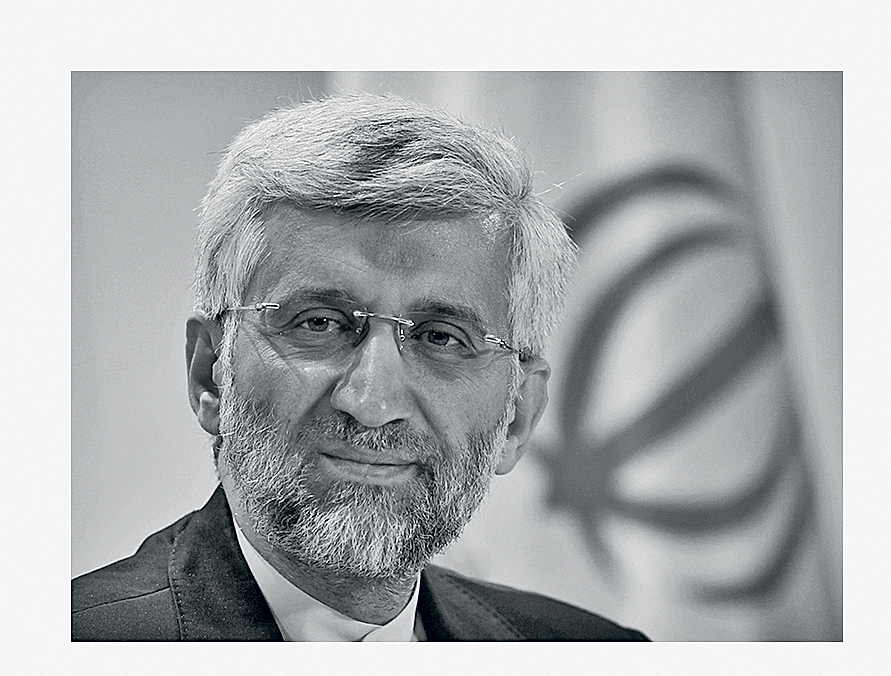 | 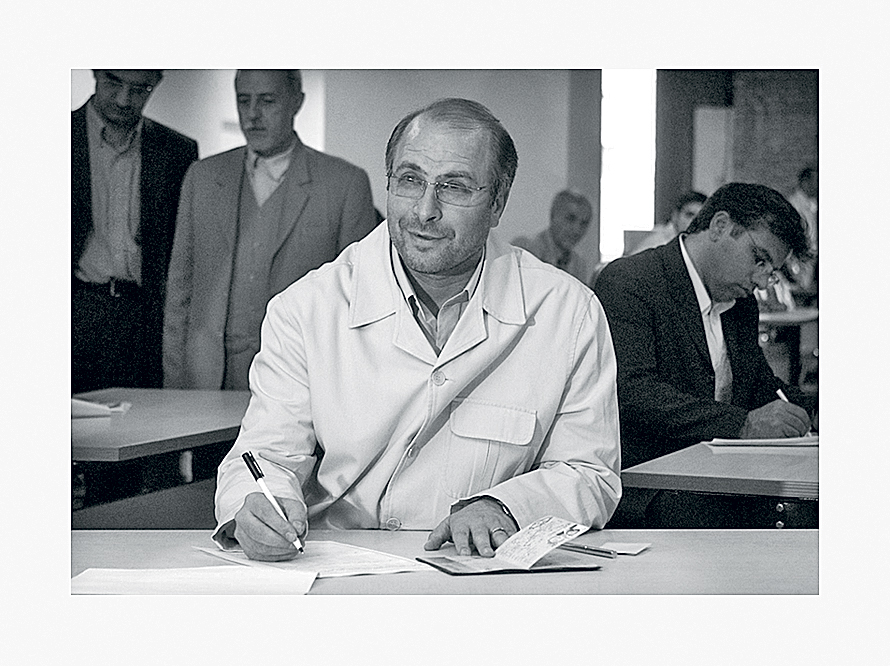 |
| Said Jalili | Mohammad Baker Galibaf |
And they dream of protests ...
| *Iranian oppositionists called the events “spring” in the figure sense, literally - they occurred immediately after the presidential election on June 12. ** In the Council of 12 members, six of them are appointed personally by the supreme leader Ayatollah Ali Khamenei, and the remaining six - the head of the Iranian judicial system, who, in turn, is appointed by the same Hamens. |
The Iranian Ayatollahs still dream of the Green Spring of 2009*, when tens of thousands of supporters of opposition candidates-Mirkhossein Musavi and Mehdi Carrubi entered the streets of Tehran: people did not believe in the victory of Mahmad Akhmadinejad. The result of that June: 5 dead, 300 wounded, thousands of arrested throughout the country, a complete information blockade ... This time Ayatolles did everything to avoid such surprises. The Council of Guardians of the Constitution **, selecting candidates for elections of all levels - presidential, municipal and parliamentary, headed the closest associate of Rachbar (Supreme Ruler), Ayatollah Sadik Laridzhani, one of the five powerful brothers of Laridzhani, belonging to a conservative clan. (Ali Laridzhani-the speaker of the Mejlis, Muhammad Laridzhani-Human Rights Advisor and Chairman of the Human Rights, Bager Laridzhani-former Minister of Health.) According to independent sources, in February-March the Council of Guardians held several unplanned meetings, which discussed the issue of strengthening “procedural control” for the election. Ayatollah Khamenei demanded no later than May to approve the “final list of elected candidates”. In the allotted time, members of the council did not meet: the list lay on the table to Hameni only by mid -May. Preliminary selection for "compliance with Islamic criteria" was only eight people. Two more from the list was personally deleted by the Larijani kindergarten: the victims of the veto were the former president of Iran (1989–1997) Akbar Hashemi Rafsanjani and the ally of the current president of Mahmad Ahmadinejad Esfandiyar Rakhima Mashai. Honestly, both candidates are both completely harmless to the authorities, no one would vote for Rafsanjani, he has no support among the people. But Ayatollah Khamenei perfectly remembers: the family of the ex-president, in particular his son Mehdi and daughter Faeshe, sponsored the oppositionist Musavi four years ago. Rafsanjani's excommunication from the race is a preemptive signal to his children: do not stick into politics anymore!
The same thing with Mashai: a native of power structures, he would not win the elections, despite the support of Ahmadinejad personally. But Khamenei advised to exclude from the short-list and his-the spiritual leader does not fully trust the security forces, he is calmer if only his people are in the cage of the candidates.
It would be appropriate to ask those who believed in the “democracy” and “transparency” of the Iranian elections: and where are the favorites of the last race - Musavi and Carrubi now? Why didn’t they want to join the struggle again?
The answer is: the whereabouts of these two remains unknown even for members of their families. According to some sources, both live under house arrest in protected residences in Tehran, in others they are in prison, and nothing is known about any trial.

Sadik Laridzhani, Head of the Council of Guardians of the Constitution, the main "Censor" of the presidential race
Eight - from casket
All eight selected candidates are immigrants from the Iranian political establishment or special services. Moreover, everyone holds posts to which they (directly or indirectly) appointed omnipotent Ayatollah Khamenei.
For example, Ali Akbar Velayati, ex-head of the Ministry of Foreign Affairs, adviser to the Supreme Leader for International Affairs. Another candidate is Mokhsen Rezai, a former commander of the Islamic Revolution Corps, Secretary of the Council of Political Expectability. By the way, a scandal on the Russian model is associated with the name of Rezai: the media doubted that he was the author of his doctoral dissertation in the economy, seemed to be busy with the throat, and wrote voluminous scientific work in 10 days.
| *Until 1993, GCU had a college status |
We move on. The only mullah in the list of Hassan Rukhani is the confidant of Ayatollah Khamenei, the head of the Center for Strategic Studies of the Council for the expediency of Iran, and in the recent past - the secretary of the Higher Council of National Security. In accordance with the official biography, the presidential candidate studied in Scotland and graduated from the Glasgow Caledonian University (GCU) in the 70s is also connected with Rukhani, according to the official biography. However, meticulous journalists found out: this university was founded only in 1993. So the mullah was either deceiving or presented the public for a fake “crust.”*
The list also includes ex-minister of telecommunications Mohammad Garazy, former Vice President of Iran Mohammed Reza Aref, as well as Haddad Adele, son-in-law and adviser to Ayatollah Hamenie.
“All these candidates, of course, were included in the list of eyes,” the opposition politician, one of the founders of the unification for democracy in Iran Hassan Shariahmadari, who was in exile in the exile, noted in a conversation with The New Times. But in fact, the country's spiritual leadership chooses between the mayor of Tehran, Mohammad Bager Galibaf and Said Jalili, the secretary of the Supreme National Security Council (BCH) and the chief negotiator for the Iranian nuclear program in Vienna. At the same time, there is more chances, despite the polls, still with Jalili.
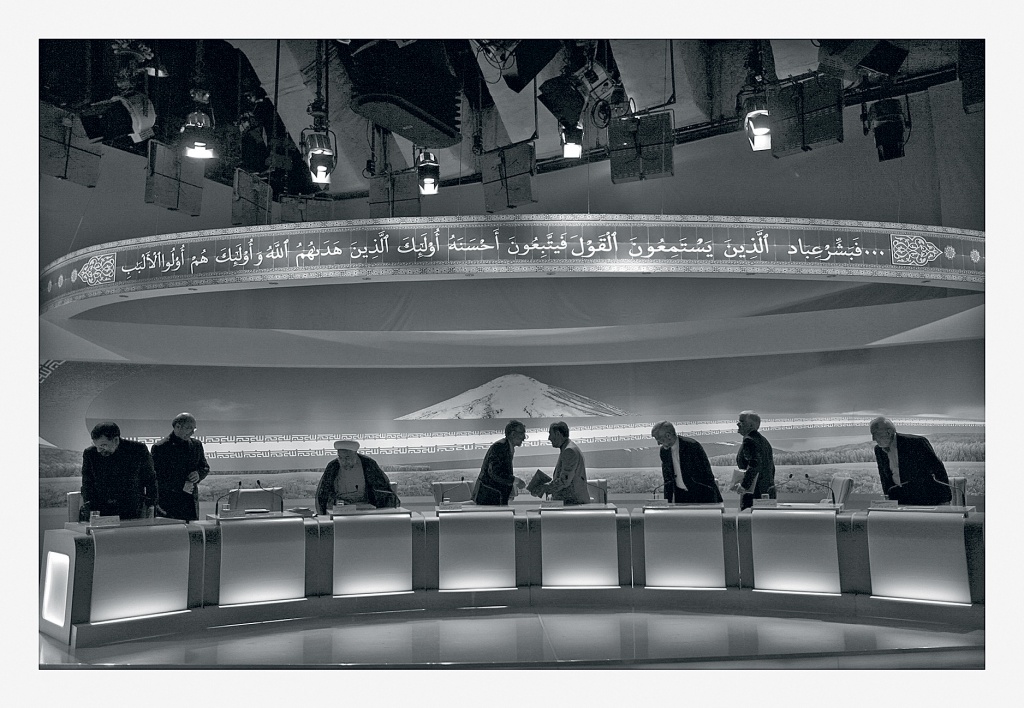
June 5. Presidential candidates immediately after the end of television explosives in the Gosty studio
** Favorites **“Galibaf is a good manager and a charismatic politician, he has established himself well as the capital mayor,” Shariahmadari argues his forecast. - But Ayatollah Khamenei once burned on Ahmadinejad, who in the year before last he tried through his people in the presidential administration to take control of oil exports. Khamenei is afraid that Galibaf can also show obstinacy - he is used to managing powerful financial flows in Tehran. Therefore, the candidacy of the weak, fully controlled by the Shiite clergy of Said Jalili for Khameneya is probably preferable. "
However, serious forces are behind Galibaf. A native of the Corps of the Guardians of the Islamic Revolution, he has long been trying to create an image of a modern politician - even flaunted Airbus in the uniform of the pilot in 2005 in 2005. Galibaf, however, never managed by airplanes - he just graduated from pilots.
But in the distant 1999, Galibaf signed an open letter to the then President Hatam. The message was withstanding in a threatening tone: if the government does not stop the student unrest that swept through the country, then the guards will be forced to take the initiative. In the same 1999, Galibaf was appointed head of the National Police, one of his achievements in this post was the creation of a special police of Amaken (public places), which quickly turned into the main body to combat dissent in the artistic and intellectual environment. In the basements of Amaken, dozens of journalists, artists, writers, actors are constantly undergoing arrests and torture. Formally, among all eight candidates, Galibaf is the only one who holds an elected position (strictly speaking, the mayor of Tehran is not selected directly, but by members of the municipal council following the results of the municipal elections). However, not so long ago, an audio cassette fell into the hands of journalists, on which Galibaf tells some his friend that he actually appointed him to the post of mayor of the same Khamenei. The leak was clearly organized by one of the rivals of Galibaf in the election. But if only there was a problem in her ...
Not so long ago, Ayatollah Khamenei, who this time officially does not support a single candidate, presented the public with a list of qualities that the future president should possess. It should be a native of the people, he must lead a modest life, be a religious person, respect the law and fight with the enemies of Iran. For the highest clergy, not Galibaf, namely Jalili, is an ideal candidate in this sense. He is Ahmadinejad number two, only much more obedient. Having lost his leg during the Iran-Iraq war, Jalili is also a native of the Corps of Guardians of the Islamic Revolution. However, he himself identifies himself as one of the Basiji - the secret of the Iranian police responsible for political repressions. “Jalili is a part of this power apparatus that holds the whole country in its hands: politics, business, foreign trade, cunningly bypassing international sanctions,” says Hassan Shariahmadari. And he explains: “The sanctions are very beneficial to a small but powerful group of people in Iran - after all, gray trading schemes annually bring Iran about € 40-50 billion, and most of this amount settles in their pockets. Jalili is one of those who are not beneficial for the abolition of sanctions. ” Presumably, he had already tried to make the Viennese negotiations on the Iranian nuclear program last infinitely long.
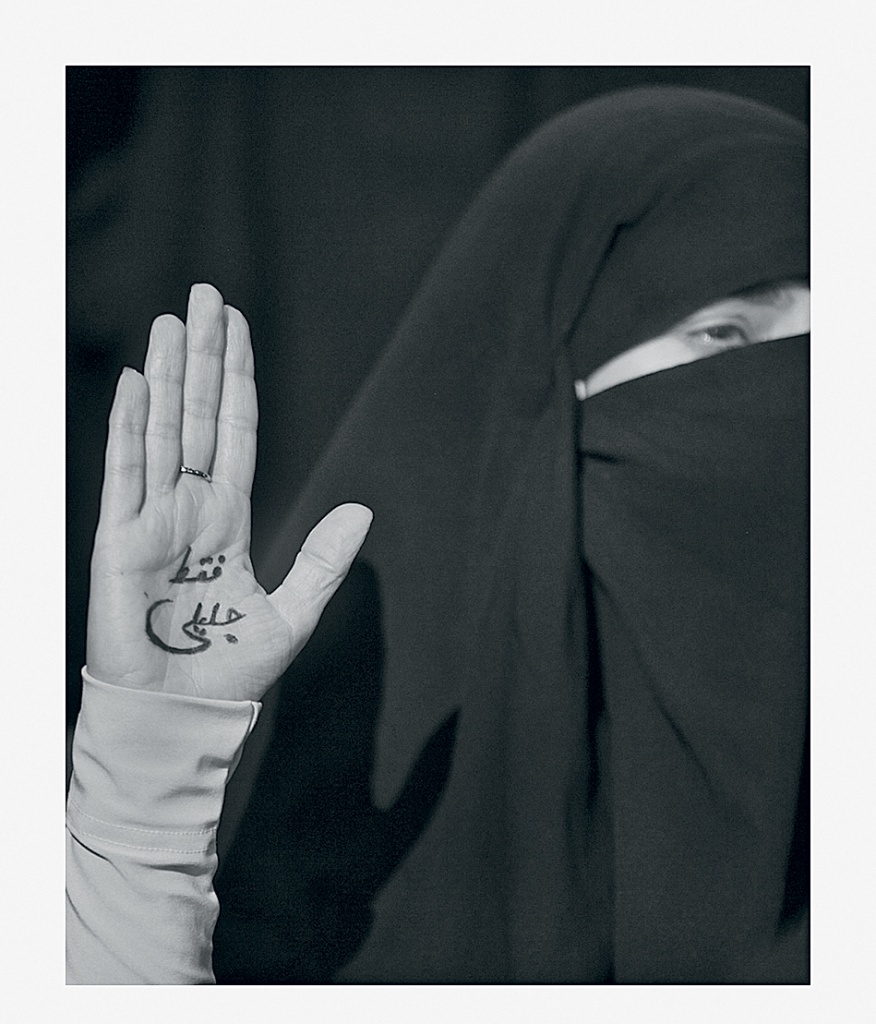
"Only Jalili" - it is written in the palm of the worshipers of the chief favorite of the election
An unexpected denouement
Four years ago, according to official figures, the turnout in the elections amounted to 85%. In fact, these numbers simply “drew”: there were a lot of reports, photographs in which absolutely empty polling stations were shown. This time, the Iranian authorities officially limited the access of foreign journalists to the country during the elections: they are afraid of “bad pictures”. In Iran, as in Russia, the votes that have not appeared in sections of voters are often used at their discretion by members of the election commission, so the “high turnout” in empty areas is an excellent recipe to win the right candidate.
This time, according to the Ministry of Internal Affairs, the election turnout amounted to almost 73%, and Hassan Rukhani with more than 18 million votes will be the new President of Iran. Nobody expected such a success of Rukhani, his result overturned all the forecasts of experts, since Said Jalili was considered a favorite.
Sergey Khazov and Boris Unanov took part in the preparation of the material
Photos: AP Photo, Reuters, East News