
Translated material
Moscow Film Festival: 9 ½ Koreans

This year, nine and a half South Korean films will be shown at the MMKF - an unprecedented attention to the Russian festival to the main Asian cinematography now. In the special program “Korean Cinema Today”-almost the entire range of modern Korean cinema, from blockbusters to indie marginalia; A great opportunity to learn several new Korean names except the hackneyed “Kim Ki Doc”.
More films from South Korea at the MMKF were shown only five years ago, when the Museum of Cinema made Kwon Thak as the MMKF. The program “Korean Cinema Today”, of course, does not have a hint of retrospectiveness - all films are defiantly new. Moreover, they were chosen almost according to the top of the Korean annual box office for this and last years. The selection is a little reminiscent of what is usually shown at the weeks of Korean cinema in the 35 mm cinema: last year there were also a couple of next blockbuster, one of the previous works by Hon San Su and something else. True, now in the South Korean film industry the new boom - 2012 was one of the best in history, so even the films chosen in this way completely reflect the extraordinary cinematography. Here are the five best programs of the program and the rest of the Korean cinema of the 35th MMKF.
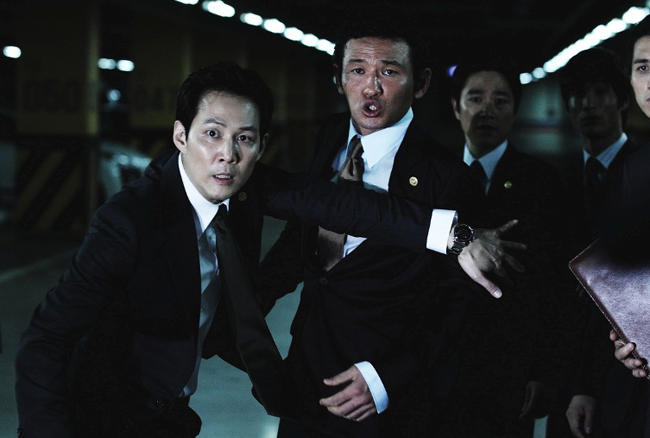
"New World." Director Pak Hong Jong
 © MMKF
This is the second film of one of the most interesting Korean authors of the new generation - Pak Hong Zhon (he is known primarily as the screenwriter of the “unfair deal” of Ryu, the son of Van and “I saw the devil” Kim Chi Una). In all his stories, Pak Hong Jong explores how even a good person in bad circumstances inevitably defeats evil and how attachment, family and complex Korean ethics contribute to this. The “New World”, the gangster saga of the Koppol -scale scale, depicting corporations as an organized crime group. The president of the Goldmoon respectable conglomerate - and part -time leader of the gang - dies in a suspicious accident. Top managers are immediately included in the struggle for power. Between the two lights there is a high -ranking bandit of tea sleep (Lee Zhon Zhe), who has to choose who he is devoted. But most of all, Sona is concerned about his second work - he is a policeman, introduced into this gang many years ago, and his real chief Kan (he is played by Oldboy Choi Min Sik) is also trying to influence the leader of the leader’s elections.
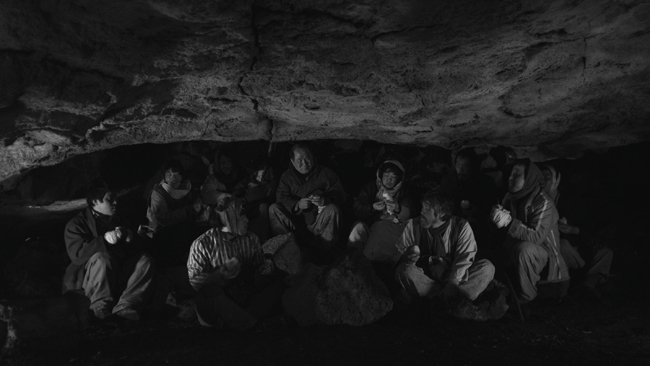
"Chisyl." Director about Mole
 © MMKF
Black and white picture about the uprising on the island of Chechzhu in the spring of 1948. Then the inhabitants of the island and members of the South Korean Working Party rebelled after the police shot a peaceful demonstration. To suppress the rebellion, the South Korean dictator Lee Manya introduced the troops to the island and declared everyone living in the depths of the island. A massacre began on Chechju. These events in the film are shown from the point of view of people sitting in the cave - several peasants managed to escape from the military and hide. For weeks, they were afraid to stick out and only could worry about the abandoned farm.
The film received the main prize in the international competition at the Sandance festival this year. But it is difficult to call this a reward for the entire South Korean cinema: the director about Mole is away from the rest of the film industry, he does not live in Seoul or Busana, but on the very island of Chechzhu. About Chechzhu about Mole and shoots his films with the help of unprofessional actors from local residents. Chisyl was removed in the local dialect and went with subtitles in the Korean rental. The name of the film is translated as “Potato” (on ordinary Korean - “Kamka”) - the only food of peasants hidden in the cave.
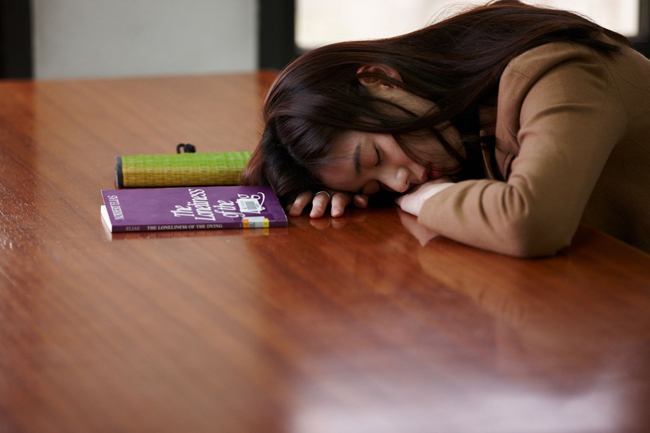
"Dear daughter He Vaughn." Director Hon San Su
 © MMKF
Hong San Su makes two full -length films a year and, it seems, thus tries to invent a new cinematic form. This is not a series or a cycle, rather a wreath of sonnets. The penultimate film Hon San Su “In another country” was a fantasy about a European tourist (Isabelle Jupper) at the Korean resort. In the first minutes, the director’s new work, “Dear Daughter He Won”, is attached to the previous one - He Vaugh (Jung Yun Che) falls asleep and meets the lost European tourist in a dream - Jane Birkin, who speaks a dumbfounded Korean, that she looks like her daughter Charlotte.
“Dear Daughter He Vaugh” is a movie about the self -identification of a young girl at a crossroads. Her mother emigrated to Canada, a lover - a teacher of a film school seems tired. Who to be and with whom? What to do? Drink, sleep and see dreams!
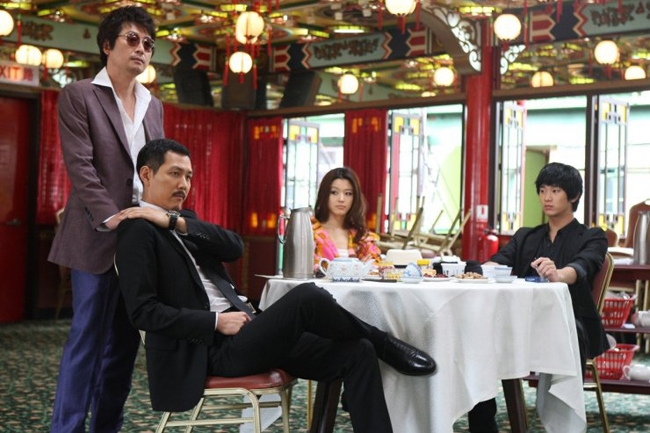
"Thieves . " Director Choi Don Hong
 © MMKF
The main Korean blockbuster is either in recent years, or all time - they still argue in accounting, he broke the record of “Dinosaur’s invasion” Pon Jun Ho or not. Oddly enough, this hit belongs to the far from the cash regional genre itself: this is a capper. A team of thieves with sonorous pseudonyms of chewing gum (Kim He Suk), mobile (Jung Ji Hyun), prick (Lee Jeg Zhe in a comic role - it is interesting to compare with his tragic character in the New World) and Pepsi (Kim Hey Su) under the leadership of the Makai Pak (Kim Yun Sok) is going to steal a casino from casino to Macao. Chinese colleagues help them (they are played by Angelica Lee and Simon Yam) and a strange Chinese Korean Andrew (king of the episode about Dal Su). Each is not concerned about the outcome of the common cause, but their own interests, including revenge. And some in the team are generally from the police.
The genre and stars in the main roles earned the film that the not quite fair title "Korean" Eleven Friends of Ocean "." In fact, “thieves” are more like a classic capper, “asphalt jungle” or “rhyfi” than to the film Soderberg: the robbery here only in the middle, and the denouement is the consequences of the crime, for some characters - tragic ones. Director Choi Don Hong specializes in films about fraudsters, cards shoolors and thieves, in these heroes and related plots he is most interested in the drama of deception. In all his films, the characters build multi -way combinations to deceive their victims and accomplices, and the director collects the plot in such a way as to deceive the viewer. “Korean David MEMMET” is an adequate title for ChWE Don Hong.
"Juvenile delinquent". Director Kan and Gwan
 © MMKF
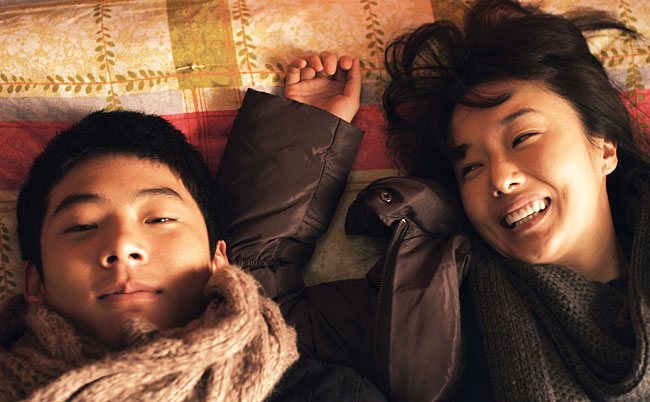
This melodrama represents two trunk trends in Korean cinema at the MMKF at once - films about mothers (Pieta, Mother, Sedaneous) and arthouse stories about problem youth (“18 years”, “cold night”); Fortunately, without the cruelty of the first and the hopelessness of the latter. A schoolboy (with Yong Zhu), who has only a sick grandfather from relatives, in stupidity and bad luck, got into a correctional institution for minors. While he was in the dungeon, his grandfather died, and the young man had no one left, but one compassionate teacher found the boy’s missing mother. Mother was delighted with the lost son and took him to live, however, it soon turned out that in this family a more adult and responsible - a child, not a parent.
The role of the mother was played by Jeon Hyun, who had already entered the history of Korean cinema with her debut role: at fifteen she starred in the most cruel Korean film, Chan Song W - a metaphorical experience of a massacre in Kwanju, told through the relationship of the girl and a brutal homeless person crazy. Since then, Lee Jeon Hyun managed to leave the cinema and become a popular singer in the style of technology for all of Asia. On stage, she constantly changed images, used wild costumes ... In general, she was an Asian lady Gaga when the real Lady Gaga still went to school. In Korean cinema, Lee Jeon Hyun returned in a short film of the Pak Night Fishing Brothers. "Little Criminal" is the first great work of the actress in many years.
"Waste boy." Director Cho Song Huh
 © MMKF
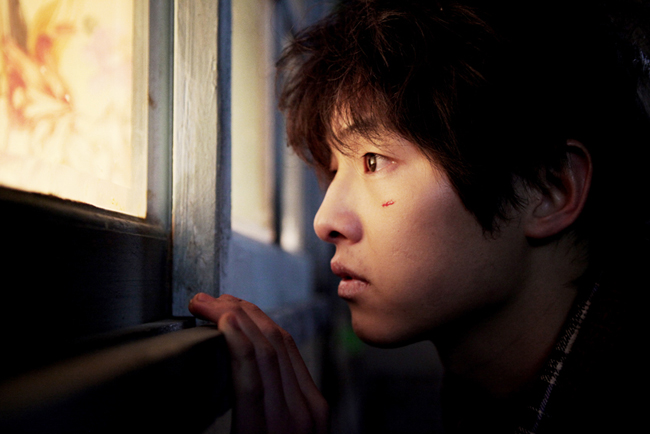
The tale of eternal love between a girl and a wolf. Korean grandmother returns from America to his homeland to deal with the forgotten inheritance - the old house in which she lived in her youth. In the house, the old woman is captured by memories, and the film falls into the past. Once upon a time, in the 60s, she (Park Bo Yong) moved with her mother (Chan Yong to us) from the city to the village. In the barn behind a strange door, the girl found a wild, but terribly beautiful young man (Sleep Zhong Ki) - he does not talk, does not know how to read and behave at the table, sometimes turns into a wolf.
Another Korean blockbuster, which involuntarily earned a comparison with the Western analogue - this time with the Twilight Saga. Actually, the “Waste boy” is deprived of twilight insanity and home building, it can even be called feminist. But there is still a common one with “twilight” - a hundred percent hit in a target audience; Everyone who is not included in it will be bored.
"Adjuma." Director Lee Ji Son
 © MMKF
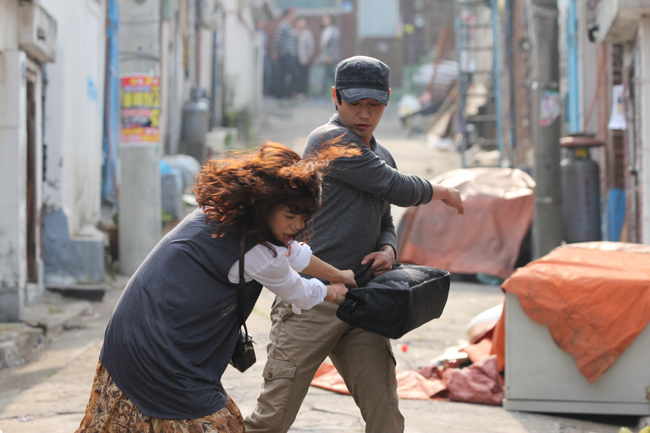
Ajuma is a standard, often not very polite Korean appeal to a middle -aged unfamiliar woman. Aunt, citizen. A forty -year -old heroine (characteristic actress of Chan Yong in a rare main role) is a former dental nurse, one raises a daughter and sells insurance. Once on the way from school, a girl abducts and raping a maniac pedophile. The police first refuse to look for a missing child, then, when the girl is found, is inactive. Mother is forced to look for a maniac herself.
Although this is the first film by Lee Ji Son, he himself is not a newcomer in the cinema-an influential Indie producer, professor of the Kafa Korean film school. "Ajuma" is not just a thriller about revenge, but a social statement - about the defenselessness of children, an unfair attitude towards women and indifference. In order to hide the inevitable for films with a message of straightforwardness and create an illusion of unpredictability, the director, using the Flashbekov chains, collected the film so that all the events in it occur almost simultaneously - the capture of the criminal, a crime, a relatively distant past and merciless revenge.
"Horror." Directors Hong Ji Yong, Nam Tae Un, Chong Bom Sik, Min Gyu Don, Kim Gok, Kim Song
 © MMKF
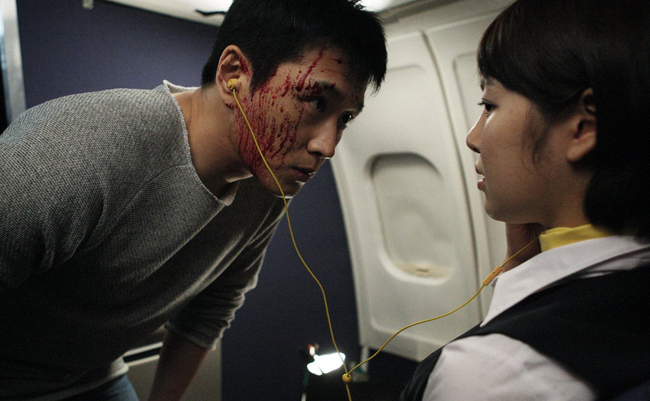
A maniac steals a schoolgirl, and in order to extend his life, the girl tells the villain the most terrible stories that she knows. Of these short stories, filmed by different directors, there is an almanac of horrors - the genre, not the strongest in Korean cinema. The appearance of this omnibus in the festival program can be explained by continuity. One of the shorts, about zombies, was removed by Kim Gok and Kim Sleep brothers, the authors of the “capitalist manifesto” (out-of-end program of the 26th MMKF) and “Geolobotomy” (the picture decorated the competition “Prospects” in 2006). Since then, the Levaki brothers have stepped into the mainstream, removed the full-length horror about the Korean pop-up “White: Damned Melody” and are now entrenched in this genre with a short film.
"Lebanese emotions." Director Jung Yong Hong
 © MMKF
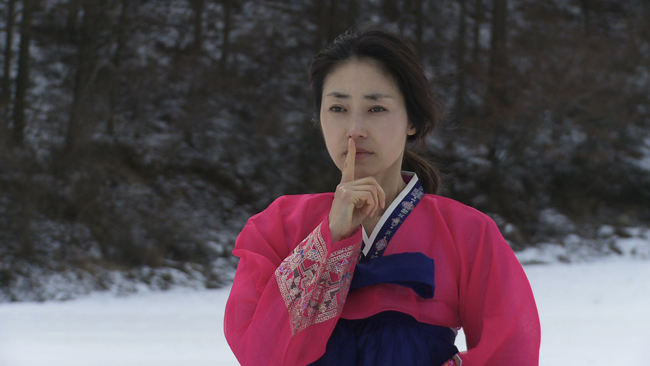
Film from the competitive program of the festival. Geographically, “Lebanese emotions” have nothing to do with the Middle East, this is an abstract picture of how people-symbols overcome grief, depression and learn to live on. A nameless man, experiencing the death of his mother, settles in the province in an empty house of his friend on the condition that he should check the animal trap left in the forest. A nameless woman leaves prison, tries to escape from the past, finds herself in the forest and falls into that very trap. The director chose as a name a random line in a modern Korean poem, which associatively approached the mood of the film.
"Jury". Director Kim Don Ho
 © MMKF
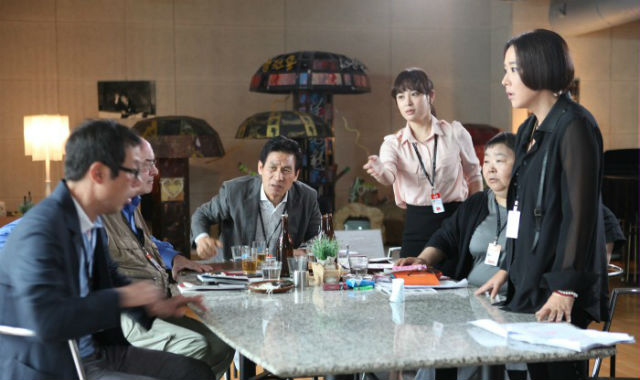
Short range from the out -of -end program "Corner of a short meter". Its director Kim Don Ho is the godfather of the Busan Film Festival, his long -term director, and now - an honorary director of pension. “Jury” - the debut of a seventy -five -year -old author, a production comedy on how the jury of the film festival works: director for emotions, actress for a message, critic Tony Rains for the hierarchy. This year, Kim Don Ho himself enters the jury of the MMKF; Perhaps, according to the results of his work, he will remove the emotional sequel with Garmash to his “jury”.
Also on the topic:
Inna Kushnareva. Moscow Film Festival: Program Z
Boris is ridiculous, Denis Ruzaev, Anton Razrechikov. Moscow Film Festival: Portugal, Bordeaux and Sonderkanda